
Qualcomm Patents Presence Detection That Adapts to Foldable Phone Angles
Your foldable phone held flat on a desk behaves very differently than one propped up at a 120-degree angle — and Qualcomm thinks its presence-detection system should know the difference.
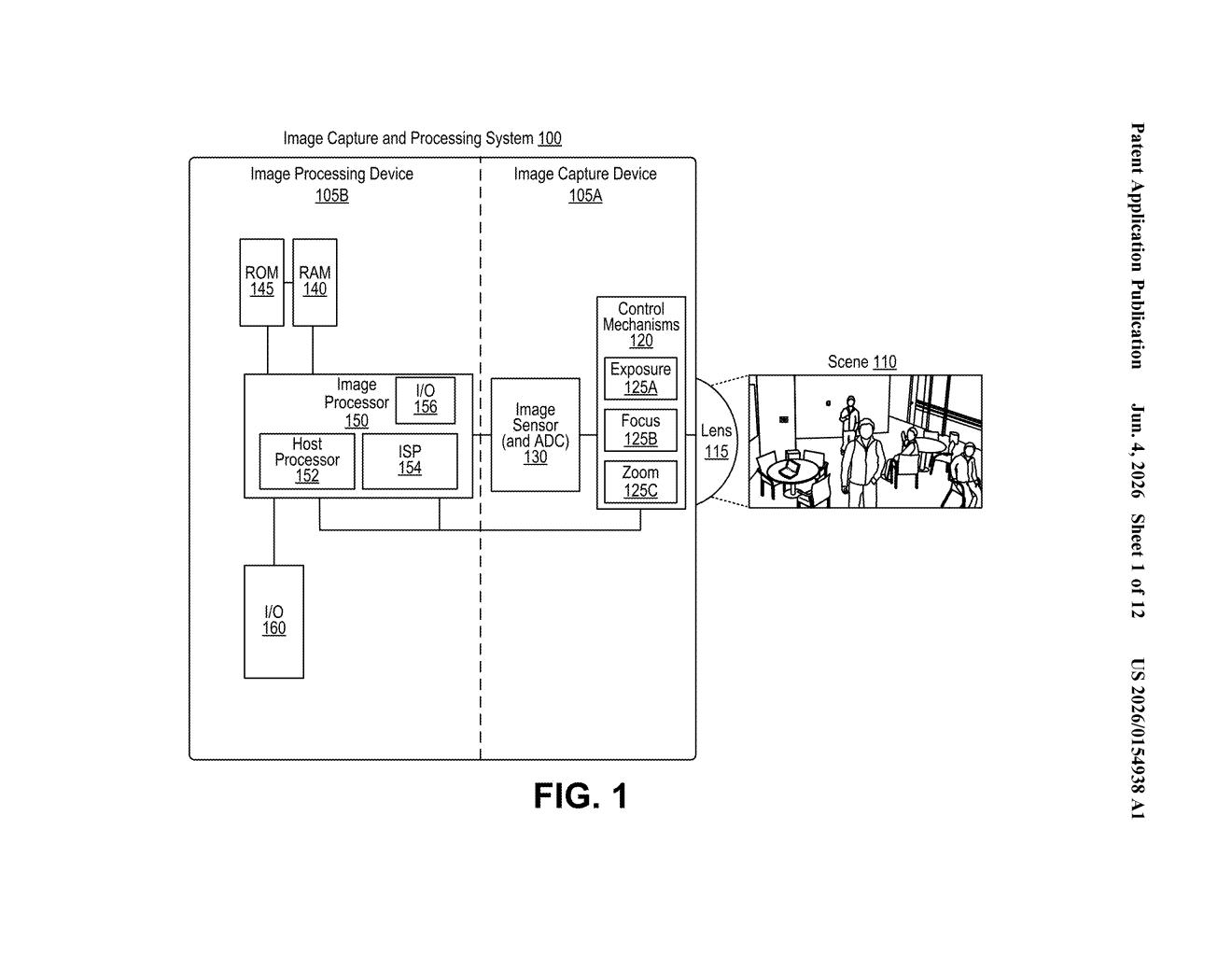
What Qualcomm's fold-aware presence detection actually does
Imagine your laptop dims its screen the moment you step away, or your phone locks itself when you're not looking at it. That's human presence detection — the camera quietly watching to see if you're still there. It works great on a fixed-screen device, but a foldable phone or tablet changes shape constantly, and the same camera angle that spots a face perfectly at one fold position might miss it entirely at another.
Qualcomm's patent describes a system that solves this by checking the device's fold angle — how far open or closed the hinge is — and then adjusting how strict the detection rules are on the fly. If the screen is nearly flat, the camera's view of your face changes dramatically, so the system loosens or tightens its confidence requirements to match.
The result is a presence-detection feature that stays reliable no matter how you're holding your foldable device, rather than one tuned for a single fixed position and unreliable everywhere else.
How the fold angle reshapes the detection confidence threshold
The system works in two connected steps. First, it runs a standard computer-vision routine on the camera feed: it spots a person (or part of a person, like a head or torso), draws a region of interest (ROI) — essentially a bounding box around the detected human portion — and produces a confidence score telling the system how certain it is about the detection.
Second — and this is the novel part — it pulls the device's current fold angle (the physical angle between the two halves of the hinge) and uses that angle to recalibrate two key parameters:
- Confidence threshold: the minimum certainty score required before the system declares "yes, a person is present."
- ROI size threshold: the minimum bounding-box area that counts as a valid detection.
So at a shallow fold angle where the camera faces mostly upward, the system might relax the confidence threshold because face geometry looks unusual from that angle. At a near-flat angle where the camera barely sees the user at all, it might tighten the threshold or require a larger ROI to avoid false positives.
The claim covers the apparatus generically, so this could apply to chipsets powering foldable phones, dual-screen laptops, or any hinged device with a front-facing camera.
What this means for privacy and always-on foldable displays
Presence detection is quietly becoming a standard privacy and power-management feature — it's already in Windows Hello and several Android OEMs' always-on displays. But foldable devices are the one form factor that breaks the assumptions every existing system is tuned for, because the camera-to-face geometry shifts continuously as you open or close the hinge.
Qualcomm supplies the chips inside many Android foldables, so a presence-detection algorithm built into its silicon would be a compelling differentiator for device makers. For you as a user, it means your foldable's screen-lock and wake features would actually work reliably in all the awkward positions you use it — propped up for a video call, half-folded like a tent, or lying flat on a desk.
This is a genuinely practical engineering fix for a real-world problem that most foldable owners have probably noticed without being able to name it. It's not a headline-grabbing AI invention, but presence detection is a feature that quietly touches privacy, battery life, and security every single day — and getting it right on foldables is harder than it sounds. Qualcomm is smart to lock this down at the chip level.
There are more where this came from
We read every patent application Big Tech publishes and send you the ones worth knowing. Plain English, free, every week.
Want this weekly breakdown for a company we don't cover? Patentlyze Pro →