
Qualcomm Patents a Cloud-Offloaded Location Engine That Filters Bad GPS and Cell Signals
Your phone uses GPS, Wi-Fi, and cell towers all at once to figure out where you are — but deciding which signals to trust is surprisingly expensive work. Qualcomm wants to hand that job to a server.
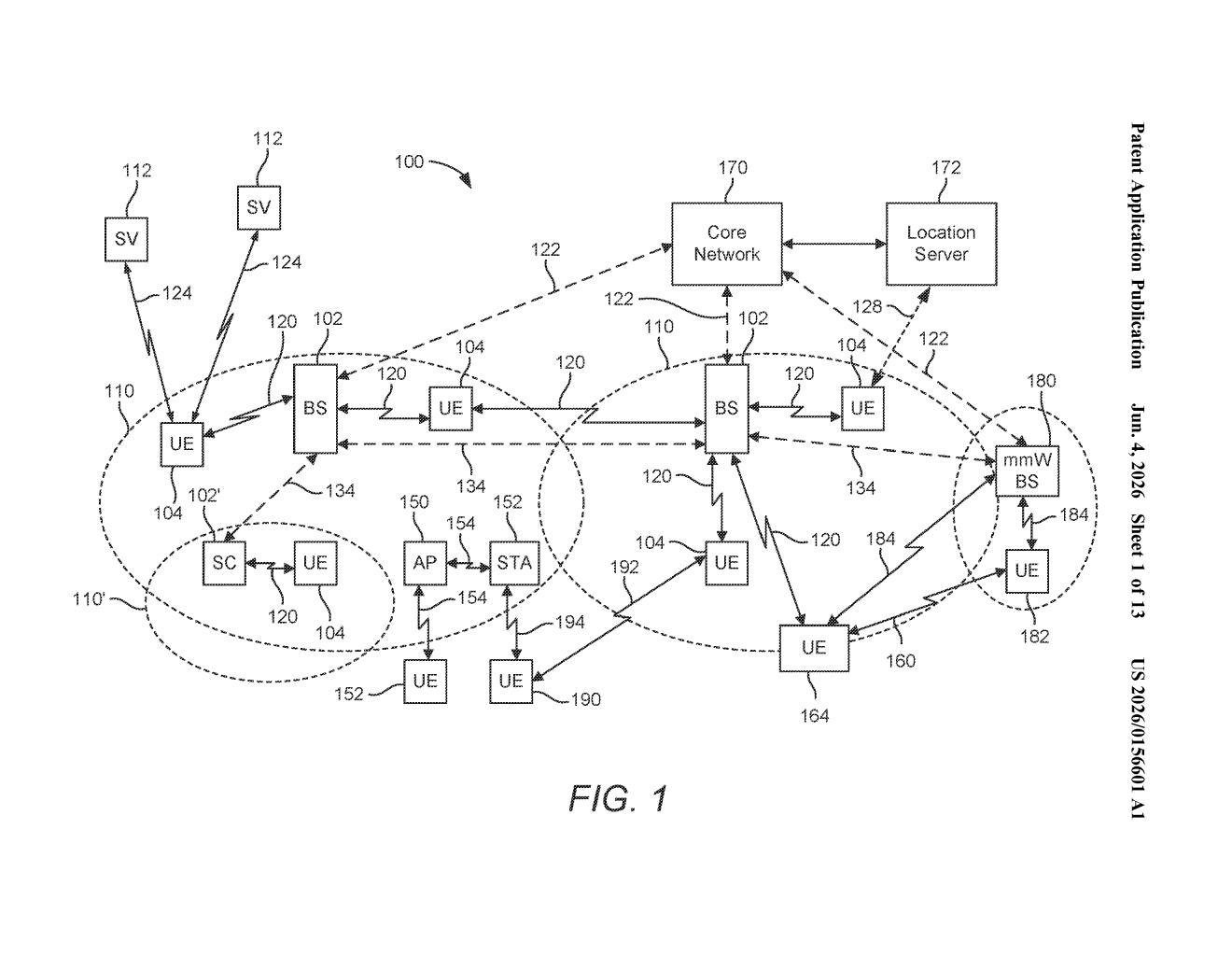
What Qualcomm's cloud positioning offload actually does
Imagine you're navigating downtown and your phone is simultaneously picking up GPS satellites, nearby Wi-Fi networks, and cell towers — all trying to agree on where you are. Some of those signals are bouncing off buildings and giving bad readings. Figuring out which ones to ignore is hard math, and right now your phone does all of it on-device.
Qualcomm's patent describes a system where your phone can recognize when that math is getting too heavy and send the messy work to a server. The server sifts through the signals, tosses out the bad ones, and sends back a clean, weighted answer. Your phone then uses that answer to pin down your location.
The key idea is that the phone stays in charge — it decides what to offload and when — but the cloud does the heavy lifting on signal filtering. That split could mean better accuracy in tricky environments without burning through your battery.
How the server filters bad anchors across GPS, Wi-Fi, and cell
The patent describes a multi-technology positioning engine — a system that fuses signals from multiple sources (GPS, 5G cells, Wi-Fi access points, etc.) into a single location estimate. The novel part is that the most compute-intensive steps can be offloaded to a remote server.
The offloaded work falls into three specific jobs:
- Intra-technology inlier detection: filtering bad anchors within a single technology — e.g., tossing out GPS satellites whose signals look corrupted before mixing them with anything else.
- Inter-technology inlier detection: cross-checking the cleaned-up signals from GPS, cell, and Wi-Fi against each other to catch outliers that slipped through the first pass.
- Inlier weighting: once the good anchors are identified, deciding how much trust to give each one — a GPS fix might be more reliable than a single Wi-Fi beacon in an open field, for instance.
The UE (your phone) sends a request to the server, gets back the filtered and weighted anchor set, and then computes the final position estimate locally. The phone retains control over whether to offload — it can decide based on battery state, compute load, or signal complexity.
What this means for phone location accuracy and battery life
Location accuracy is a surprisingly big battleground in mobile chipsets. The scenario this patent addresses — dense urban canyons where signals bounce everywhere — is exactly where current positioning falls apart. Offloading the outlier-rejection math to a server with more compute and potentially richer signal databases could make a measurable difference in the kind of environments where you most need precise navigation.
For Qualcomm, this is also a platform play. A cloud positioning backend that talks to Qualcomm-chipset devices is the kind of service that could attach to Snapdragon licensing. If cloud-assisted positioning becomes standard in next-gen devices, whoever owns the server-side filtering logic has real leverage — especially as 5G positioning (which Qualcomm heavily shapes through standards work) matures.
This is quiet but genuinely clever infrastructure work. Splitting the positioning pipeline so the phone decides what to offload — rather than blindly streaming raw data to a server — is a sensible design that respects battery and privacy constraints simultaneously. It's not a flashy AI patent, but it's exactly the kind of thing that shows up in a Snapdragon spec sheet two years from now as 'Enhanced Cloud Positioning.'
There are more where this came from
We read every patent application Big Tech publishes and send you the ones worth knowing. Plain English, free, every week.
Want this weekly breakdown for a company we don't cover? Patentlyze Pro →