
Sony Patents a System for Keeping Local and Cloud Game Instances in Sync
Imagine playing a co-op game with a friend on the same couch — but your copy of the game is running locally on the console while your friend's copy is streaming from Sony's cloud. This patent is Sony's answer to keeping both of you in the same moment.
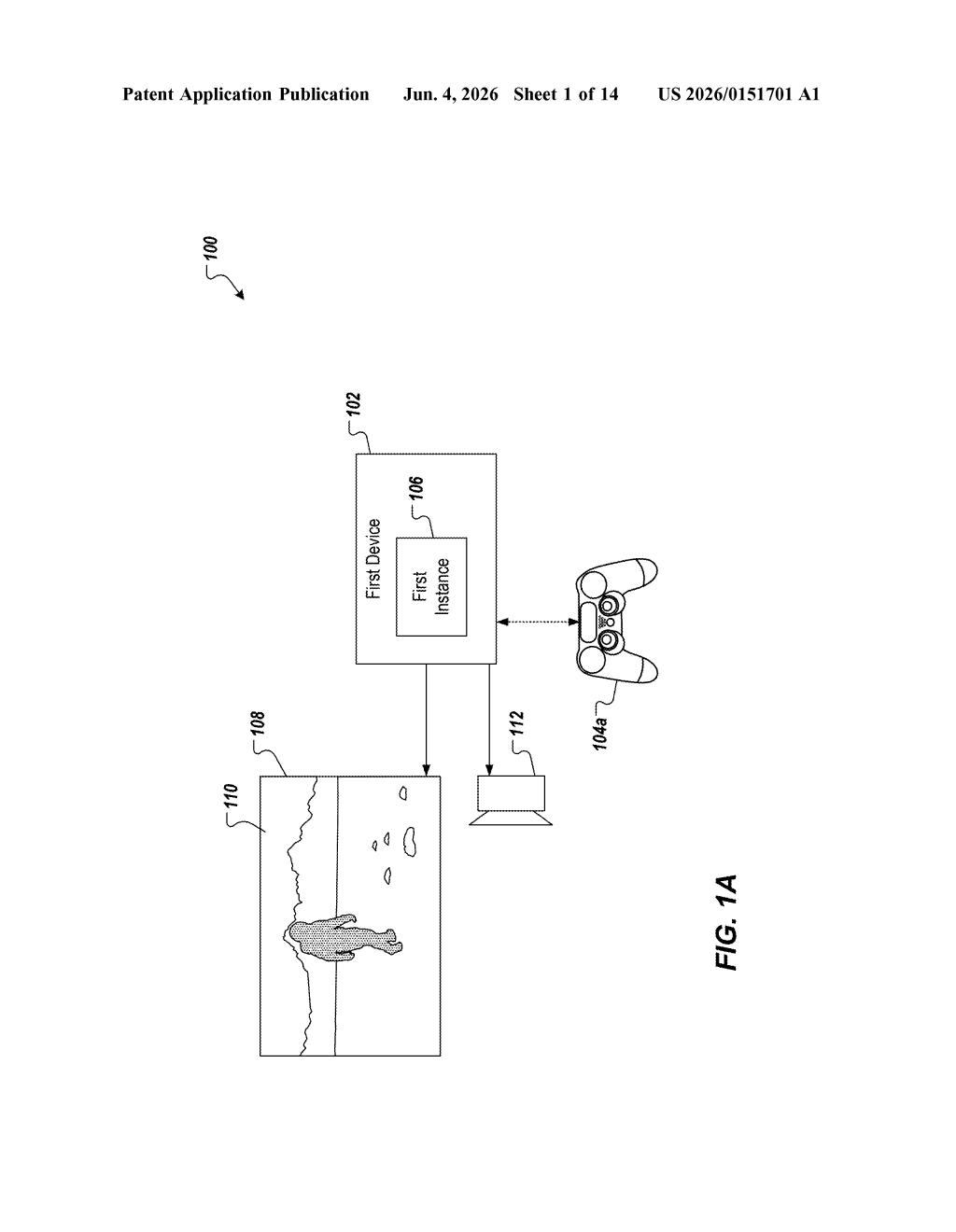
What Sony's dual-instance sync actually does for co-op gaming
Picture two players sharing a TV, both playing the same co-op game. Your character's game runs natively on the PlayStation sitting in front of you. But your friend — maybe a guest, or someone using a different account — has their copy streaming in from Sony's servers. The problem is those two versions of the game can drift apart in time, causing one player to be a few frames, or even a few seconds, ahead of the other.
Sony's patent describes a way to detect that drift and correct it. The system finds matching "checkpoints" inside each running copy of the game — moments where both instances should be at the same place — and measures how far apart they've gotten. Then it adjusts one or both copies to close that gap.
For couch co-op or any shared-screen experience, this is the kind of invisible plumbing that makes the whole thing feel seamless. Without it, one player could be watching a cutscene while the other is already fighting the next boss.
How Sony measures and corrects the timing gap between instances
The patent describes a coordination system that sits between a local game instance (running on a PlayStation-style device) and a remote game instance (running on a cloud server, with its output streamed back to the same screen).
Here's the core loop:
- The local device runs Player 1's game instance normally.
- It receives a video/data stream from a remote server running Player 2's instance.
- Both instances are monitored for synchronization points — identifiable moments in the game state or user input stream that can serve as a shared reference (think: a level load, a checkpoint trigger, or a specific in-game event).
- The system measures the temporal offset — how far apart in time the two instances are at those matching checkpoints.
- It then applies modifications to one or both instances to reduce that offset, pulling them back into alignment.
The modifications aren't fully specified in the claim, but they could include things like slowing down or speeding up one instance, buffering the stream, or adjusting simulation tick rates. The key insight is that the system uses application state data and user input data together to find reliable sync points, rather than relying purely on timestamps — which makes it more robust to variable network latency.
What this means for cloud-assisted couch co-op on PlayStation
Sony's PlayStation Plus cloud streaming tier already lets players stream games to a console. The logical next step is using that infrastructure to run multiple instances of the same game simultaneously — one locally, one in the cloud — so a single device can support more players without requiring enough local hardware to run everything. This patent is the synchronization layer that would make that experience feel like a real co-op session rather than two disconnected streams sharing a screen.
For PlayStation users, this could mean more flexible local multiplayer: guests or secondary accounts might not need their own full console license or hardware resources, with the cloud picking up the slack. The sync problem this patent solves is exactly the kind of subtle technical hurdle that separates a polished product from a janky demo.
This is genuinely interesting infrastructure work. Sony is clearly thinking about how to stretch cloud gaming resources across multiple simultaneous users on a single physical device — and the synchronization problem they're solving here is real and non-trivial. It's not a flashy AI feature, but it's the kind of patent that shows up quietly and ends up being load-bearing for a future product tier.
There are more where this came from
We read every patent application Big Tech publishes and send you the ones worth knowing. Plain English, free, every week.
Want this weekly breakdown for a company we don't cover? Patentlyze Pro →