
Apple Patents a Dynamic System for Getting Devices Online Before a Real SIM Exists
Every eSIM-equipped device has a chicken-and-egg problem: it needs a cellular connection to download its SIM profile, but it needs a SIM profile to get a cellular connection. Apple's new patent describes a clever three-step handshake that solves exactly that.
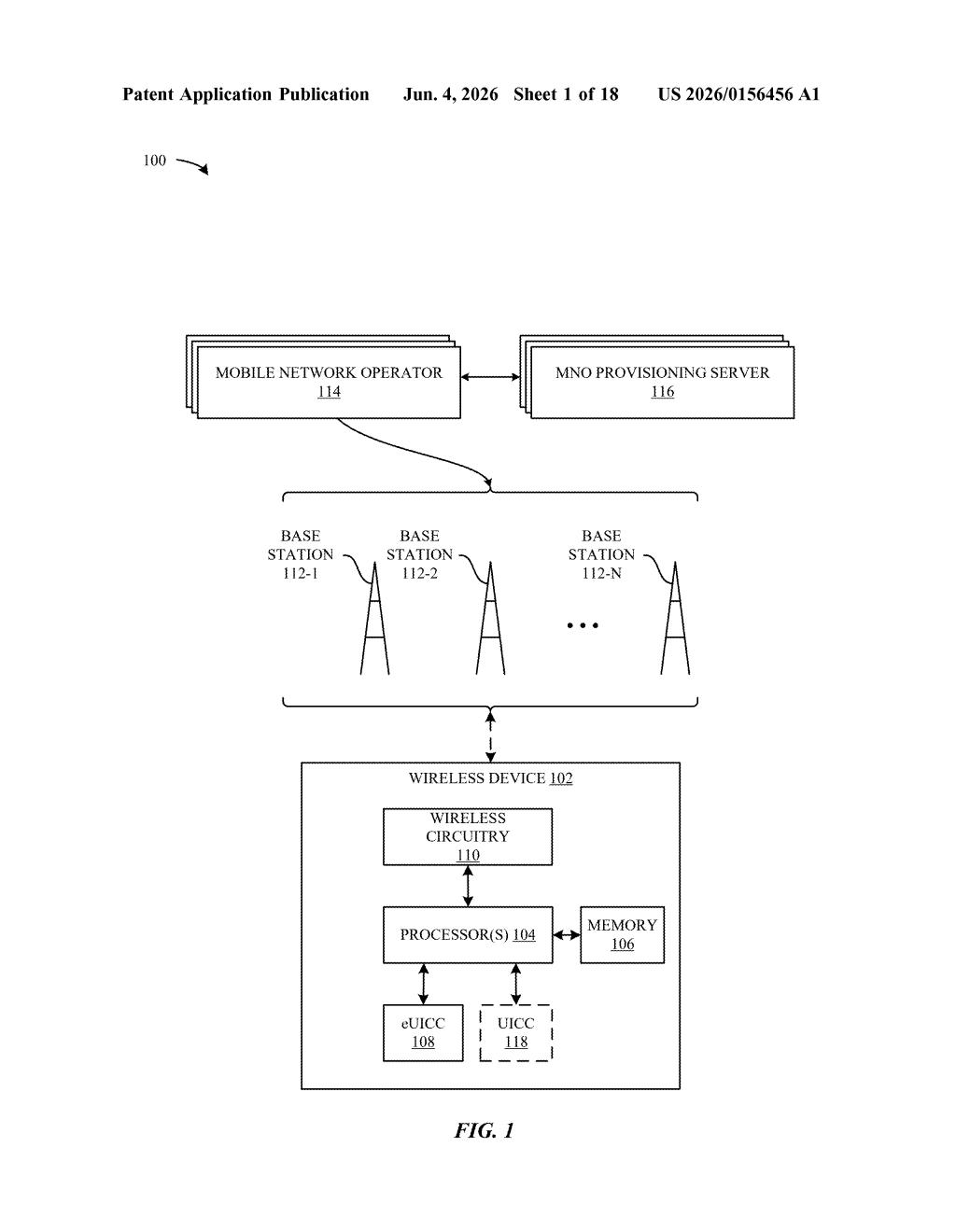
What Apple's temporary cellular ID trick actually does
Imagine buying a new Apple device that has no carrier set up yet. To get your SIM downloaded over the air, the device first needs to connect to a cellular network — but it doesn't have a SIM to do that. That's the bootstrapping problem, and it's surprisingly tricky to solve at scale.
Apple's patent describes a system where a device starts with a generic, shared credential (called an i-IMSI) just to get its foot in the door of any nearby network. It then asks a special server for a temporary, dedicated ID (a b-IMSI) that's reserved just for that device, just for a short time. The server picks that temporary ID based on why the device needs it — say, initial setup versus a factory test — so the network can handle different situations differently.
Once the temporary ID expires or the device is done with it, that ID goes back into a pool for another device to use. The whole process is designed so that Apple or carriers don't have to pre-assign millions of permanent IDs to devices sitting in a warehouse.
How the bootstrap eSIM cycles through three connections
The patent describes a three-stage connection sequence managed entirely on the device's eUICC (embedded Universal Integrated Circuit Card — the hardware chip that holds eSIM profiles).
- Stage 1 — Generic bootstrap: The device uses a shared i-IMSI (initial IMSI) pulled from a local pool to connect to any compatible network. This is a one-size-fits-all credential, not unique to the device.
- Stage 2 — Dedicated temporary ID: Over that first connection, the device sends a request — including its unique device identifier — to a bootstrap server. The server consults a bootstrap rules service to pick an appropriate b-IMSI (bootstrap IMSI), a temporary ID dedicated to this specific device. Crucially, the request includes a use case type (e.g., end-user setup, manufacturing, testing), so the rules service can apply different policies depending on context.
- Stage 3 — Real eSIM delivery: Using the b-IMSI, the device opens a second connection on a potentially different network and downloads its actual user eSIM from a carrier's provisioning server. After that, it connects on its permanent carrier credentials.
The b-IMSI is time-limited: it returns to the shared pool either when a timer expires or when the device sends an explicit delete notification, keeping pool exhaustion in check.
What this means for future Apple device activation
For consumers, this is largely invisible plumbing — but it's the plumbing that makes eSIM-only devices possible at scale. If Apple continues removing physical SIM trays (as it already has in US iPhone models), a robust, efficient bootstrap system becomes critical infrastructure. A device that can't reliably get its first cellular connection can't be activated at all.
For carriers and enterprise deployments — think corporate iPhone fleets or Apple Watch cellular activations — the use-case-aware routing is the interesting part. The same bootstrap infrastructure can behave differently for a consumer unboxing a phone versus a factory running automated tests, without needing separate hardware or manual provisioning steps.
This is solidly unglamorous but genuinely important work. Apple has been pushing hard on eSIM-only devices, and the bootstrap problem is a real scaling constraint that gets ugly fast when you're shipping tens of millions of devices. The use-case-type field is the quietly clever bit — it means one bootstrap infrastructure can serve consumer, enterprise, and manufacturing workflows without separate systems.
There are more where this came from
We read every patent application Big Tech publishes and send you the ones worth knowing. Plain English, free, every week.
Want this weekly breakdown for a company we don't cover? Patentlyze Pro →