
Disney Patents an AI That Rewrites Tour Scripts in Any Commentator's Voice
Disney is patenting a system that doesn't just generate a commentary script — it rewrites that script to sound like a specific character, celebrity, or persona tailored to the individual user asking for it.
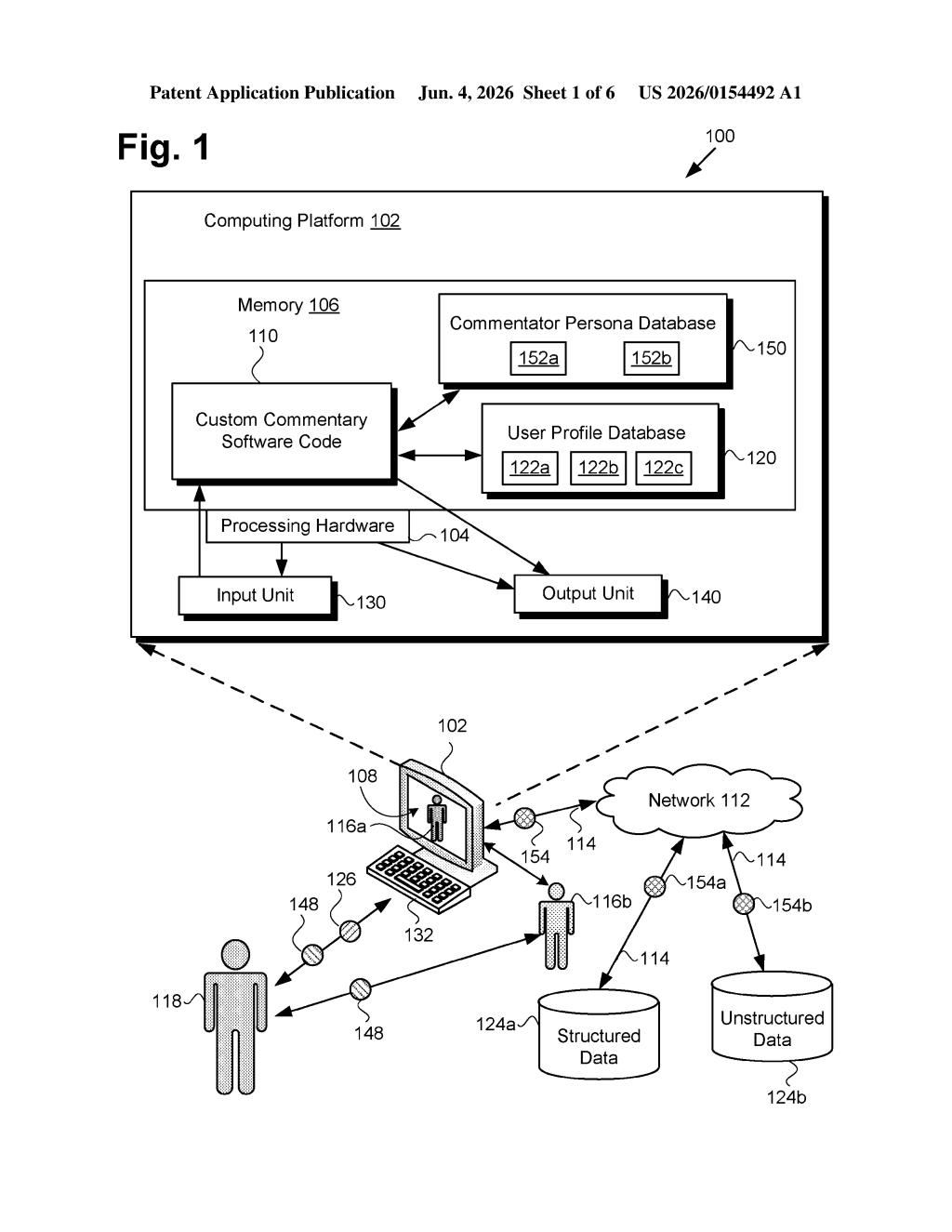
What Disney's AI commentator persona system actually does
Imagine you're on a Disney theme park ride or using a Disney app, and instead of hearing a generic narration, you hear the story delivered in the voice and style of your favorite character — say, a gruff space ranger, a wise elder, or even a classic Disney villain. That's the core idea here.
Disney's system first figures out what you're asking for and what kind of commentary would help you. Then it pulls in the relevant content, builds a base script, and — here's the twist — rewrites that script to match a specific commentator persona chosen for you specifically.
The result is a commentary that isn't just accurate, it's delivered in a voice and style that feels like it was made for you. Think of it as a two-step ghostwriter: one AI writes the facts, another rewrites them in character.
How the system picks a persona and rewrites the script
The system operates in two distinct generation phases. First, it takes input data from the user — a question, a location trigger, a content request — and uses that to determine both the user's intent (what they actually want to know or experience) and to retrieve relevant content data to inform the commentary.
A base script is then generated from that intent and content. This is a straightforward, factual draft of the commentary — the 'what to say' layer.
The second phase is where the patent's core novelty sits: a commentator persona is selected based on information associated with the specific user (their preferences, profile, or context), and the base script is transformed into a commentator-specific script — essentially restyled to match that persona's vocabulary, tone, and delivery patterns.
The claim language notably separates the persona selection from the script generation step, suggesting these are modular components. This means the same factual script could theoretically be restyled into dozens of different persona outputs without regenerating the underlying content each time — a potentially significant efficiency win at scale.
What this means for personalized park and streaming experiences
Disney runs theme parks, streaming platforms, and location-based experiences where personalized storytelling is a core product differentiator. A system like this could power guided park tours narrated by a character matched to your ticket profile, or a streaming app that explains a documentary in the voice of a beloved presenter. The two-stage architecture — write once, restyle many times — also makes this cheaper to operate than generating a fully custom script for every user from scratch.
For you as a guest or viewer, the practical effect is commentary that doesn't feel like a canned recording. Whether that's a ride audio track, an in-app guide, or a behind-the-scenes explainer, the persona layer is what makes it feel personal rather than generic.
This is a genuinely clever architectural choice — separating 'what to say' from 'how to say it' is exactly the kind of modular AI design that ages well. Disney has obvious motivation to deploy this in parks and apps, and the two-stage pipeline makes it scalable. It's not flashy patent language, but the underlying idea is solid and commercially pointed.
There are more where this came from
We read every patent application Big Tech publishes and send you the ones worth knowing. Plain English, free, every week.
Want this weekly breakdown for a company we don't cover? Patentlyze Pro →