
Google Patents a System That Tells You Which AI Prompts Will Actually Work
Getting good results from an AI chatbot often comes down to how you phrase your request — but most people have no idea whether their wording is good or bad until they see a mediocre answer. Google is patenting a system that shows you, before you even hit send, which suggested prompts are the best fit for what you've already typed.
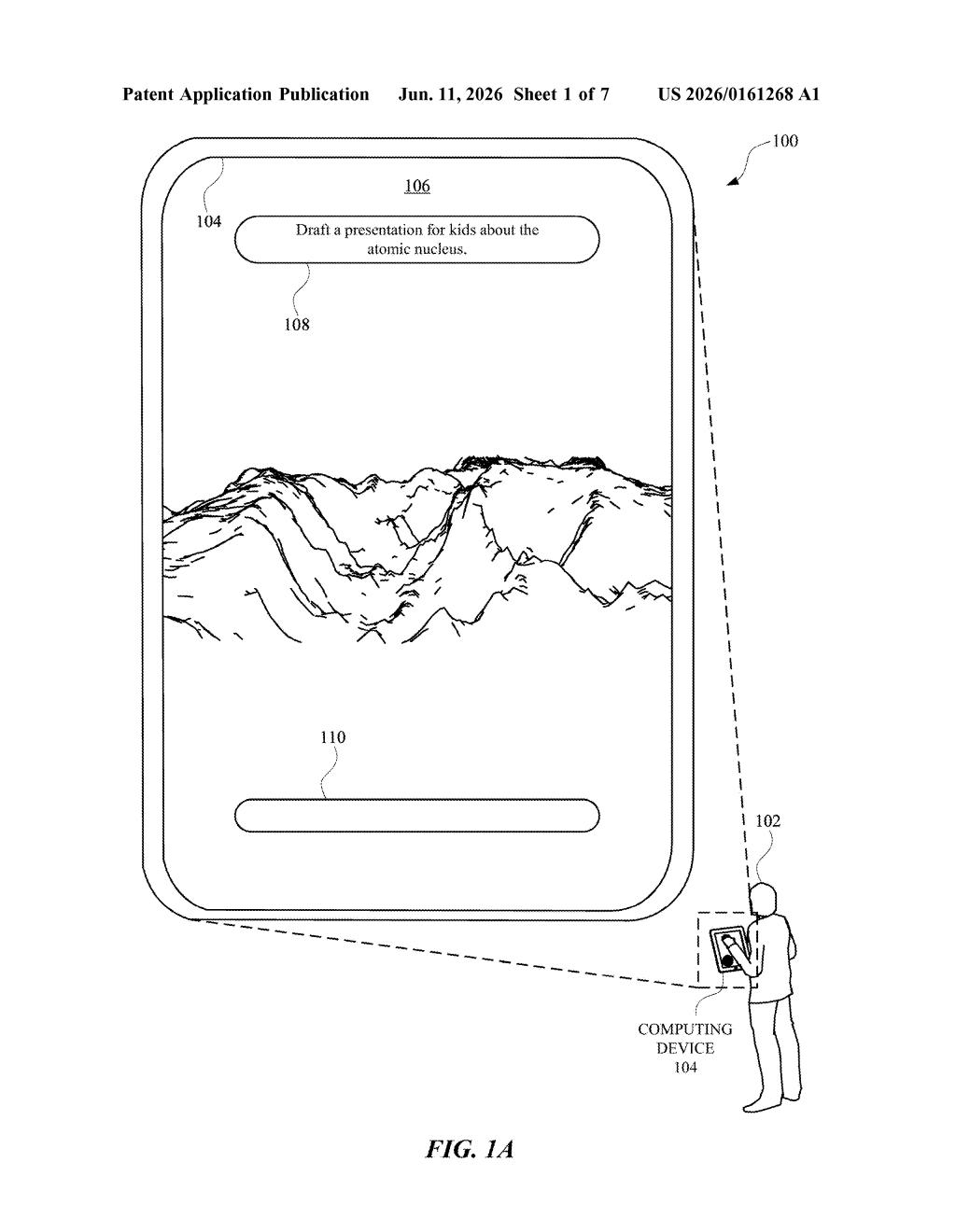
What Google's prompt-suggestion feature actually does
Imagine you start typing a request into an AI assistant — something like "summarize this article" — and the app immediately shows you a list of suggested follow-up phrases or ways to complete your prompt. That already exists in some tools. What Google's patent adds is a visual indicator on each suggestion showing how well it matches what you've already written.
Think of it like a Wi-Fi signal bar for your prompt: some suggestions are a strong match for your input, others are a weaker fit. The patent says this compatibility signal can also hint at whether a suggestion will use more or fewer of the AI's processing resources — meaning some phrasings are cheaper and faster to run than others.
You can also interact with a suggestion (say, by tapping it on a touchscreen) to reveal that compatibility detail. Once you pick one, the app combines your original input with the chosen suggestion and sends the whole thing to the AI to generate your answer.
How the compatibility indicator scores each suggestion
The patent describes a generative AI application — think a chatbot or AI writing tool — that does three things in sequence.
First, as a user types an initial input, the system uses one or more generative models (the same kind of large language model that powers tools like Gemini or ChatGPT) to generate a list of prompt suggestions: pre-written phrases or completions that, when combined with the user's input, should produce better AI output.
Second, each suggestion is rendered as a selectable GUI element (a button or chip on screen) that carries a compatibility indicator — a visual feature signaling how well that suggestion aligns with what the user already typed. The patent notes this indicator can reflect two things:
- Whether the suggestion will produce a more accurate AI output
- Whether it will consume fewer tokens (tokens are the units of text an AI model processes; fewer tokens generally means faster and cheaper responses)
Third, when the user selects a suggestion, the app combines it with the original input and feeds the combined prompt to the AI model to generate the final content. The compatibility detail can also appear in response to an interaction gesture — like a tap or hover — rather than being shown by default.
What this means for everyday AI chatbot users
For most people, prompting an AI is still guesswork. You type something, get a so-so answer, rephrase, try again. A built-in signal that says "this phrasing is a strong match for what you've typed" could meaningfully cut down that trial-and-error loop — especially for users who are new to AI tools and don't yet have intuitions about what makes a good prompt.
For Google, this fits neatly into its Gemini ecosystem, where the company is clearly trying to make AI assistance feel less intimidating and more guided. The token-efficiency angle is also interesting: if Google can steer users toward prompts that cost less to process, that's a real operational saving at scale across millions of queries.
This is a genuinely useful UX idea that addresses a real friction point in AI tools — most people don't know if their prompt is good until they get a bad answer. The compatibility indicator is clever because it works on two levels simultaneously: it helps users and it helps Google's infrastructure costs. It's not a flashy AI capability, but it's the kind of polish that makes or breaks whether everyday users stick with a product.
There are more where this came from
We read every patent application Big Tech publishes and send you the ones worth knowing. Plain English, free, every week.
Want this weekly breakdown for a company we don't cover? Patentlyze Pro →