Latest language AI patents, Page 30
The text machines: language models, summarizers, translators, and search that understands what you meant. Filings that show where written AI is headed.
- in the Nov 19 release
- 16
- in November so far
- 36
- filings tracked
- 408
- last 90 days
- 172
Recent filings
Newest first · 408 total-
Nvidia · Published May 28
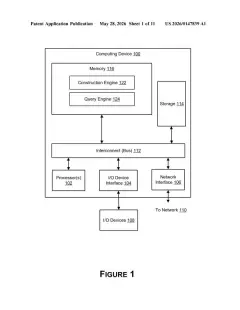
Nvidia Patents a Hierarchy-Aware Document Retrieval System for AI Search
When you ask an AI a question, it usually searches a flat pile of text chunks — no sense of whether a sentence belongs to an introduction, a subsection, or a footnote. Nvidia's new patent wants to change that by teaching retrieval systems to respect how documents are actually structured.
-
Samsung · Published May 28
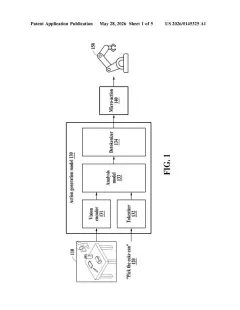
Samsung Patents a Layered AI System for Precise Robot Motion Control
Teaching a robot to 'clean the table' is easy to say and brutally hard to execute — Samsung's new patent tackles that gap by chaining AI models together to translate a high-level goal into precise, frame-by-frame physical movements.
-
Samsung · Published May 28
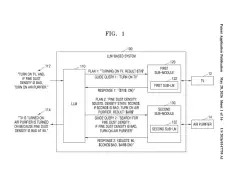
Samsung Patents a Central LLM That Delegates Tasks to On-Device Sub-Models
Samsung is patenting an AI architecture where a large 'orchestrator' model breaks down your requests into sub-tasks, farms them out to smaller specialized models on individual devices, and then stitches the results back into a single coherent answer.
-
IBM · Published May 28
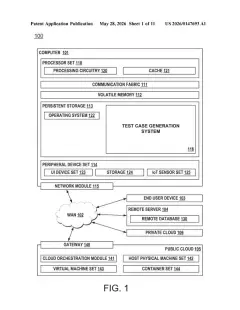
IBM Patents an AI System That Writes Software Test Cases from Requirements Docs
Writing test cases is one of software development's most tedious chores — and IBM is betting a combination of knowledge graphs and retrieval-augmented generation can automate most of it away.
-
IBM · Published May 28
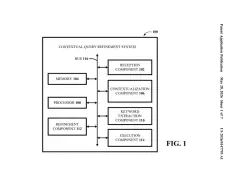
IBM Patents a Context-Aware Query Rewriting System for RAG
RAG systems are only as good as the question you ask them — and most questions are underspecified. IBM's new patent tackles that problem by automatically rewriting your query before it ever hits the retrieval layer.
-
Adobe · Published May 28
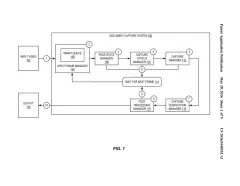
Adobe Patents ML-Driven Document Scanning That Captures Pages as You Flip
Adobe is working on a document scanner that watches you flip through a book on video and automatically grabs a clean image of each page — no button-tapping required.
-
Adobe · Published May 28
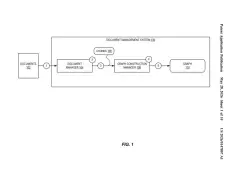
Adobe Patents a Graph-Based Context Retrieval System for Large Language Models
When you ask an AI a question that spans dozens of documents, most systems just do a keyword-style search and hope for the best. Adobe's new patent tries something more structured: building a graph that maps how document chunks relate to each other before the AI ever starts answering.
-
Adobe · Published May 28
Adobe Patents an Embedding-Driven Retrieval System for Generative AI Content
Adobe has patented a retrieval-augmented generation (RAG) pipeline that converts a user's query into a mathematical embedding, hunts for similar data embeddings in a high-dimensional space, and then feeds that matched data into a generative AI model to produce contextual content.
-
Adobe · Published May 28
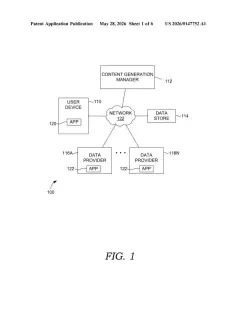
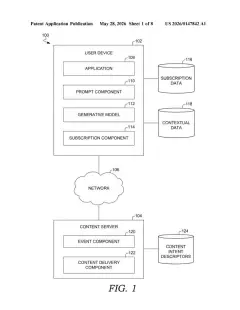
Adobe Patents a System That Generates Content When Real-World Events Happen
Adobe is patenting a system where a server watches the internet for real-world events, then automatically kicks your device's on-device AI into gear to generate relevant content — no manual prompt required.
-
Sony · Published May 28
Sony Patents LLM-Powered NPCs That React to What You Actually Say
Sony is patenting a system where NPCs don't just hear you talk — they understand what you're asking for, act on it through the game engine, and then talk back with full awareness of what just happened.
-
Intel · Published May 28
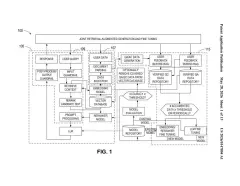
Intel Patents a RAG Pipeline That Continuously Fine-Tunes Its Own AI Models
Intel has patented a system where every question you ask a RAG-powered AI doesn't just get answered — it also feeds a training pipeline that gradually makes the underlying model smarter and the retrieval system cheaper to run.
-
Intel · Published May 28
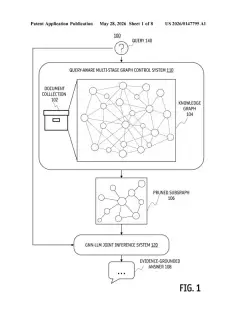
Intel Patents a Query-Aware Graph Pruning System for RAG
When you ask an AI a question, the quality of the answer depends almost entirely on what context gets fed into the model. Intel's new patent tackles a surprisingly tricky part of that pipeline: figuring out which pieces of a knowledge graph to actually use — and which to throw away.