
IBM Patents an AI System That Writes Software Test Cases from Requirements Docs
Writing test cases is one of software development's most tedious chores — and IBM is betting a combination of knowledge graphs and retrieval-augmented generation can automate most of it away.
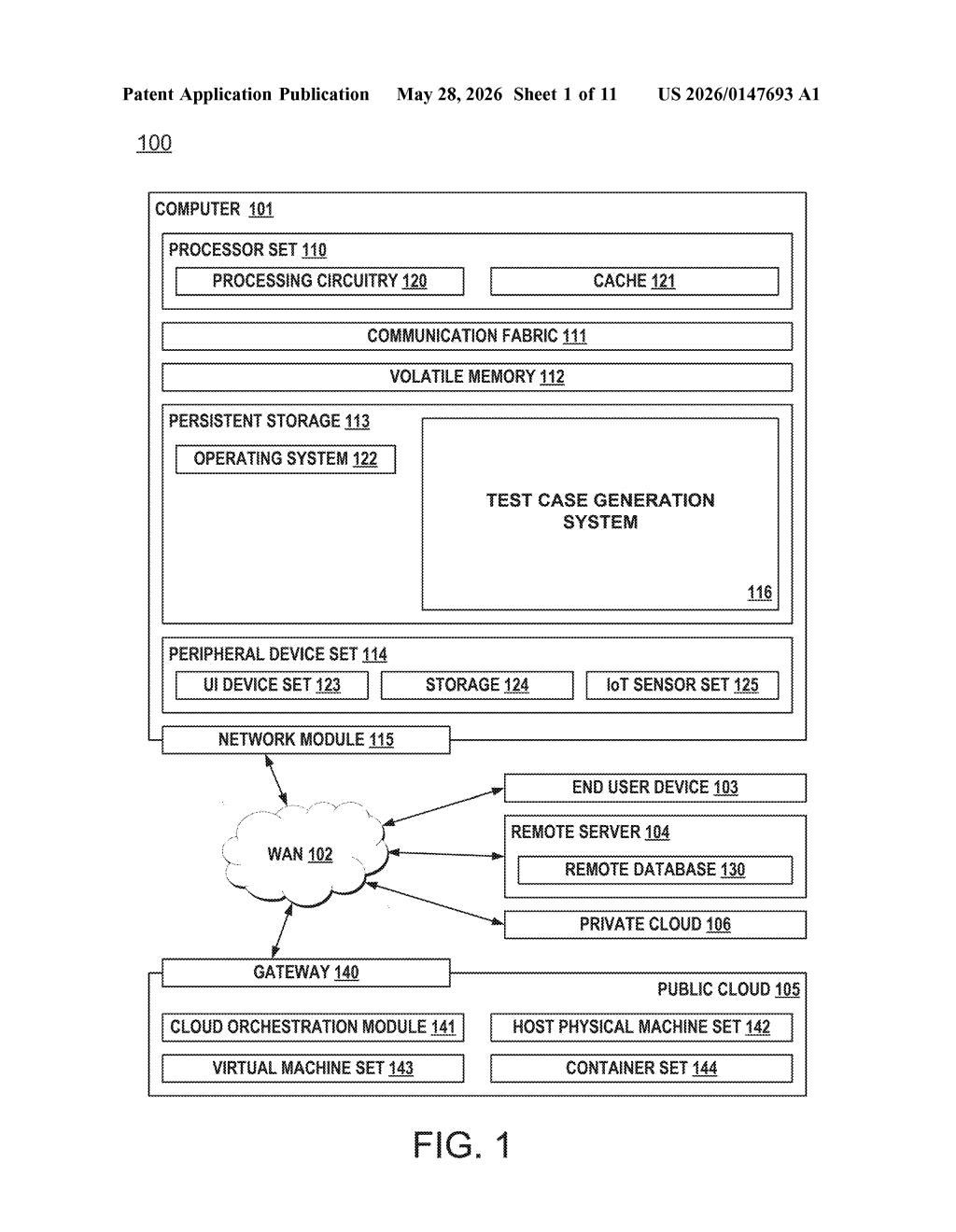
How IBM's graph-plus-RAG system auto-writes test cases
Imagine you've just finished writing a 50-page requirements document for a new banking app. Before a single line of code goes live, someone has to write hundreds of test cases checking that every feature works correctly. That job is slow, repetitive, and easy to get wrong.
IBM's patent describes a system that reads your requirements document automatically, identifies all the things that need to be tested (the "testing targets"), and maps out how they relate to each other — like a web of connections. When you ask it to generate a test case for a specific feature, it pulls the relevant slice of that web and feeds it to an AI model, which writes the test for you.
The system then actually runs the generated test against your software and reports back results. The idea is to compress what's normally a multi-day manual process into something much closer to a button press.
How the graph model and ML pipeline produce test cases
The system works in four main stages:
- Extraction: It parses a requirements document — think a product spec or a user-story backlog — and identifies discrete "testing targets" (individual features, behaviors, or conditions that need to be validated).
- Graph construction: Those testing targets become nodes in a graph model, and the relationships between them (e.g., Feature A depends on Feature B, or they share the same data input) become edges. This gives the system structural context that a flat list of requirements can't provide.
- RAG-assisted generation: When a test case is requested for a specific target, the system retrieves the relevant subgraph (the target node plus its neighbors and relationships) — this is the retrieval-augmented generation (RAG) step, where context is fetched dynamically rather than crammed into a fixed prompt. A machine learning model then uses that graph data to write the test case.
- Execution and reporting: The generated test is actually run against the software system, producing real test results.
The graph-based approach is the key architectural bet here. By modeling correlations between requirements — not just individual requirements in isolation — the ML model has richer context when writing each test case, which should reduce gaps and contradictions in coverage.
What this means for enterprise software QA pipelines
Software QA is a massive cost center, especially in enterprises where requirements documents can run into the hundreds of pages and test suites into the thousands of cases. Automating even a portion of that work — particularly the initial drafting of test cases — could meaningfully speed up release cycles and reduce the manual burden on QA engineers.
For IBM's enterprise customers, this fits neatly into the kind of developer-productivity tooling IBM has been pushing through its watsonx platform. The graph-plus-RAG approach is also more architecturally interesting than simple prompt-based test generation: by encoding requirement relationships as a graph, the system can handle complex interdependencies that a naive LLM prompt would likely miss or hallucinate around.
This is solid, practical engineering work aimed squarely at a real pain point in enterprise software development. It's not flashy AI research — it's a workflow automation tool that borrows sensibly from two proven techniques (knowledge graphs and RAG). Whether it actually delivers on test-case quality at scale is the real question, but the architecture is well-reasoned.
There are more where this came from
We read every patent application Big Tech publishes and send you the ones worth knowing. Plain English, free, every week.
Want this weekly breakdown for a company we don't cover? Patentlyze Pro →