
Samsung Patents a Barrier Structure to Protect 3D Memory Wordlines
As memory chips get denser and more three-dimensional, the manufacturing steps used to etch one part of the chip can accidentally damage neighboring parts. Samsung's latest patent targets that exact problem with a precisely placed barrier structure inside 3D memory circuits.
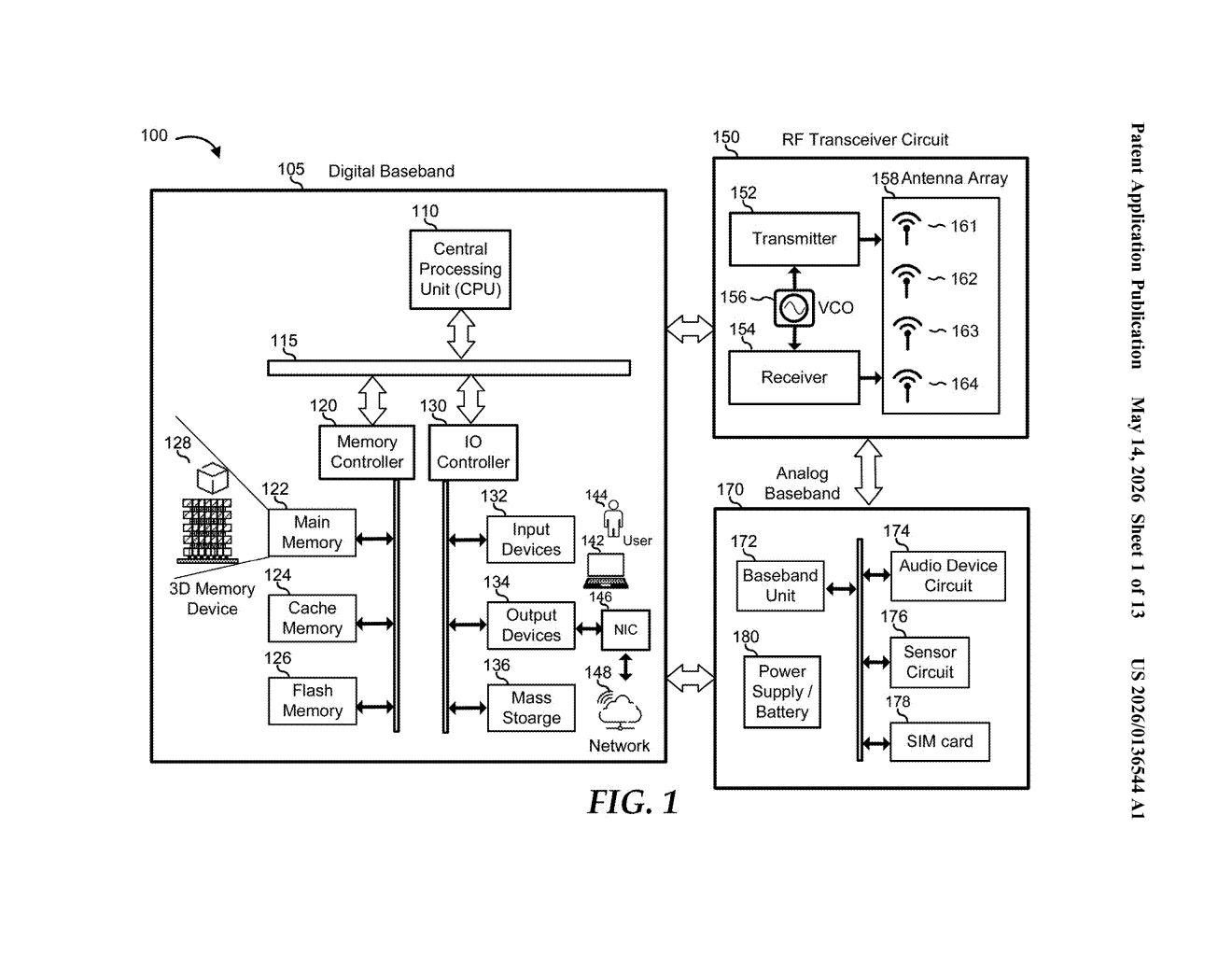
How Samsung's memory barrier shields wordline areas
Imagine you're renovating a house and drilling into one wall accidentally cracks the plaster on the wall next to it. That's roughly what happens inside a memory chip when fabricating one region inadvertently damages an adjacent one.
In Samsung's case, the concern is the wordline (WL) area — a critical part of a memory chip that selects which row of memory cells to read or write. During manufacturing, chemical and physical processes used nearby can creep in and degrade that area. Samsung's patent describes a barrier structure: a protective liner wrapping a filler material, inserted between the wordline zone and its neighbors, to stop those effects from reaching the wordlines.
The structure is designed to fit neatly into the existing grid of narrow strips and trenches that make up a modern 3D memory chip — without requiring a major redesign of the chip's layout.
How the liner and strip geometry block process damage
The patent describes a barrier region made up of three main elements working together.
- Barrier structure: A liner material (think of it as a protective sleeve) that surrounds an inner fill material. Together, they form a wall that chemically and physically isolates the wordline area from unwanted process effects — things like etch byproducts or diffusion of materials from adjacent fabrication steps.
- First strip: A narrow feature that runs in one direction across the chip layout. It's deliberately interrupted — split into a first segment and a second segment — leaving a gap (the "space") between them. The barrier structure sits inside this gap.
- Second strip: A strip running perpendicular to the first, intersecting the second segment. This cross-geometry helps anchor the barrier within the chip's layout grid.
The barrier structure is positioned specifically between the WL area and either a WL dummy area or a cell array area. A dummy area is a region of non-functional structures used to keep manufacturing processes uniform — they're common in advanced chips but can act as conduits for process effects. By placing the barrier at these boundaries, Samsung's design intercepts damage before it reaches the active wordlines.
What this means for denser, more reliable DRAM
Wordlines are fundamental to how DRAM works — if they're degraded during manufacturing, you get lower yield (more chips thrown away) and potentially less reliable memory. As Samsung and its competitors push DRAM to smaller nodes and taller 3D stacks, the proximity of different process zones becomes a bigger headache, and solutions like this barrier structure become more important to maintaining acceptable factory yields.
For you as a consumer, this is the kind of behind-the-scenes manufacturing refinement that eventually translates into cheaper, denser, more reliable RAM in your phone, laptop, or data center server — even if you'd never know this patent existed.
This is unglamorous but genuinely important semiconductor process engineering. It won't make headlines at a product launch, but the ability to isolate critical memory regions from manufacturing side-effects is exactly the kind of incremental work that separates a 70% yield from a 90% yield at scale. Samsung files a lot of process patents like this, and they tend to show up quietly in production chips.
There are more where this came from
We read every patent application Big Tech publishes and send you the ones worth knowing. Plain English, free, every week.
Want this weekly breakdown for a company we don't cover? Patentlyze Pro →