
Samsung Patents an Adaptive Row Hammer Detection System for DRAM
Row hammer attacks can corrupt memory by repeatedly accessing adjacent DRAM rows — and Samsung's new patent describes a controller that watches for those patterns in real time and decides on the fly how aggressively to defend against them.
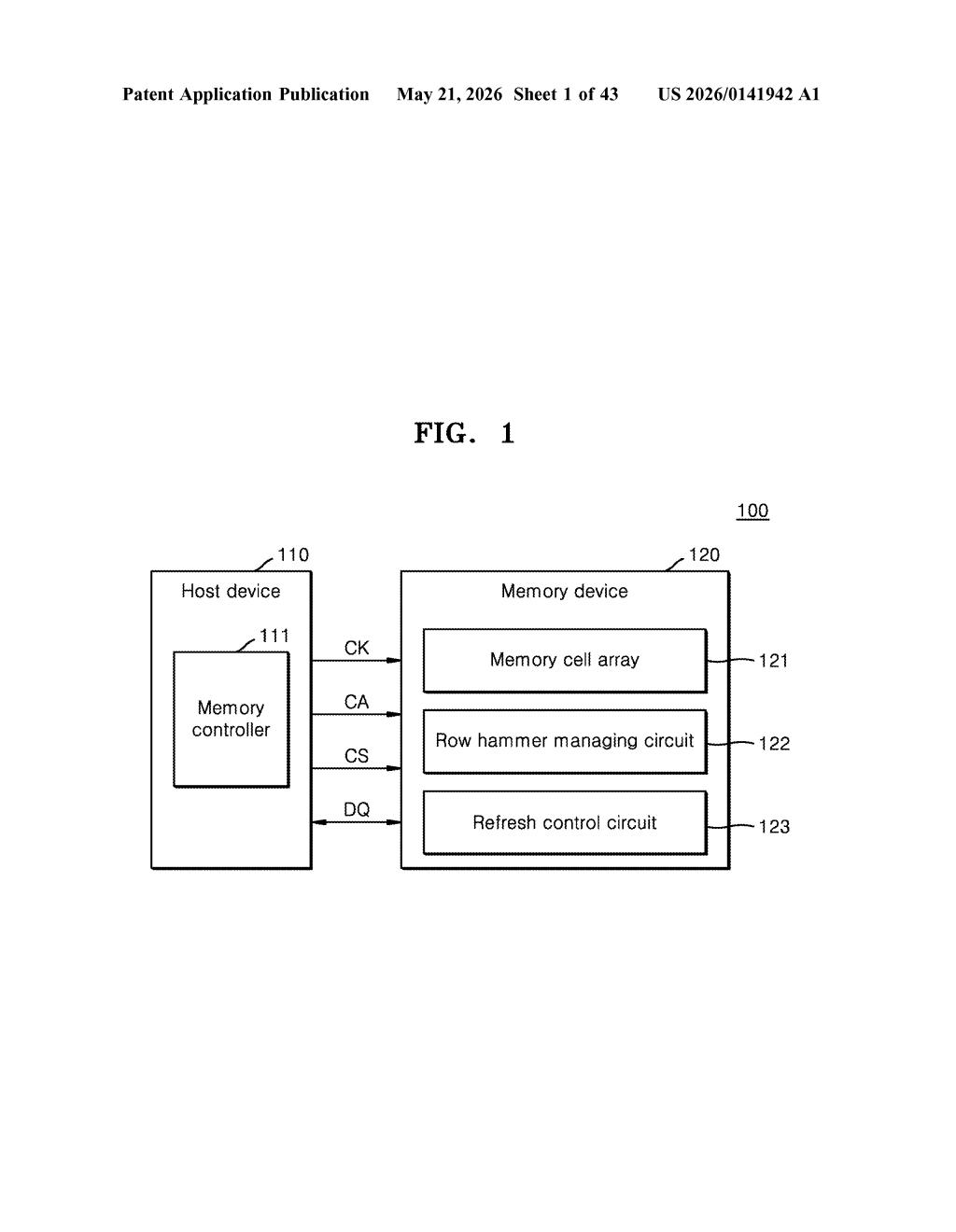
What Samsung's row hammer defense actually does
Imagine someone repeatedly knocking on the walls of neighboring apartments to disturb the residents inside — that's roughly what a row hammer attack does to your computer's RAM. By reading the same memory location over and over, an attacker can cause bit flips in nearby rows, potentially corrupting data or escalating privileges.
Samsung's patent describes a memory controller that watches the stream of addresses coming from the host processor and figures out whether an attack is happening — and crucially, what kind of attack it is. Is the attacker hammering rows evenly across memory (uniform), or are they clustering hits in certain spots (non-uniform)? That distinction determines which refresh strategy kicks in.
Instead of just refreshing blindly, the controller tracks the attack's pattern size and only fires a targeted refresh command every L accesses, where L matches the detected pattern. This keeps the memory healthy without flooding the system with unnecessary refresh cycles that slow everything down.
How the controller detects patterns and triggers refresh
The patent covers a row hammer mitigation system built into a memory controller — specifically designed for volatile memory (DRAM) in devices that communicate with a host over an interface like CXL (Compute Express Link, a high-speed interconnect used in servers and memory expansion cards).
The controller does two things simultaneously as it watches incoming row addresses:
- Pattern size detection — it measures how many distinct rows are being cycled through in a repeating sequence (the "pattern size").
- Row distribution analysis — it classifies the distribution of hammered rows as either uniform (evenly spread across memory) or non-uniform (clustered in specific regions).
The distribution type is the key decision branch. A uniform attack suggests a broad, possibly automated sweep; a non-uniform one suggests targeted hammering of specific memory regions. Each type calls for a different refresh management strategy, so the controller picks the right one rather than applying a one-size-fits-all response.
Finally, every L accesses — where L corresponds to the detected pattern size — the controller issues a refresh management command and a target row address to the DRAM array, refreshing only the vulnerable rows rather than doing a full memory refresh. The patent also references a CXL memory expansion device as a target platform, signaling this is aimed squarely at datacenter memory hardware.
Why smarter DRAM refresh matters for servers and CXL
Row hammer has been a known DRAM vulnerability for over a decade, but defenses have historically been blunt — refresh everything more often, which burns bandwidth and adds latency. As DRAM cell density increases (smaller nodes mean rows sit closer together), the problem gets worse, and dumb refresh strategies become increasingly expensive.
This patent is aimed at the CXL memory expansion market, where Samsung and others are selling large pools of DRAM that attach to server CPUs over a PCIe-style bus. In that context, unnecessary refresh cycles are a real performance tax. A controller that only intervenes surgically — and knows the difference between a uniform sweep and a targeted cluster attack — could let CXL memory modules maintain higher effective bandwidth while still defending against one of memory's nastiest hardware-level exploits.
This is solid, practical security engineering — not flashy, but exactly the kind of low-level work that actually ships in enterprise DRAM products. The distinction between uniform and non-uniform attack distributions is a genuinely useful refinement over existing mitigation approaches, and the CXL framing tells you Samsung is thinking about this for its datacenter memory expansion lineup, not just consumer DIMMs.
Get our take in your Top Stories
Liked this breakdown? Add Patentlyze as a preferred source on Google, and our plain-English take shows up more often in your Top Stories the next time Samsung patent news breaks.
There are more where this came from
We read every patent application Big Tech publishes and send you the ones worth knowing. Plain English, free, every week.
Want this weekly breakdown for a company we don't cover? Patentlyze Pro →