
Samsung Patents a Smartwatch That Boosts Signal Strength Through Its Wireless Charger
Inside a smartwatch there are precious few millimeters to spare, and every component competes for space. Samsung's new patent finds a clever way to make the wireless charging coil pull double duty as part of the antenna system.
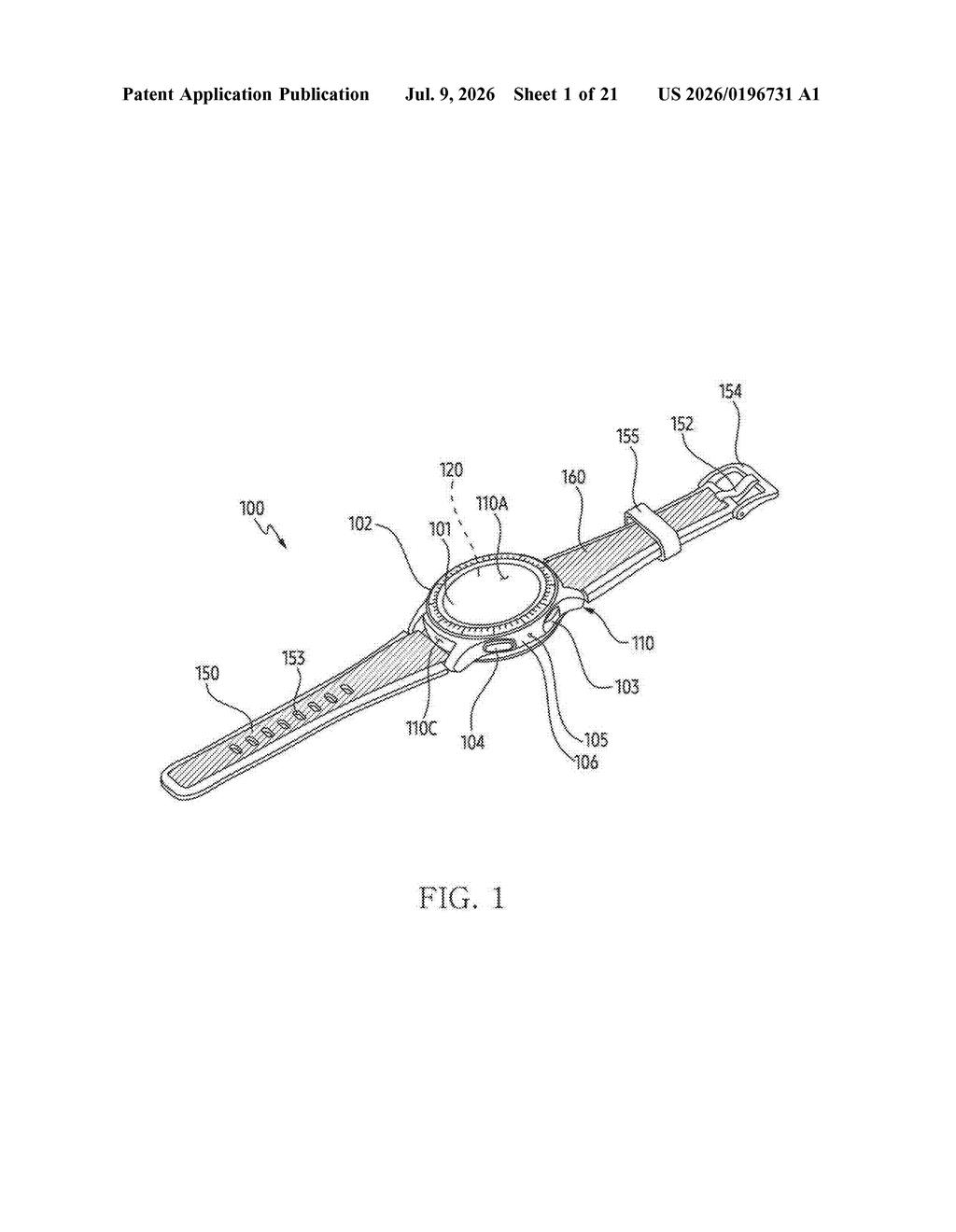
How Samsung's watch uses its charger coil for radio signals
Imagine trying to fit a Wi-Fi radio, a Bluetooth chip, a heart-rate sensor, a battery, and a wireless charger inside something smaller than a stack of three quarters. That's the engineering puzzle every smartwatch maker faces, and one of the biggest headaches is getting a decent antenna into that tiny space.
Samsung's patent describes a design where the metal band around the watch face acts as the main antenna, which is already common. What's new is how the system sets up its electrical foundation: a thin conductive plate sits between the wireless charging coil and the main circuit board, and the patent wires everything together so that the charging coil, the display, and that conductive plate all act as a shared electrical ground for the antenna. Instead of adding dedicated antenna-support hardware, Samsung is making existing parts work harder.
The practical upside is that you could get a better or more consistent radio signal without making the watch any thicker or more complex to assemble.
How the conductive member ties the coil into the antenna ground
The patent covers a wearable device (almost certainly a smartwatch) built around a metal frame that doubles as a radio antenna. A wireless communication circuit on the main circuit board sends and receives RF signals through that frame, which is a standard approach in thin wearables where a traditional antenna would take up too much room.
The new element is a conductive member, essentially a flat conductive plate or shield, placed in the gap between the wireless charging coil and the printed circuit board. This plate is electrically connected to both the charging coil and the circuit board's ground (the electrical reference plane that everything else in the device is measured against).
By linking the charging coil, the display, and the conductive member all together as a shared ground for the antenna, the design solves a tricky interference problem: wireless charging coils can disrupt antenna performance if they're not properly integrated into the antenna's electrical environment. Treating them as part of the ground plane rather than obstacles means the antenna behaves more predictably.
In short, the patent describes a way to make three existing components (the coil, the display stack, and a thin conductor) cooperate so the metal frame can act as a reliable antenna without needing extra dedicated parts.
What this means for future Galaxy Watch antenna design
Wearable antennas are notoriously hard to design because the human body absorbs radio energy and the watch case leaves almost no room for optimization. Using the charging coil as part of the ground structure means Samsung can potentially improve signal reliability on future Galaxy Watch models without adding thickness or weight. For you as a user, that could translate to fewer dropped connections and more consistent heart-rate data syncing when your watch is tucked under a sleeve.
This is also a manufacturing efficiency story. If a component already inside the watch can serve a second electrical purpose, the device needs fewer additional parts, which reduces cost and assembly complexity. That kind of internal consolidation tends to show up across product generations rather than as a headline feature, but it compounds over time into noticeably thinner and lighter devices.
This is a solid but unglamorous engineering patent focused on getting more performance out of parts that are already inside a smartwatch. It won't excite anyone who isn't designing wearable hardware, but the underlying problem it solves, fitting reliable wireless connectivity into an impossibly small space without adding components, is real and genuinely difficult. Samsung files a lot of antenna-optimization patents, and most of them make their way into shipping products.
Get our take in your Top Stories
Liked this breakdown? Add Patentlyze as a preferred source on Google, and our plain-English take shows up more often in your Top Stories the next time Samsung patent news breaks.
There are more where this came from
We read every patent application Big Tech publishes and send you the ones worth knowing. Plain English, free, every week.
Want this weekly breakdown for a company we don't cover? Patentlyze Pro →