
Adobe Patents an AI That Builds New Camera Angles From a Single Photo
You have one photo of an object, and you need to show it from the side, the back, or above. Adobe is patenting an AI system that generates those missing angles on its own, without a camera or a 3D artist.
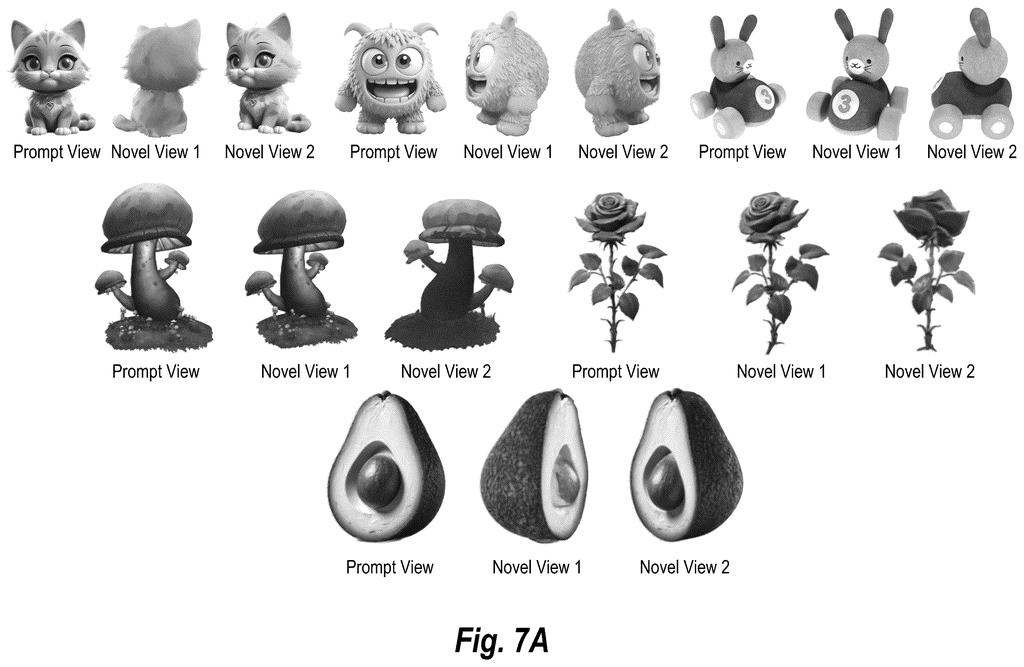
What Adobe's single-photo angle generator actually does
Right now, if you photograph a product from the front and later need a three-quarter view, you either reshoot it or hire someone to model it in 3D software. There is no easy shortcut, and that costs time and money. Adobe wants to change that with an AI system that takes your single reference photo and figures out what the subject would look like from a completely different angle.
The system works by having the AI build an internal, three-dimensional map of the subject based on that one image and a camera instruction telling it which new angle to aim for. From that 3D map, it then produces a finished, photorealistic image from the new viewpoint.
Adobe's long bet on generative image tools shows up clearly here. The practical payoff for you as a designer or photographer is skipping an entire reshooting session, or avoiding 3D modeling software entirely, just to get one extra view of something you already captured.
… generating, utilizing a diffusion model with an input camera condition and the prompt image, three-dimensional (3D) Gaussian point clouds representing the visual entity from a second viewpoint; and utilizing the 3D Gaussian point clouds to generate a new image depicting the visual entity from the second viewpoint.
Translation: The AI uses a diffusion model and new camera settings to turn a flat photo into 3D points that render a brand new perspective.
How the diffusion model builds a 3D point map then renders
The patent describes a pipeline with three main steps.
- Input: The system receives a single "prompt image" showing a subject (a product, a person, an object) from one particular angle, which the patent calls the "first viewpoint."
- 3D Gaussian point cloud generation: A diffusion model (the same class of AI used in image generators like Stable Diffusion) takes that image plus a camera condition, essentially a mathematical instruction describing the target angle, and produces a 3D Gaussian point cloud. Think of this as a dense cluster of floating dots in three-dimensional space, each dot carrying color and opacity information, together representing the shape and surface appearance of the subject from the new angle.
- Image rendering: Those 3D point cloud dots are then "splatted" into a final 2D image (a standard technique called Gaussian splatting), producing a photorealistic picture of the subject from the requested viewpoint.
The key design choice is using the diffusion model to generate the 3D structure rather than the final image directly. This separates geometry from appearance, which generally produces more geometrically consistent results than asking the AI to hallucinate a new angle in pure 2D space.
What this means for designers, photographers, and AI tools
For product photographers, e-commerce teams, and graphic designers, reshooting or 3D modeling for every angle is a real bottleneck. A tool built on this system could let you upload one photo and pull out the side, top, or back view in seconds. That is a genuinely useful shortcut for any workflow where you need multi-angle visuals but only captured one.
The bigger picture is that Adobe is working this into its AI image toolset (the Firefly family is the obvious home for something like this). If the quality is high enough for commercial use, it reduces the need for full product photo shoots or 3D scanning rigs, shifting some of that work from a studio problem to a software problem.
This is the 34th Adobe filing we've tracked since May in the AI photo editing race, building on work like cutting people from video and repositioning people in photos.
The reader-facing payoff here is pretty clear: one photo becomes many views, without a studio or a 3D artist. If it works reliably, that removes a genuine pain point for anyone who produces visual content at scale.
The technical bet is interesting. Using the AI to build a 3D scaffold first, then render the image from that, is a more principled approach than asking an image generator to directly invent a new angle. It should produce fewer floating limbs and melting edges, the failure modes that make purely 2D angle-synthesis look uncanny.
That said, the hard part is quality at the edges. Generating a 45-degree rotation from a front view is one thing; generating the back of a subject the camera never saw is essentially an educated guess dressed up as geometry. The patent describes the mechanism but says nothing about how well it handles those blind-spot cases, which is where users will notice success or failure most.
There are more where this came from
We read every patent application Big Tech publishes and send you the ones worth knowing. Plain English, free, every week.
The drawings
23 drawing sheets from US 2026/0278922 A1 · click any drawing to enlarge


Want this weekly breakdown for a company we don't cover? Patentlyze Pro →