
Salesforce Patents an AI That Debates Itself Before Writing a Service Plan
Instead of asking an AI for one answer, Salesforce's patent describes a system that asks the same AI to argue from multiple expert angles — then vote on the best result before handing you a plan.
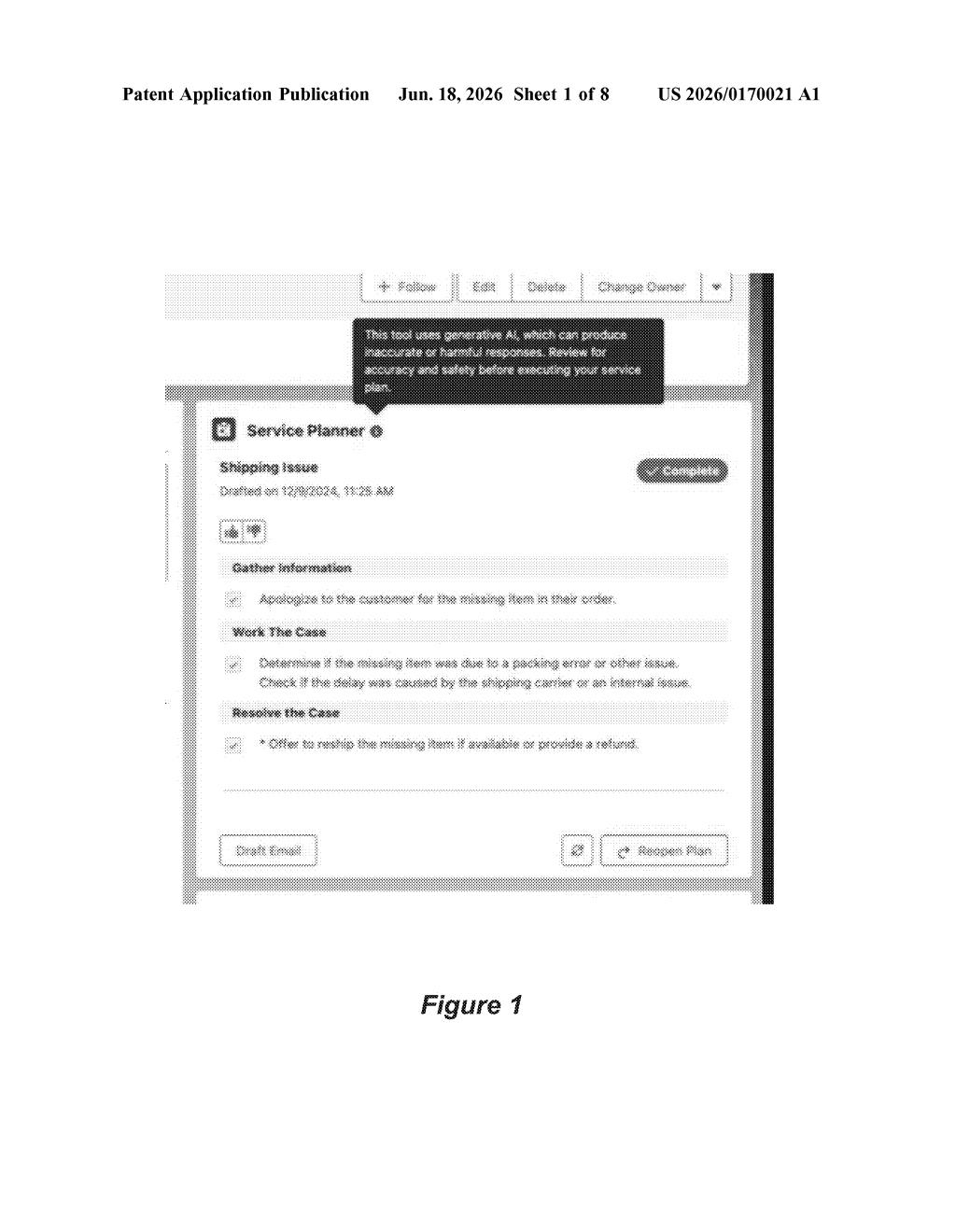
What Salesforce's multi-expert AI planning system actually does
Imagine you call customer support with a complicated billing problem. Instead of one agent making a quick judgment call, a panel of specialists — a billing expert, a contracts expert, a technical expert — each weighs in before anyone writes up a resolution plan. Salesforce is patenting an AI system that works the same way, except the 'panel' is entirely simulated inside a single large language model.
The AI is given a customer service case and told to think about it from several distinct expert perspectives simultaneously. Each perspective produces its own set of recommended steps. Then a built-in voting mechanism picks the plan that the combined perspectives judge to be the most well-reasoned.
The result is meant to be a better-quality action plan than you'd get from a single AI prompt — more thorough, less likely to miss an angle a real specialist would catch.
How the LLM runs its internal debate and voting process
The patent describes a method for generating service resolution plans using a large language model (LLM — the same kind of AI that powers tools like ChatGPT) that's been prompted to behave as multiple separate experts at once.
Here's how the process works at a high level:
- A prompt (a set of written instructions) tells the LLM to approach a given customer case from several distinct expert viewpoints — for example, a legal perspective, a technical perspective, and an account-management perspective.
- The LLM generates a separate set of recommended steps from each of those perspectives.
- A voting mechanism — essentially a built-in scoring step — evaluates all the competing step-sets and selects whichever plan is judged most logical and effective across the expert views.
- That winning plan is then surfaced as the final output.
The approach draws on a technique sometimes called multi-agent or ensemble reasoning (where a single model, or multiple models, tackle the same problem from different angles to reduce blind spots). Rather than relying on separate AI instances, Salesforce's design handles all of this within one LLM call driven by carefully crafted instructions.
What this means for customer service and AI-generated workflows
Customer service AI today often produces generic, one-size-fits-all responses that a single prompt generates. A system that forces the model to consider multiple professional angles before committing to a plan could meaningfully reduce errors in high-stakes support scenarios — think insurance claims, enterprise software outages, or financial account disputes — where getting the resolution steps wrong is costly.
For Salesforce, whose core business is CRM and customer service software, this fits squarely into its push to embed AI deeper into its Agentforce platform. If it works as described, agents using Salesforce tools could receive AI-drafted resolution plans that have already been internally stress-tested, rather than plans a human has to second-guess from scratch.
The underlying idea — making an AI argue with itself before committing to an answer — is a real and well-studied technique in AI research, so there's nothing far-fetched here. Whether Salesforce's specific prompt-and-vote implementation is novel enough to hold up as a patent is a separate question, but as a product strategy move it makes obvious sense given the Agentforce direction. Don't expect this to be a flashy public feature; it's the kind of behind-the-scenes reliability improvement that matters to enterprise buyers.
There are more where this came from
We read every patent application Big Tech publishes and send you the ones worth knowing. Plain English, free, every week.
Want this weekly breakdown for a company we don't cover? Patentlyze Pro →