
Adobe Patents a System That Finds the Right Page and Answers Your Document Questions
Adobe is patenting a way to let an AI read a document, figure out which page is relevant to your question, and then answer based only on that page. It sounds simple, but the page-finding step is doing a lot of the work.
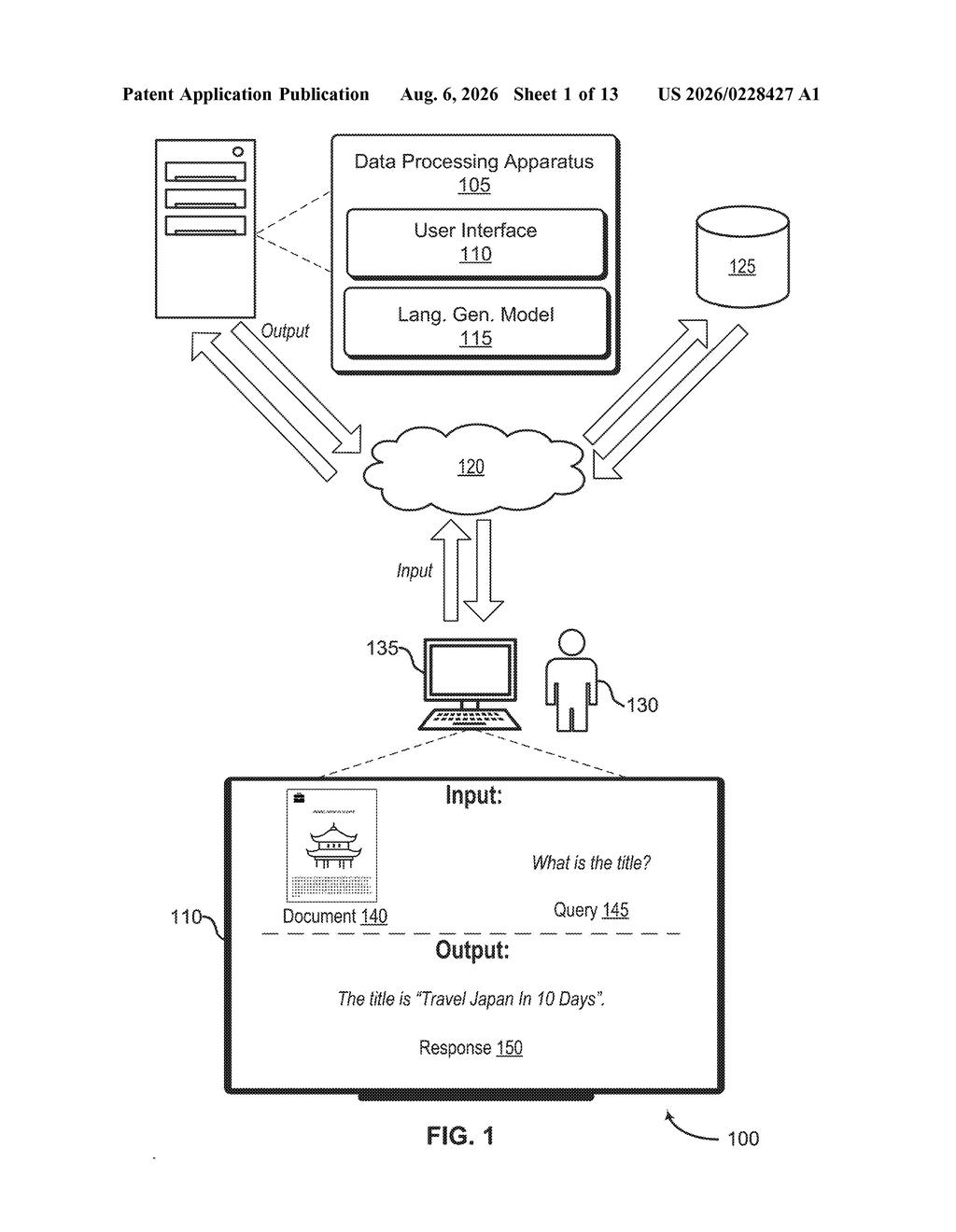
How Adobe's document question-answering actually works
Imagine you have a 200-page PDF and you want to know what the refund policy is. Right now, you might have to search, scroll, or skim. Adobe's patent describes a system where you just ask, and an AI finds the right page for you, then answers directly from it.
The key idea is that the AI does two things in sequence: first it identifies which page in the document is most relevant to your question, then it generates an answer using only that page. Separating those two steps is what makes the approach different from just throwing the whole document at an AI and hoping for the best.
This kind of tool could show up in Adobe Acrobat or similar PDF software, where you already have options to search and annotate documents. Adding a natural-language question-and-answer layer on top of that is a logical next step.
… identifying, using a language generation model, a relevant page of the document based on the query; and generating, using the language generation model, a response to the query based on the relevant page, wherein the response incudes the requested information about the document.
Translation: The system uses AI to pinpoint the exact page you need and then writes a summary that answers your specific question.
How the language model picks the right page before answering
The patent describes a two-stage pipeline built around a language generation model (an AI similar to the kind behind ChatGPT).
- Stage 1 - Page retrieval: The model receives the full document and the user's query, then identifies which specific page is most relevant to answering that query.
- Stage 2 - Answer generation: Using only that identified page as context, the model generates a direct response to the query.
The significance of separating retrieval from generation is that it keeps the AI focused. Language models can struggle when given too much text at once because they may pull from irrelevant sections or lose track of the most important content. Narrowing the context to a single page before generating an answer is meant to improve accuracy.
The patent is written broadly, covering documents of any type and queries of any form, which means Adobe is staking out a wide claim over this general approach rather than a narrow implementation detail.
A method, apparatus, non-transitory computer readable medium, and system for data processing includes receiving a document and a query requesting information about the document, identifying, using a language generation model, a relevant page of the document based on the query …
Translation: This technology describes a software process that takes your document and your question to find the right page automatically.
What this means for Adobe's document and PDF tools
Adobe Acrobat already has a built-in AI assistant that can answer questions about PDFs, so this patent appears to cover the underlying mechanics of how that feature, or a future version of it, decides which part of a document to draw from. If the page-identification step is proprietary, Adobe has legal breathing room to differentiate its document AI from competitors.
For you as a user, the practical promise is a more accurate answer engine inside PDF and document tools. Instead of an AI that occasionally cites the wrong section or hallucinates a detail that isn't in the file, the two-step approach is designed to keep responses grounded in a specific, verifiable page of the document you uploaded.
This is a fairly broad patent covering an approach that is already commercially deployed in various forms, including inside Adobe's own Acrobat AI assistant. The claim language is wide enough that Adobe is clearly trying to own the general concept, not just a specific algorithm, which will invite scrutiny during examination. Interesting as a business move, but not technically surprising.
There are more where this came from
We read every patent application Big Tech publishes and send you the ones worth knowing. Plain English, free, every week.
The drawings
13 drawing sheets from US 2026/0228427 A1 · click any drawing to enlarge


Want this weekly breakdown for a company we don't cover? Patentlyze Pro →
Be the first to weigh in