
Samsung Patents a Sampling-Grid Method for Pixel-Level Image Reconstruction
Samsung is patenting a way to rebuild images pixel-by-pixel using a grid that already knows where each reconstructed pixel should land — a low-level but potentially powerful approach to image upscaling, correction, or super-resolution.
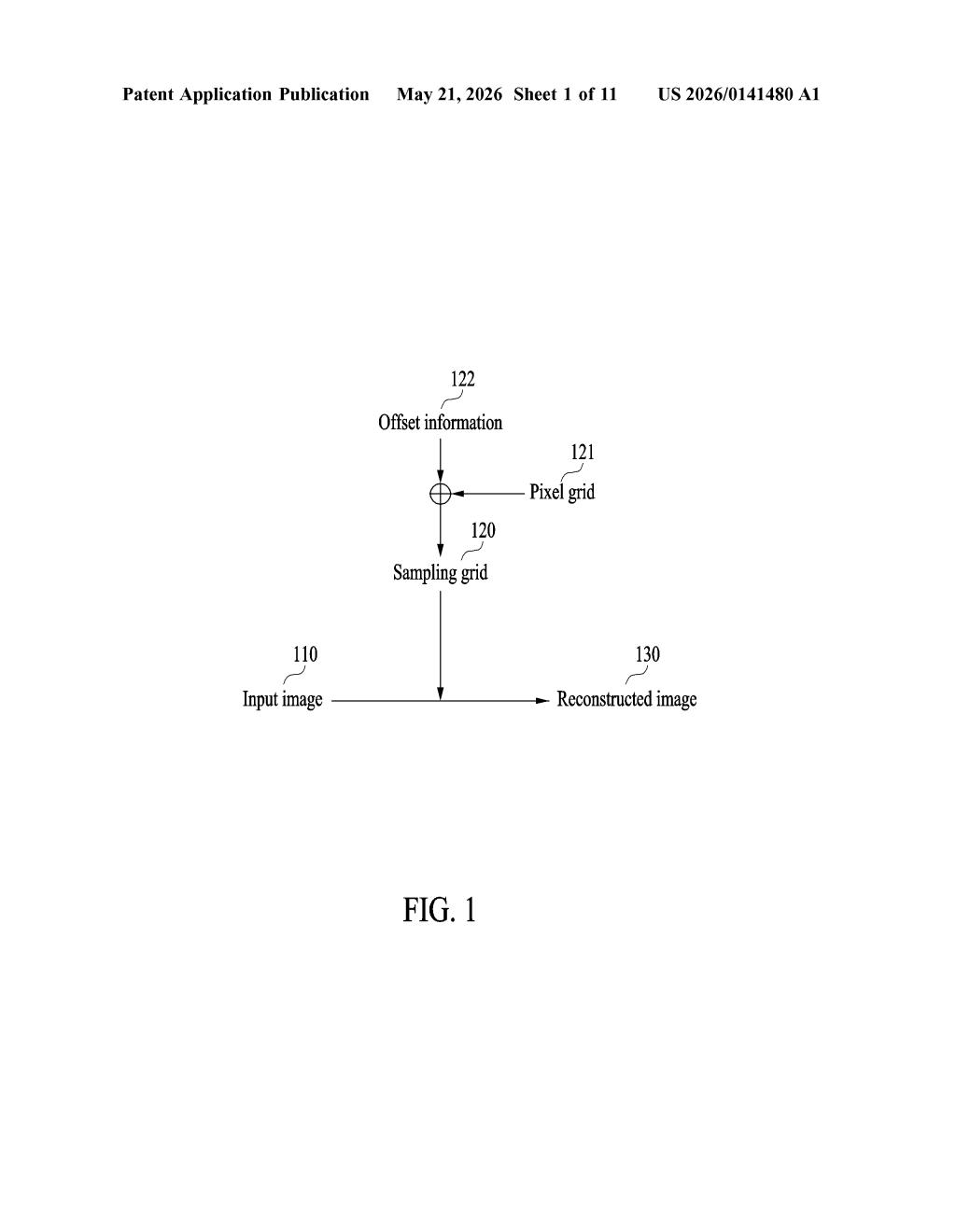
What Samsung's offset sampling grid actually does to your photos
Imagine you took a photo and some pixels came out blurry, misaligned, or just wrong. Instead of guessing how to fix them on the fly, what if your phone had a pre-built map telling it exactly where every pixel should be — and then just moved them there? That's the core idea here.
Samsung's patent describes a system that takes an input image and runs it through a sampling grid — essentially a coordinate map layered on top of a standard pixel grid. Each position in that map carries "offset information," which tells the system the precise location each pixel should be reconstructed at. The result is a reconstructed image where pixels have been repositioned or regenerated based on that pre-computed spatial guidance.
This kind of approach shows up in image upscaling, lens-distortion correction, and neural super-resolution pipelines. It's a building block, not a finished feature — but building blocks are what camera systems are made of.
How the pixel grid and offset data rebuild each image
The patent describes a three-step image processing pipeline:
- Input image acquisition — the system takes in a source image, which could come from a camera sensor, a video frame, or any pixel buffer.
- Sampling grid construction — a pixel grid (a regular, predefined coordinate lattice) is augmented with offset information, meaning each grid point is tagged with a displacement vector or target location that says "this pixel belongs over here, not where the grid originally placed it."
- Grid application and reconstruction — the offset-augmented sampling grid is applied to the input image, pulling or interpolating pixel values from the shifted locations to produce a reconstructed image.
The key technical idea is that the offset information encodes reconstruction location information per pixel — meaning the system doesn't just apply a uniform warp or scale; it can have a unique spatial correction for every single grid point. This is the same conceptual backbone used in deformable convolutions (a neural-network technique where filters learn to sample irregular spatial locations rather than fixed rectangular ones) and in spatial transformer networks.
The claim is intentionally broad — it covers the method regardless of how the offset grid is generated, which leaves room for both learned (neural) and hand-crafted (geometric) offset sources.
What this means for Samsung's camera and display pipeline
For Samsung, which ships hundreds of millions of camera-equipped devices per year, even small improvements in pixel reconstruction fidelity can meaningfully affect perceived image quality. This kind of spatially-aware grid approach is a core primitive in super-resolution, lens-distortion correction, and image stabilization — all areas where Samsung competes aggressively with Apple and Google.
The broad claim language is worth noting: by patenting the general method of applying an offset-assigned sampling grid to reconstruct pixels, Samsung is staking ground across a wide range of image processing use cases. Whether this ends up in a dedicated ISP (image signal processor) chip, a neural super-resolution model running on-device, or a display upscaling pipeline, the foundational mechanic is the same.
This is foundational plumbing — the kind of patent that doesn't announce a product but quietly secures IP around a technique that's already embedded in modern camera and display stacks. It's not thrilling on its own, but given how central spatial image reconstruction is to Samsung's camera differentiation strategy, it's the right kind of thing to be filing.
Get our take in your Top Stories
Liked this breakdown? Add Patentlyze as a preferred source on Google, and our plain-English take shows up more often in your Top Stories the next time Samsung patent news breaks.
There are more where this came from
We read every patent application Big Tech publishes and send you the ones worth knowing. Plain English, free, every week.
Want this weekly breakdown for a company we don't cover? Patentlyze Pro →