
Qualcomm Patents AI That Tells Networks Which Signals Work Best
Every time your phone connects to a cell tower, it sends back a report card on signal quality — and Qualcomm wants to make that reporting far more efficient using AI compression models called autoencoders.
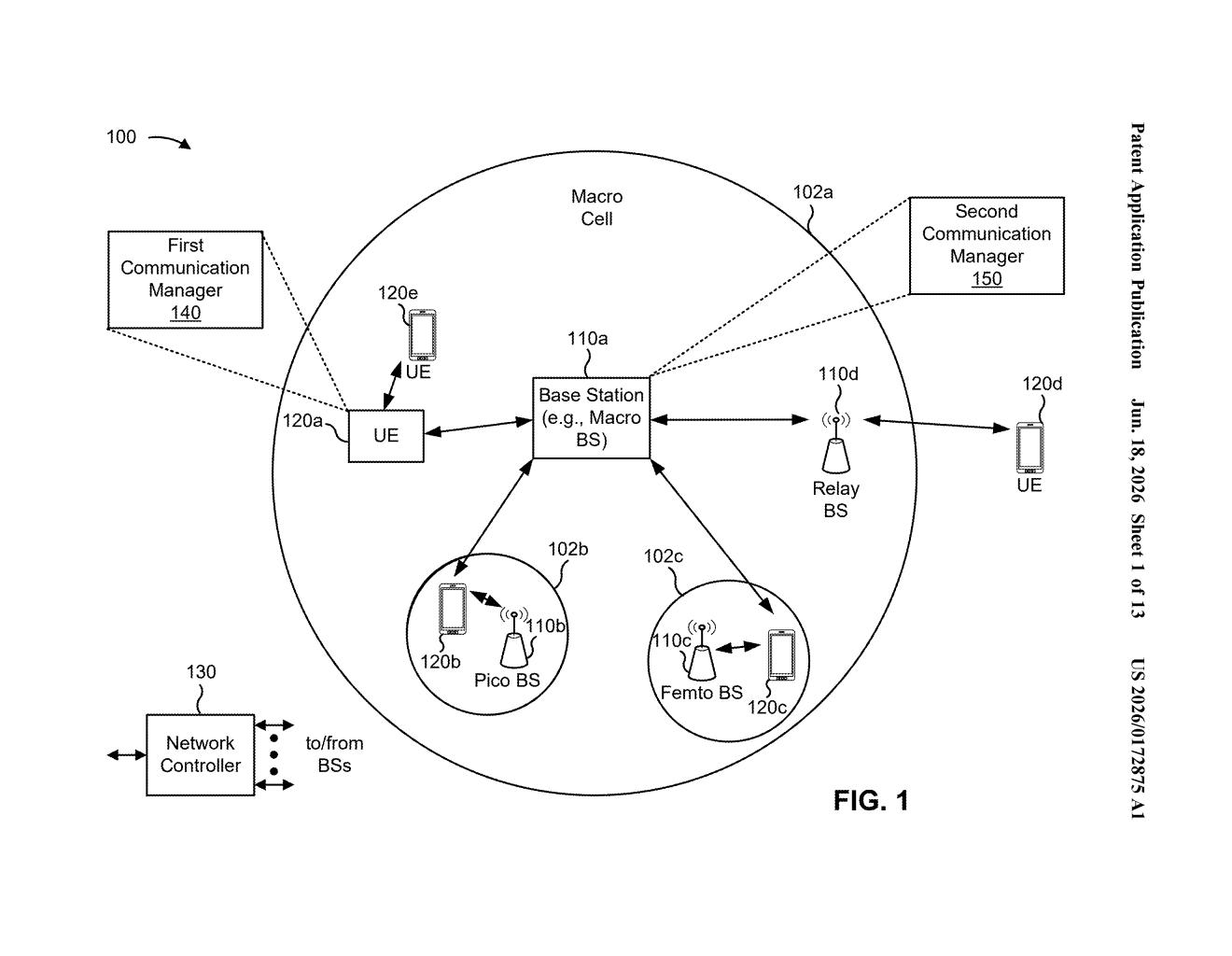
How Qualcomm's autoencoder feedback improves your signal
Picture your phone as a student constantly passing notes to a teacher (the cell tower) about how good the classroom reception is. Right now, those notes are fairly blunt — just numbers describing signal strength and direction. Qualcomm's patent describes a way for your phone to use small AI models to write much more compact, informative notes instead.
The AI models, called autoencoders, compress complex signal information into a tight summary before sending it. The phone picks the best autoencoder for current conditions and tells the tower which one it chose — then periodically updates that choice and the compressed signal data on a schedule the tower sets.
The result is that towers get better information about your signal using less airtime, which means the network can tune your connection more precisely. You probably won't notice it directly, but it's the kind of plumbing improvement that shows up as fewer dropped calls and faster speeds in crowded areas.
How the autoencoder index and latent vector reporting works
The patent describes a system where a wireless client (your phone or a connected device) selects from a library of autoencoders — small neural networks that compress data into a compact form and can reconstruct it on the other end. In wireless systems, they're used to compress channel state information (a detailed snapshot of how radio signals are traveling between the phone and the tower) before sending it back over the air.
Here's the flow the patent lays out:
- The network sends the phone a selection feedback configuration — essentially rules for when and how to report which autoencoder it picked.
- The phone picks the best autoencoder from its library for the current signal environment and reports back an autoencoder index (just a short ID number identifying its choice).
- The phone also generates a latent vector — the compressed representation of the channel that the chosen autoencoder produces — and sends that too, on either a fixed schedule or a dynamic one set by the network.
The tower receives both the index and the latent vector, reconstructs the full channel picture using its own copy of the matching autoencoder, and uses that to steer the signal more accurately toward the phone. The separation of index reporting and latent vector reporting gives the network flexibility to update each at different rates depending on how quickly conditions are changing.
What this means for 5G and next-gen wireless performance
Channel feedback is one of the biggest bottlenecks in modern cellular networks. The more accurately a tower knows what the signal looks like at your phone, the better it can focus its radio beams — which directly affects speed and reliability, especially in dense urban environments where many users compete for the same spectrum.
Qualcomm is one of the dominant suppliers of modem chips inside smartphones and base stations alike, so a patent like this could eventually show up in both ends of the link. If autoencoder-based feedback becomes part of a 5G or 6G standard, Qualcomm would be well-positioned to collect licensing fees from every company building hardware to that standard — making this filing as much about standards strategy as about any specific product.
This is a classic Qualcomm move: filing on a specific piece of AI-for-wireless infrastructure that sits squarely in the path of upcoming 3GPP standards work on AI-native air interfaces. It's dry as a patent filing gets, but the business logic is clear — own the feedback mechanism and you're embedded in every chipset built to the standard.
There are more where this came from
We read every patent application Big Tech publishes and send you the ones worth knowing. Plain English, free, every week.
Want this weekly breakdown for a company we don't cover? Patentlyze Pro →