
Sony Patents an AI System That Turns Patient Sensor Data Into Caregiver Conversations
Sony is patenting a system that watches a patient's sensor data around the clock, picks out the moments worth talking about, and automatically drafts comments — including direct questions — for healthcare providers or community members to respond to.
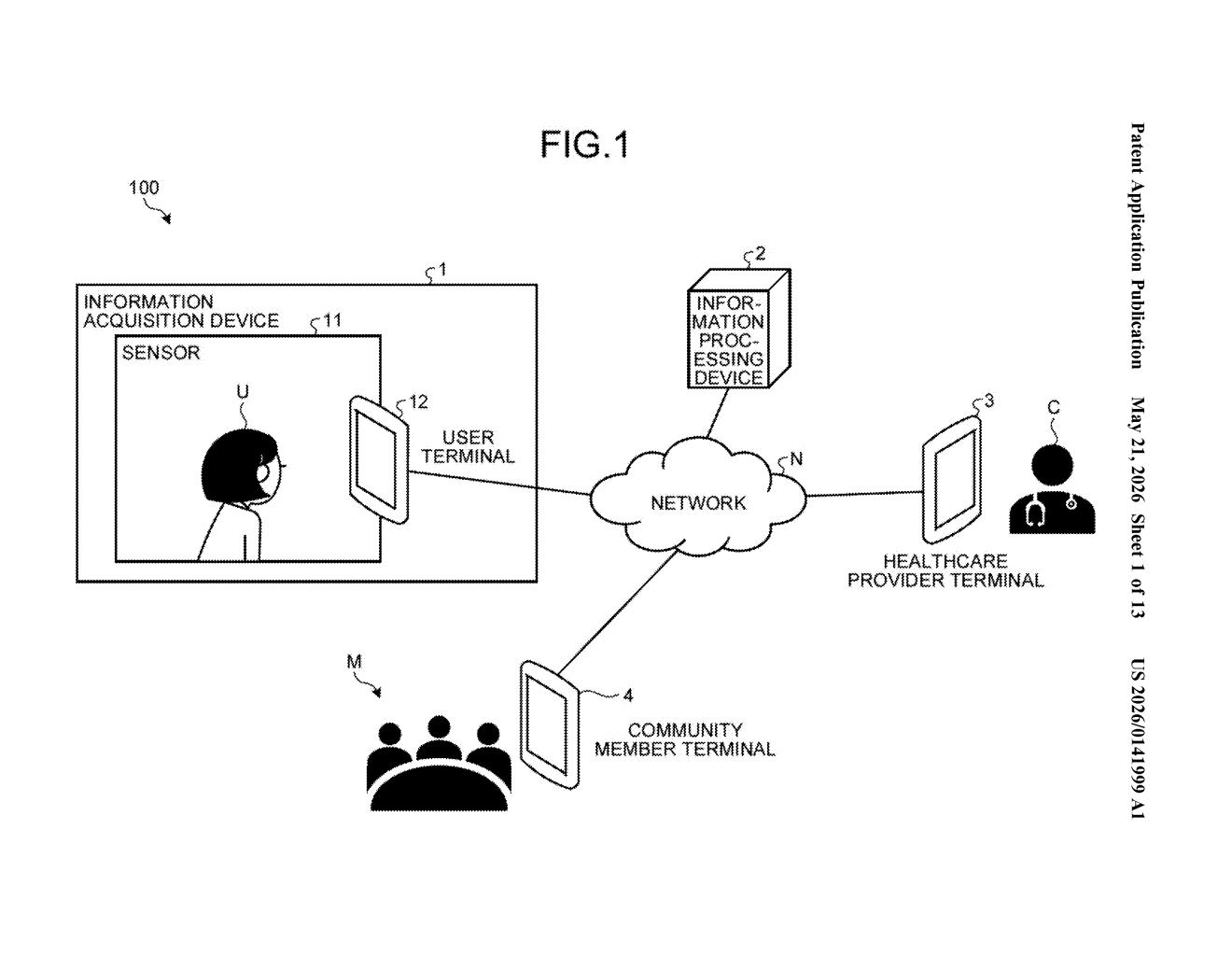
What Sony's patient-monitoring comment system actually does
Imagine your elderly parent wears a health sensor at home. Most of the day, nothing remarkable happens — but one afternoon their activity drops sharply, or their sleep pattern shifts. Who notices? And who brings it up with the doctor?
Sony's patent describes a system designed to close that gap. It continuously reads sensor data from a patient's wearable or home device, identifies situations that stand out from their normal daily routine, and then automatically generates content — including a specific inquiry comment — that gets surfaced to healthcare providers or community members. Think of it as an AI that not only flags "something seems off" but also drafts the conversation-starter: "Your patient was unusually sedentary between 2–4 PM — is everything okay?"
The patent mentions both healthcare provider terminals and community member terminals, suggesting the system is designed to loop in a broader circle of care, not just a single doctor.
How the system extracts situations and generates inquiry comments
At its core, the system has three steps: ingest sensor data, identify noteworthy situations, and produce structured content around those situations.
Sensing data intake is broad by design — the patent doesn't lock in a single sensor type, which means it could pull from wearables, in-home environmental sensors, or other patient-adjacent devices. The key output of this stage is a stream of the patient's daily activity and health signals.
Situation extraction is where the intelligence lives. The system doesn't just relay raw numbers — it identifies which situations deserve attention from the full picture of a user's daily life. This implies some form of pattern recognition or anomaly detection (spotting deviations from baseline behavior, for instance).
Content generation takes the flagged situation and wraps it in a human-readable format, including an inquiry comment — a prompt or question directed at whoever receives the notification. The involvement of both healthcare provider terminals and community member terminals in the patent's figures suggests the generated content routes to different audiences depending on context.
The patent's CPC class (705/2) places this squarely in healthcare data processing, and the overall architecture resembles a lightweight clinical decision-support layer sitting on top of consumer or medical-grade sensor hardware.
What this means for remote patient monitoring and care networks
Remote patient monitoring is a crowded space, but most systems stop at alerting — they fire a notification and leave the human to figure out what to say or do next. Sony's approach of generating the conversation itself, specifically an inquiry comment, is a meaningful shift. It lowers the cognitive load on caregivers and could make follow-through more likely, especially in community-care contexts where the person receiving the alert isn't a medical professional.
For Sony, this fits a longer-term push into healthcare technology that complements its sensor hardware and entertainment ecosystem. The explicit mention of community member terminals is worth noting — it hints at a social or peer-support layer around patient care, which differentiates this from purely clinical monitoring tools.
This is a sensible, incremental patent in the remote patient monitoring space — the genuine insight is pairing anomaly detection with auto-generated inquiry prompts rather than raw alerts, which addresses a real usability gap. It's not a technical moonshot, but it's the kind of quiet UX improvement that could actually change whether caregivers act on data they receive.
Get our take in your Top Stories
Liked this breakdown? Add Patentlyze as a preferred source on Google, and our plain-English take shows up more often in your Top Stories the next time Sony patent news breaks.
There are more where this came from
We read every patent application Big Tech publishes and send you the ones worth knowing. Plain English, free, every week.
Want this weekly breakdown for a company we don't cover? Patentlyze Pro →