
Qualcomm Patents AI That Measures the Distance Between Bluetooth Devices More Precisely
Bluetooth can already estimate how far away a device is, but walls, furniture, and signal reflections make those estimates unreliable. Qualcomm's new patent uses a two-step AI pipeline to clean up that mess and produce tighter distance readings.
How Qualcomm's AI judges distance from Bluetooth signals
Imagine you're trying to find your keys using a Bluetooth tracker. Your phone knows a signal is coming from somewhere nearby, but because the signal bounced off the wall, the floor, and your couch before arriving, the distance estimate is off by a meter or two.
Qualcomm's patent describes a system that feeds those messy Bluetooth signal measurements into two AI models working in sequence. The first model digs out the useful patterns buried in the raw signal data. The second model takes those patterns and produces a concrete distance estimate between the two devices involved.
The approach is specifically aimed at so-called multipath environments, the technical term for places like homes and offices where signals scatter off surfaces before reaching you. That's exactly where current Bluetooth distance tools struggle most.
How the two-model pipeline processes channel phase data
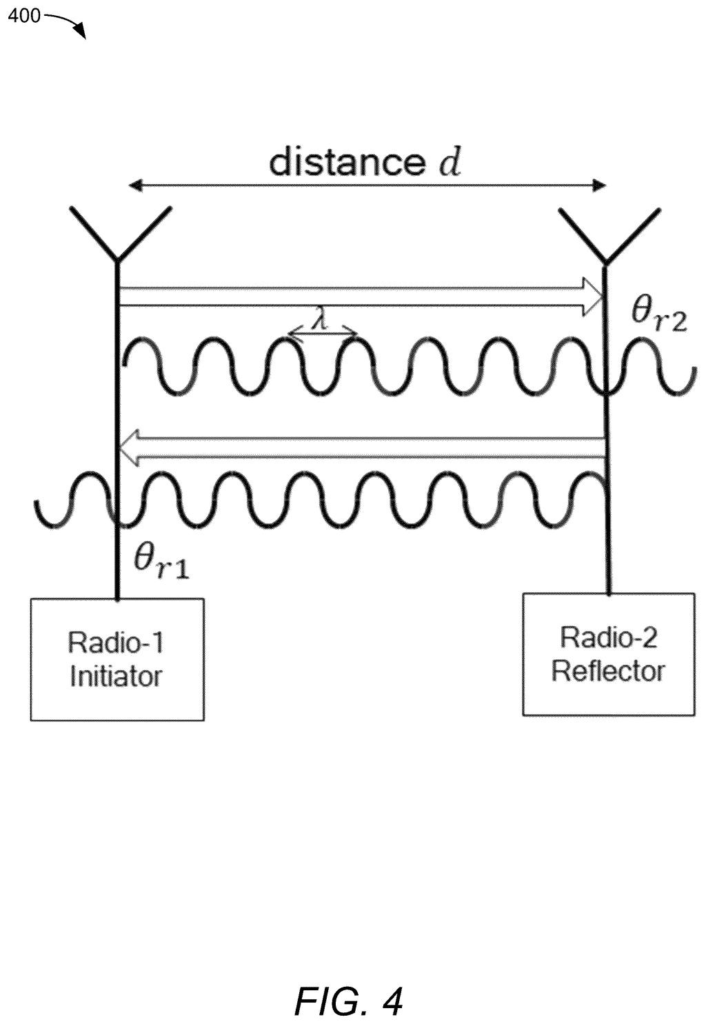
The patent centers on Bluetooth channel sounding, a feature added to Bluetooth 6.0 that lets two devices measure the distance between them by exchanging radio signals and analyzing the phase of those signals (think of phase as the timing fingerprint of a wave).
The raw output of that exchange is called root channel measurement information, essentially a snapshot of how the signal traveled through the air, including all its reflections and distortions. Qualcomm's system converts that snapshot into a format the AI models can read, then passes it through two models:
- Model 1 (feature extractor): Identifies the meaningful patterns in the signal data, filtering noise and pulling out the information most relevant to distance.
- Model 2 (regression model): Takes those extracted features and outputs a specific distance estimate, rather than classifying the result into buckets.
The key design choice is splitting extraction and estimation into separate models rather than using one end-to-end network. The patent argues this improves accuracy, especially in multipath environments where signals take multiple paths to reach their destination, a common problem indoors.
What this means for Bluetooth tracking and positioning
Accurate short-range positioning is becoming important across a wide range of consumer and enterprise applications, from asset tracking in warehouses to finding your phone in your own home. Bluetooth channel sounding is the industry's current best bet for centimeter-level ranging without GPS, but its accuracy falls apart indoors where signals bounce everywhere.
For you as a consumer, better ranging accuracy means AirTag-style trackers and phone-finding features that actually work when you're in the same building. For Qualcomm, baking AI-driven ranging into its Bluetooth chips would give device makers a ready-made accuracy advantage without extra hardware.
This is solid, incremental engineering work on a real problem. Bluetooth ranging has a known weakness indoors, and a two-stage AI approach is a sensible architectural fix. It won't make headlines the way a new chip does, but the kind of accuracy improvements this targets could make Bluetooth tracking actually useful day-to-day.
There are more where this came from
We read every patent application Big Tech publishes and send you the ones worth knowing. Plain English, free, every week.
The drawings
16 drawing sheets from US 2026/0222246 A1 · click any drawing to enlarge


Want this weekly breakdown for a company we don't cover? Patentlyze Pro →
Be the first to weigh in