
IBM Patents a Way to Search Corporate Databases With Plain Conversational Questions
Most corporate databases require a trained specialist to extract useful information — IBM's new patent describes a system that lets anyone ask questions in plain English and get real answers back, no query language required.
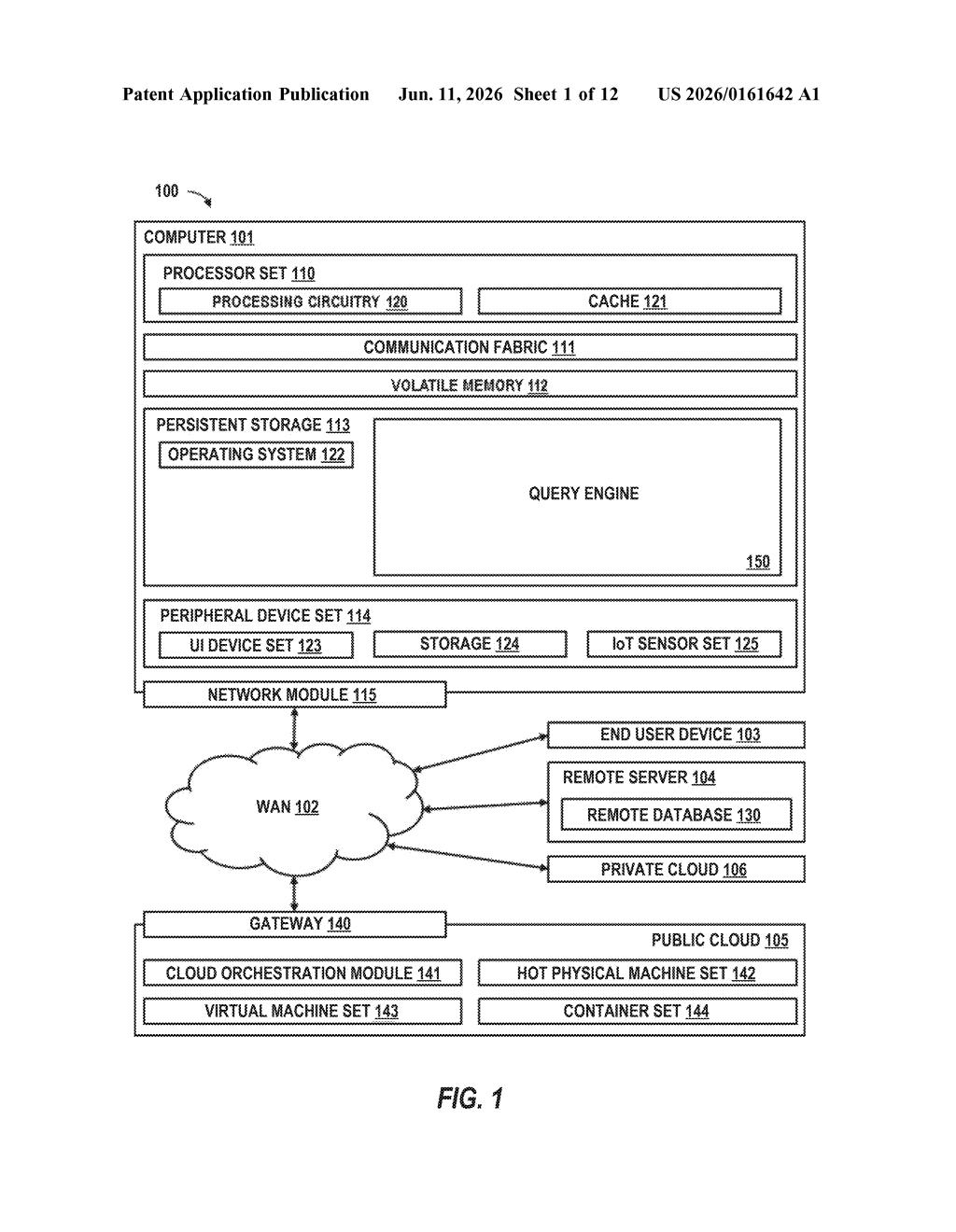
How IBM wants employees to query databases without coding
Imagine your company stores mountains of data about customers, suppliers, contracts, and employees — all connected in a web of relationships. Right now, getting useful answers out of that system typically means asking an IT specialist or data analyst to write specialized code. IBM's new patent describes a way to skip that entirely.
The idea is simple: you type a question in plain English — something like "Which suppliers have contracts expiring this quarter and also had delivery delays last year?" — and the system figures out what you're really asking, finds the relevant slice of the database, and translates your words into the precise technical query needed to get you an answer.
If the system generates a query that doesn't quite work, it doesn't just fail silently — it loops back and corrects its own mistakes until it gets it right. The goal is to make a company's internal data feel as easy to search as Google.
How the system maps plain English to graph database queries
The patent describes a multi-step pipeline for converting natural language questions into executable queries against enterprise graph databases — databases that store information as interconnected nodes and relationships (think a corporate org chart, but for every business entity and how they relate).
When a user submits a question, the system first identifies a subgraph — a focused, relevant slice of the larger database that matches the intent of the question, rather than scanning everything at once. It then maps the words in the query to specific nodes (entities like "supplier" or "contract"), attributes (properties like "expiry date"), and relationships (connections like "has a contract with").
From there, the system generates a Cypher statement — Cypher is the query language used to interrogate graph databases, roughly analogous to SQL for traditional databases. Rather than building each query from scratch, the system pulls from a library of template patterns covering common query types, then fills them in dynamically.
Critically, the system includes an iterative error-correction loop: if the generated Cypher statement is malformed or returns unexpected results, the system automatically diagnoses and fixes the problem, retrying until it produces a correct query. The system also offers recommendations — suggesting values or completions — to guide the user toward questions the database can actually answer.
What this means for enterprise data access
For large organizations, access to internal data is a persistent bottleneck. Analysts and IT teams spend significant time translating business questions into database queries — time that delays decisions. A system like this, if it works reliably, could put real data access in the hands of non-technical employees: HR managers, sales leads, compliance officers. Your question becomes the interface.
Graph databases in particular are increasingly used to model complex enterprise relationships — supply chains, risk networks, knowledge graphs — where simple table-based databases fall short. IBM's patent is betting that the combination of conversational AI and graph-native querying is where enterprise search is heading, and this filing stakes out the architecture for how that might work.
This is squarely aimed at IBM's core enterprise customer base — big companies with complex internal data and non-technical staff who can't exploit it. The self-correcting query loop is the genuinely interesting piece here: it's an acknowledgment that AI-generated database queries often get things wrong, and baking error correction into the loop is a practical, unglamorous solution to a real problem. Whether the system performs well enough in practice to replace a skilled analyst is the real question IBM hasn't answered on paper.
There are more where this came from
We read every patent application Big Tech publishes and send you the ones worth knowing. Plain English, free, every week.
Want this weekly breakdown for a company we don't cover? Patentlyze Pro →