
Salesforce Patents a System That Turns Old Chat Logs Into Step-by-Step Task Instructions
Instead of hand-writing instructions for AI agents, Salesforce wants to let the agents teach themselves by studying thousands of real support conversations that already happened.
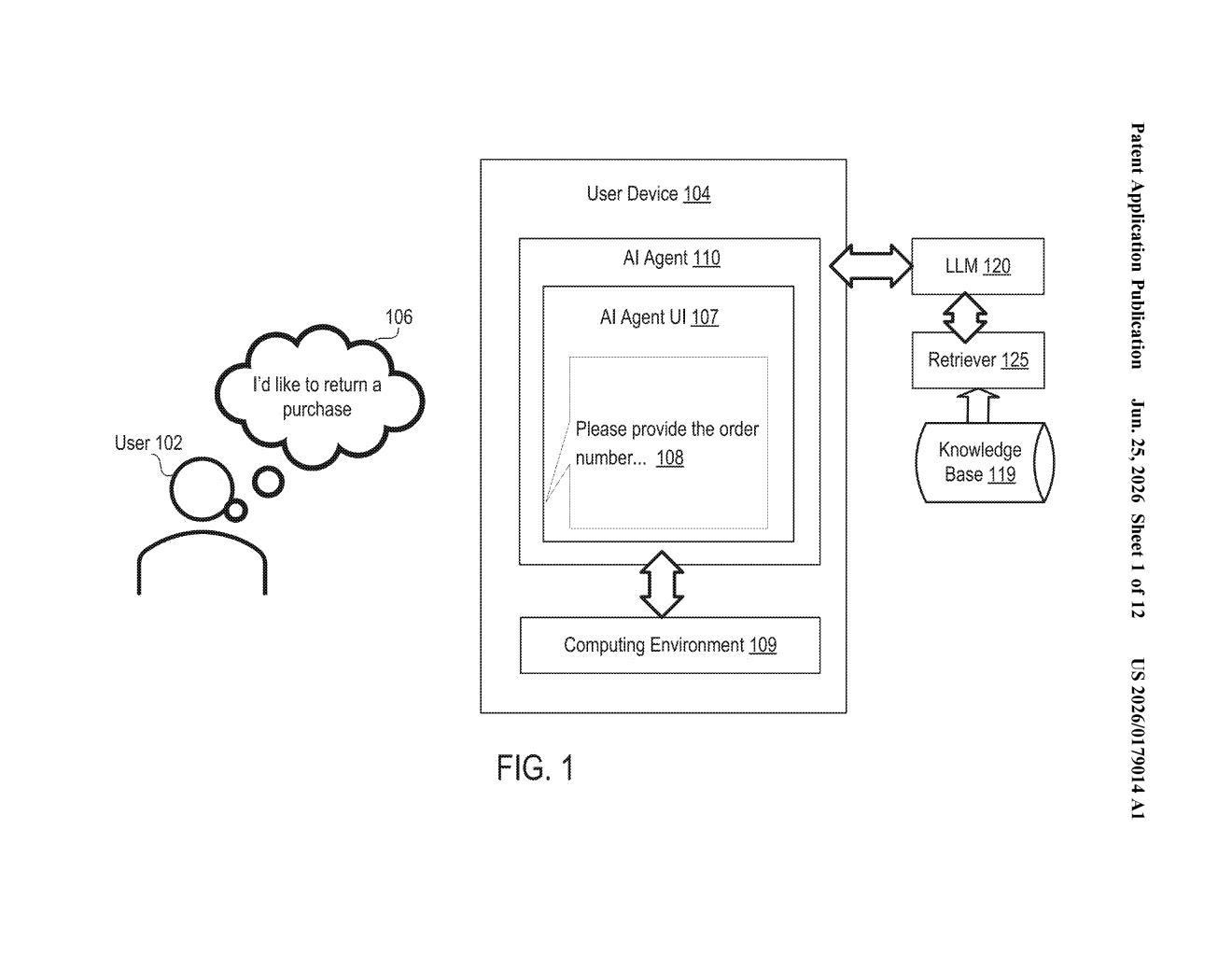
How Salesforce builds AI agent playbooks from real conversations
Imagine a company has thousands of old customer service chat transcripts sitting in a database. A customer asked how to reset a password, an agent walked them through it. Another customer asked the same thing, got the same answer a slightly different way. Salesforce's idea is to feed all those transcripts to an AI system that reads them, finds the common patterns, and writes a clean step-by-step guide for how future AI agents should handle that same request.
The result is a reusable "playbook" that an AI agent can follow the next time a customer shows up with that same need. Instead of guessing what to do, the agent has a structured set of steps derived from how real humans already solved the problem hundreds of times.
This matters because one of the biggest complaints about AI agents in business software is that they're inconsistent. They handle the same question differently each time. Automatically generating playbooks from proven past interactions is Salesforce's answer to that problem.
How the system picks conversations and writes the workflow
The patent describes a three-stage pipeline for turning raw conversation history into usable AI agent instructions.
- Normalize: A first language model reads a large batch of historic user-agent conversations and rewrites them into a consistent, structured format, so they can be compared fairly regardless of how different agents originally phrased things.
- Cluster by intent: An embedding model converts each conversation into a numerical fingerprint (a vector that captures its meaning). The system then measures the "distance" between those fingerprints to group together conversations that were about the same underlying goal, like canceling a subscription or tracking an order.
- Write the playbook: A second language model looks at the closest-matching conversations for a given intent and synthesizes them into a workflow description, essentially a structured set of steps the AI agent should follow when it encounters that intent in the future.
The finished workflow is then handed to the AI agent, which uses it as a reference when responding to new user requests. The claim is that grounding the agent in a data-derived playbook produces more consistent, accurate task execution than letting the agent improvise from a general-purpose language model alone.
What this means for AI-powered customer service software
For businesses running customer service, sales, or IT helpdesk operations on Salesforce's Agentforce platform, this is a meaningful quality-of-life improvement. Right now, building reliable AI agents often requires engineers to manually write detailed instructions for every scenario. Automating that process from existing chat logs could cut setup time dramatically and produce playbooks that reflect how the company's own staff actually handles problems, not just generic best practices.
For you as an end user, the practical effect would be AI agents that give you a consistent answer the second time you call in, not a completely different one depending on which version of the model handles your request. That consistency gap is one of the main reasons companies are still cautious about deploying AI agents for anything important.
This is a sensible, practical patent aimed squarely at one of enterprise AI's real pain points: AI agents that behave differently every time you talk to them. It's not a flashy research idea, but it directly addresses why large companies hesitate to deploy agents for anything customer-facing. Given that Salesforce's entire Agentforce strategy depends on enterprises trusting AI agents with real work, this kind of reliability infrastructure is exactly where they need to be investing.
There are more where this came from
We read every patent application Big Tech publishes and send you the ones worth knowing. Plain English, free, every week.
Want this weekly breakdown for a company we don't cover? Patentlyze Pro →