
Salesforce Patents an AI That Turns Video Meetings Into Automatic Summaries
Every meeting ends with someone asking 'can you send a recap?' Salesforce has filed a patent for an AI that handles that automatically, pulling highlights, action items, and notes directly from the video call.
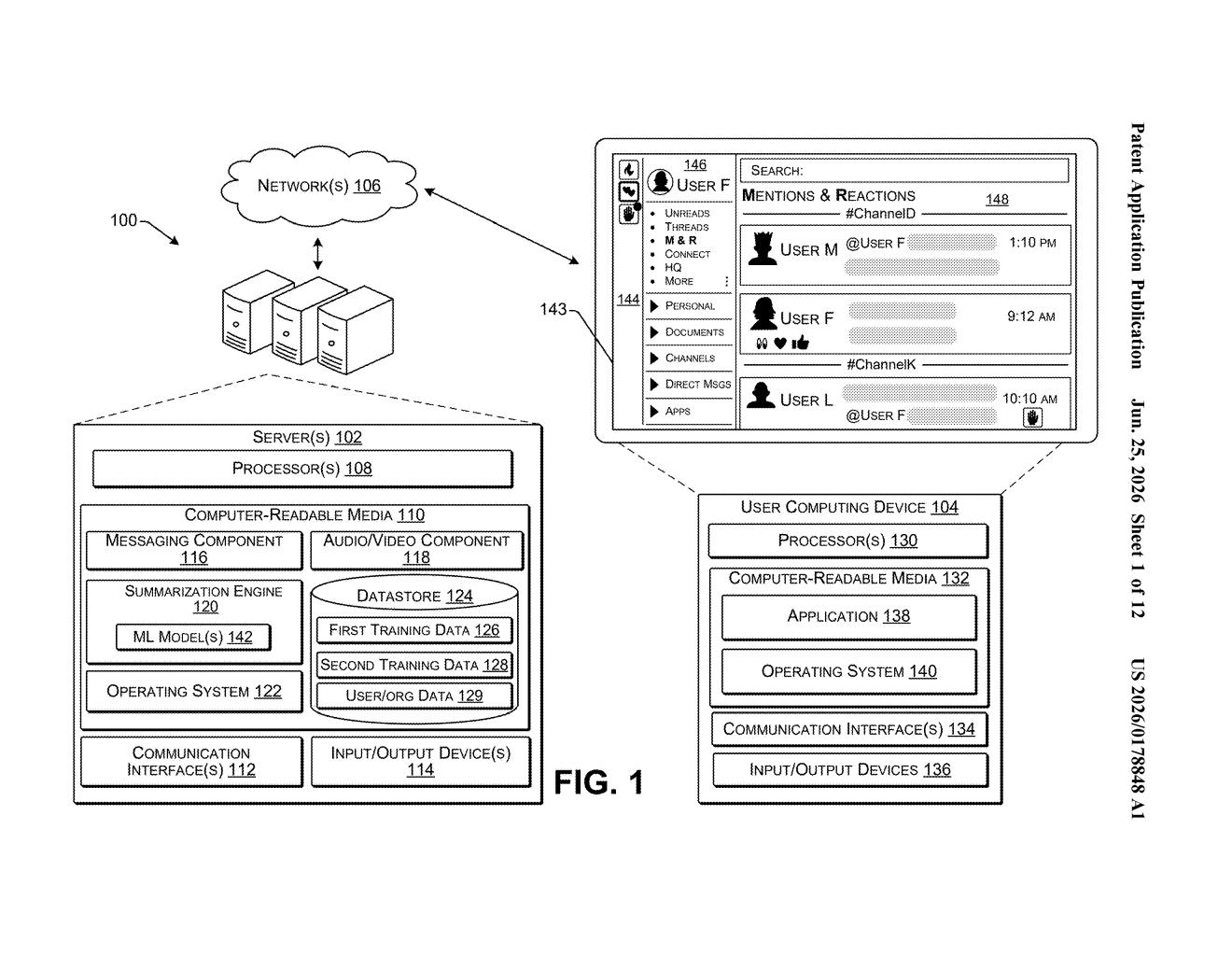
What Salesforce's meeting-summary AI actually does
Imagine you just sat through a 45-minute team call. Normally, someone has to write up what was decided and who's doing what. Salesforce's patent describes a system that does that for you, automatically, the moment the meeting ends.
The system records the video call, transcribes everything that was said, and then runs that transcript through an AI model. The model doesn't just produce a wall of text. It breaks the output into highlights, action items, and AI-generated notes, then sends that summary to everyone who was in the meeting.
What makes this a little more than a basic transcription tool is that the AI also pays attention to how people reacted during the meeting. Things like emoji responses, chat messages typed while someone was talking, and even gestures can all feed into what the model decides to flag as important.
How the model reads reactions, chat, and speech together
The patent describes a pipeline that starts the moment a video meeting begins. Audio and video from the call are captured alongside what the patent calls user interaction data, a catch-all term for chat messages typed during the meeting, emoji reactions, message threads, and detected gestures.
Once the meeting ends, a natural language processing (NLP) model (software that reads and interprets human language) converts the spoken audio into a written transcript. That transcript is then passed into a second machine learning model trained to produce structured summaries.
The output is broken into three components:
- Highlights: the key moments or decisions from the call
- Action items: tasks assigned to specific people
- AI notes: additional context the model flags as worth remembering
The summary is then displayed on the devices of the meeting participants via what the patent describes as a group-based communication system, which maps closely to a channel-based platform like Slack. The inclusion of emoji and chat reactions as model inputs is the most distinctive technical detail. The idea is that a burst of reactions around a particular moment signals importance, giving the model a signal beyond just the words spoken.
What this means for Slack and Salesforce meeting tools
Salesforce owns Slack, which already competes with Microsoft Teams and Google Meet on meeting and messaging features. Both of those platforms have rolled out their own AI meeting-summary tools (Copilot and Gemini, respectively), so this patent is Salesforce staking out its own technical approach to the same problem.
For you as a user, the practical difference is the emoji and chat-reaction angle. If the model is genuinely trained to weight moments that got a lot of real-time reactions, the summaries could be more accurate about what the room actually cared about, not just what was said the loudest or the longest. That's a meaningful distinction if your meetings are anything like most people's meetings.
This is a table-stakes patent for Salesforce. Microsoft and Google already ship this feature, so Salesforce needs its own IP foundation to build on in Slack without stepping on competitors' filings. The emoji-reaction angle is the one genuinely interesting wrinkle here. Whether it actually improves summary quality in practice is a real question, but it's at least a concrete differentiator worth watching.
There are more where this came from
We read every patent application Big Tech publishes and send you the ones worth knowing. Plain English, free, every week.
Want this weekly breakdown for a company we don't cover? Patentlyze Pro →