
IBM Patents AI That Scores Online Identity Checks Before Granting Access
Every time two computer systems verify each other's digital identities, something could go wrong. IBM wants an AI to judge whether that handshake is safe before it completes.
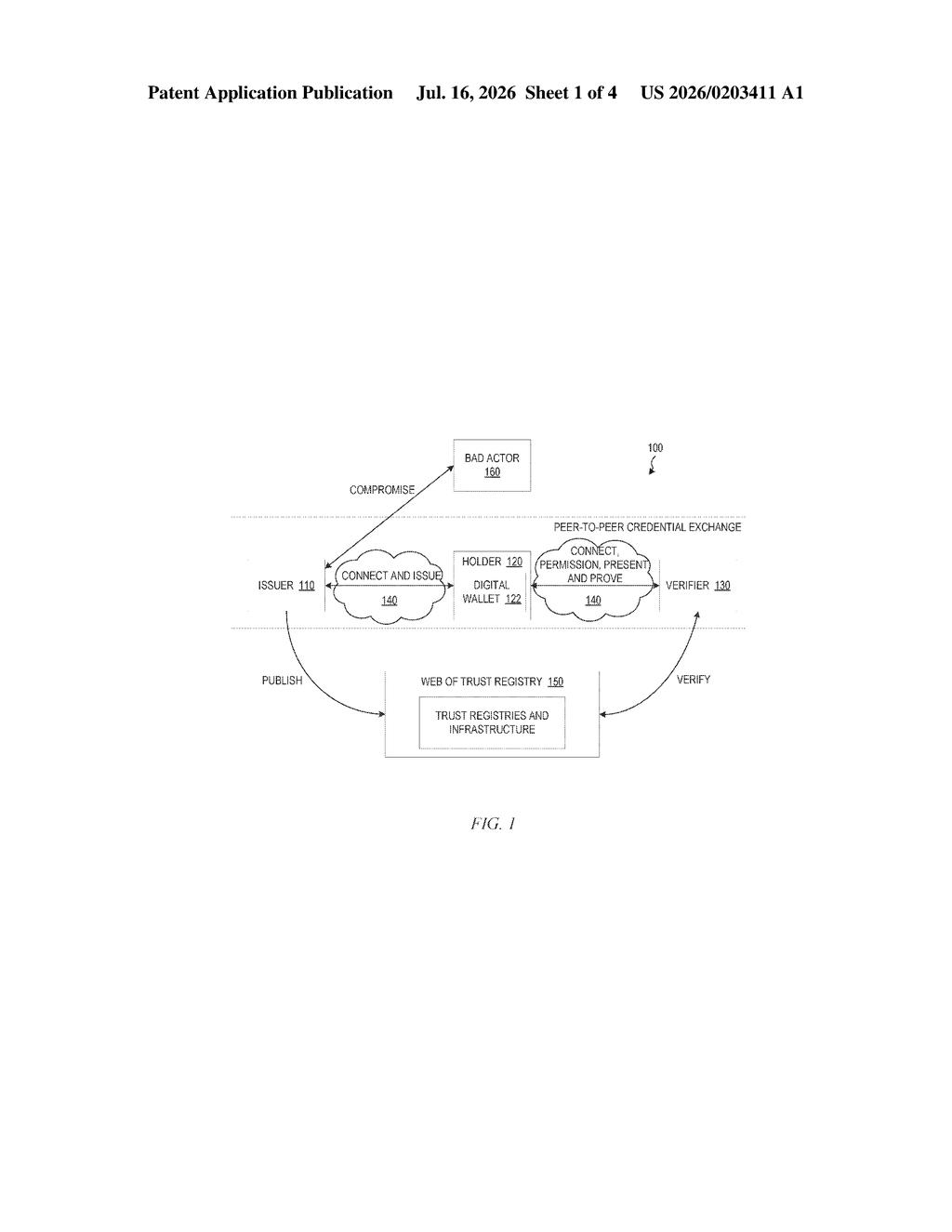
What IBM's AI identity risk-scorer actually does
Imagine two companies sharing data, and before any files move, a security guard checks both sides' credentials. IBM's patent describes something similar, but automated and powered by AI. A software agent sits inside each computer system and watches for moments when that system tries to prove who it is to another system, or vice versa.
When one of those identity checks happens, the agent quickly pulls together everything it knows about the interaction, who is asking, what they want, and what the history looks like, then hands that context to an AI language model. The model reads it and produces a risk score.
Based on that score, a set of rules either lets the interaction go through or blocks it on the spot. Think of it as a bouncer who consults an AI before deciding whether to open the velvet rope.
How the RAG prompt turns an interaction into a risk verdict
The patent describes a system built on top of what the industry calls a decentralized identity framework (a way for organizations to manage digital credentials without a single central authority controlling them). Inside that framework, IBM proposes a software component called a decentralized identity event agent that watches for identity-based interactions, moments when one computing system tries to authenticate itself to another.
When the agent spots such an interaction, it automatically assembles a dynamic RAG prompt. RAG stands for retrieval-augmented generation, which means the AI model doesn't just reason from memory; it also pulls in fresh, relevant context data (think: recent transaction logs, the requester's identity history, known policy rules) before generating its answer. The result is a risk assessment output, essentially a judgment call from the AI about how suspicious or safe the interaction looks.
That judgment feeds into a policy engine, which then decides whether to:
- Accept the identity interaction and let it proceed
- Reject it and block the exchange
The whole process is described as automatic and dynamic, meaning the AI is re-evaluated with fresh context each time, rather than relying on a static list of approved or blocked identities.
What this means for enterprise identity security
Enterprise security teams spend enormous effort managing who (and what system) is allowed to talk to what. Traditional approaches rely on static rules or credential lists that attackers can exploit once they find a gap. Bringing a context-aware AI into that decision loop means the system can catch unusual behavior even when the credentials themselves look valid, a much harder problem to solve with old-school rule sets.
For IBM's enterprise customers, this fits squarely into the zero-trust security model that large organizations have been moving toward, where trust is never assumed and every interaction is verified. If this ships in a product, it would likely land inside IBM's identity and access management stack, which already serves some of the largest banks and government agencies in the world.
This is a solid, practical application of AI to a real enterprise pain point, not a flashy consumer feature. The use of RAG is a sensible design choice because identity risk is deeply context-dependent, and a model that can pull in live data will outperform one that can't. Whether IBM can productize this before competitors in the identity-security space do the same thing is the real question.
There are more where this came from
We read every patent application Big Tech publishes and send you the ones worth knowing. Plain English, free, every week.
Want this weekly breakdown for a company we don't cover? Patentlyze Pro →