IBM
IBM · AI / ML · Filed Jan 9, 2025 · USPTO published Jul 9, 2026 · Jul 9 release
IBM Patent: Tracing AI Reasoning Paths to Detect Corrupted Trained Models
How do you know the AI model you're running is the one you think it is, and hasn't been swapped out or corrupted? IBM is filing a patent that answers that question by making the model verify itself during use.
- Publication number
- US 2026/0195620 A1(US20260195620A1)
- Applicant
- INTERNATIONAL BUSINESS MACHINES CORPORATION
- Filed · Published
- Jan 9, 2025 · Jul 9, 2026
- Inventors
- TYLER VEZIO RIMALDI, MICHAEL E GILDEIN, TABARI ALEXANDER, MARCEL SCHAAL
- Status when we published
- Waiting for an examiner
- Document
- 20 claims
- US classification
- 706/46
What IBM's AI model verification system actually does
Imagine you hire a specialist to make important decisions for your company, but you have no way to check whether they're actually the person you vetted or an imposter following different rules. That's roughly the problem with deploying AI models in high-stakes settings. You run the model, it spits out an answer, but how do you know it's the right model behaving the right way?
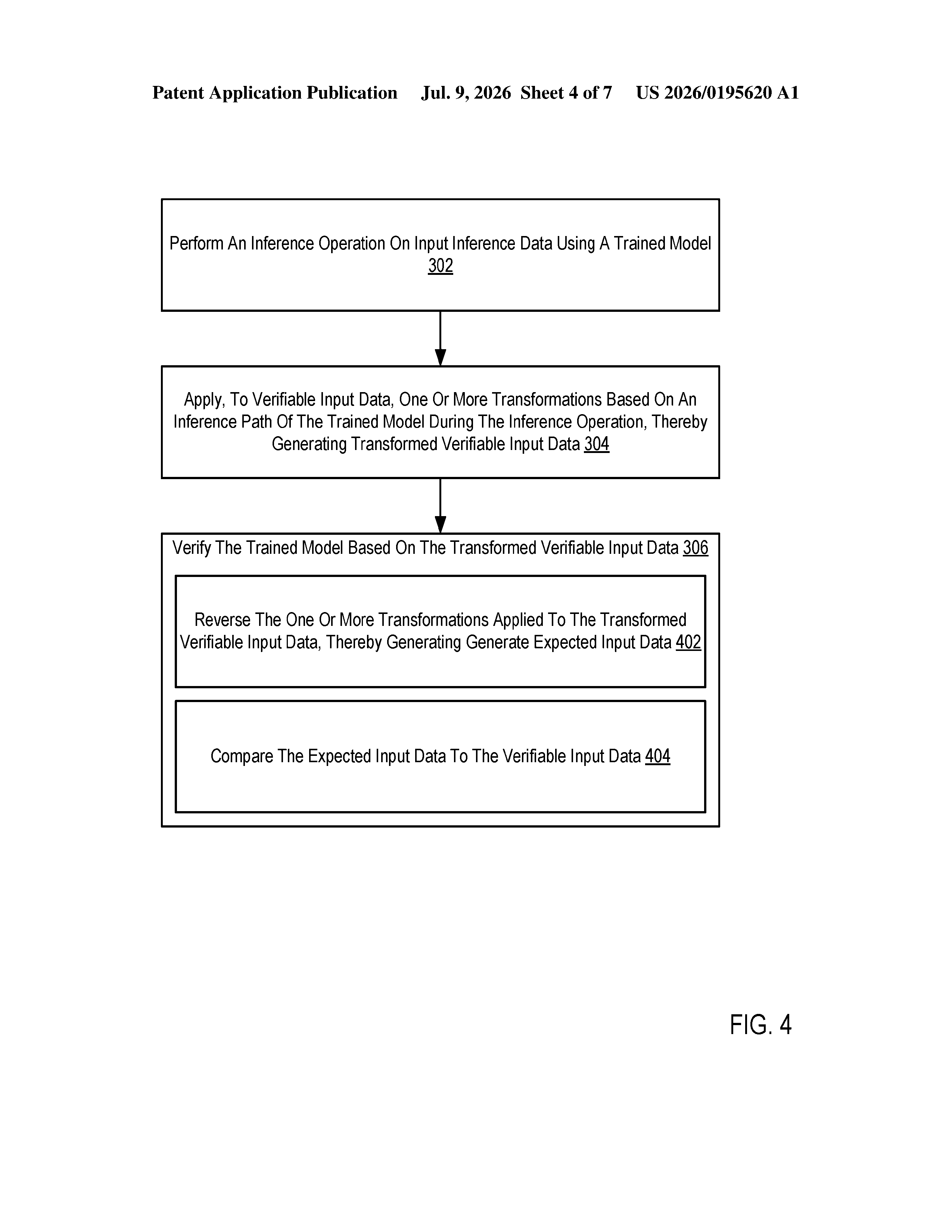
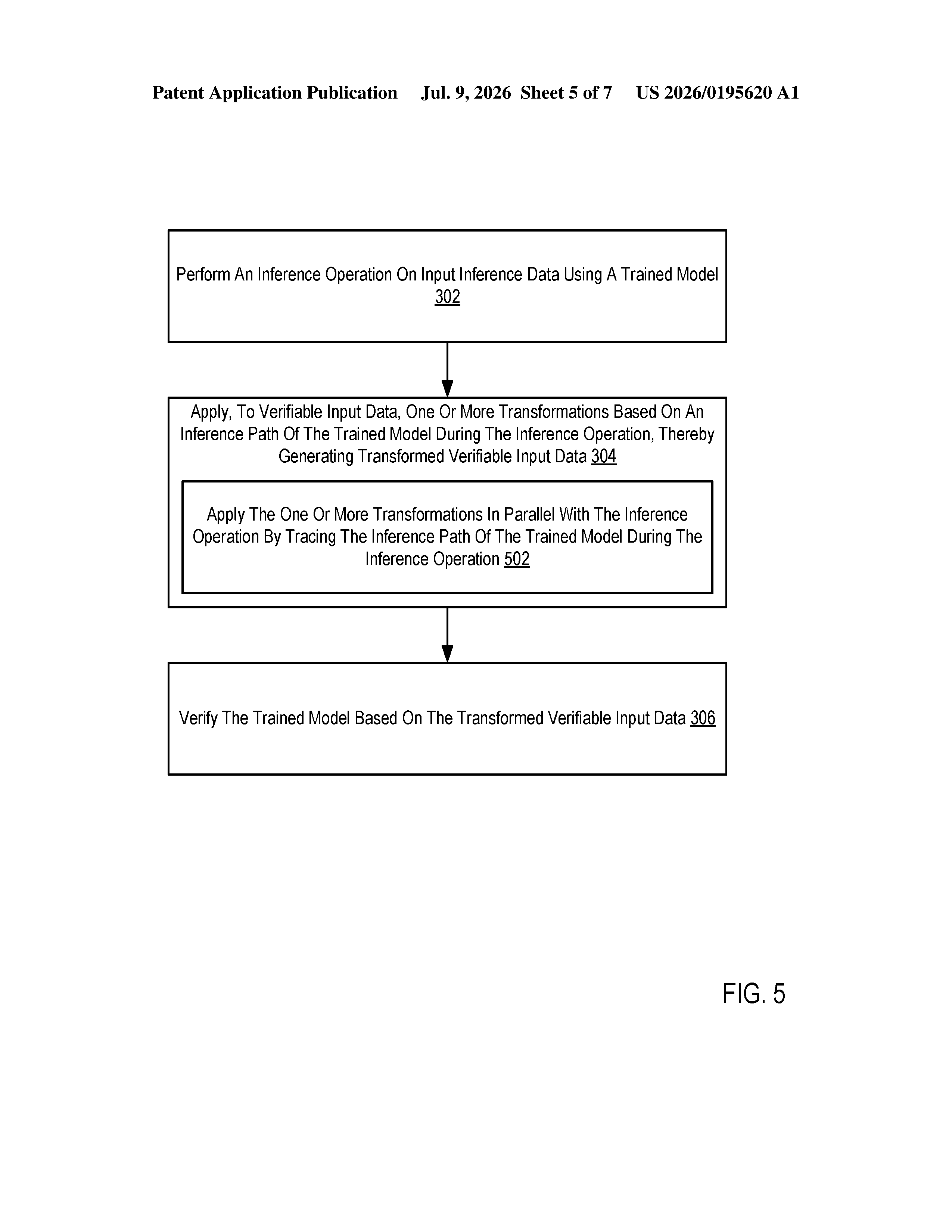
IBM's approach is to watch how the model thinks through a problem and use that thinking process as a kind of fingerprint. Every time the model processes your real data, the system also runs a separate set of test data through the same internal path the model just took. The result of that side-by-side test is then compared against what the model should produce, flagging anything suspicious.
Think of it like a built-in lie detector that piggybacks on every answer the model gives. You don't need to pause operations or run a separate audit. The verification happens as part of normal use.
How the inference path shapes the verification test
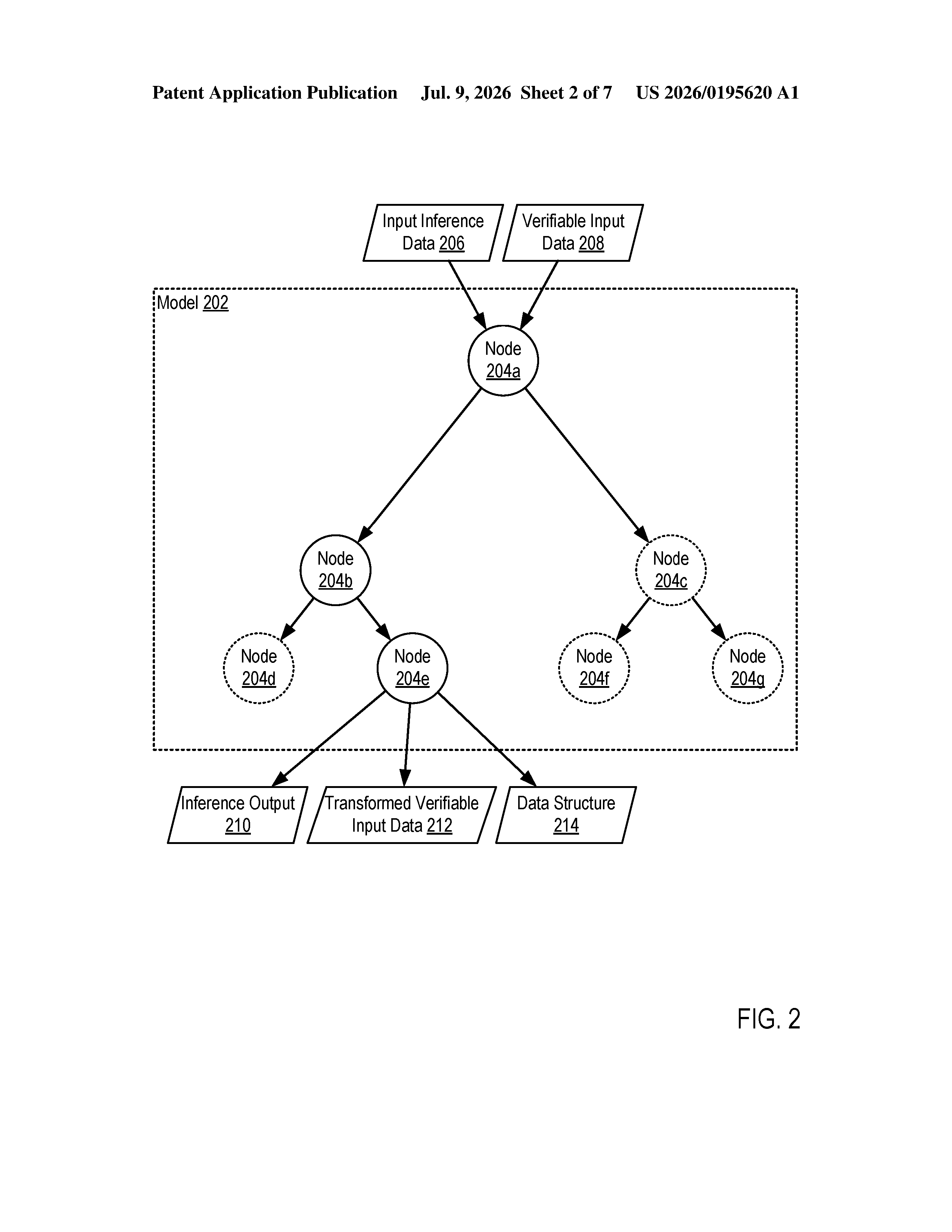
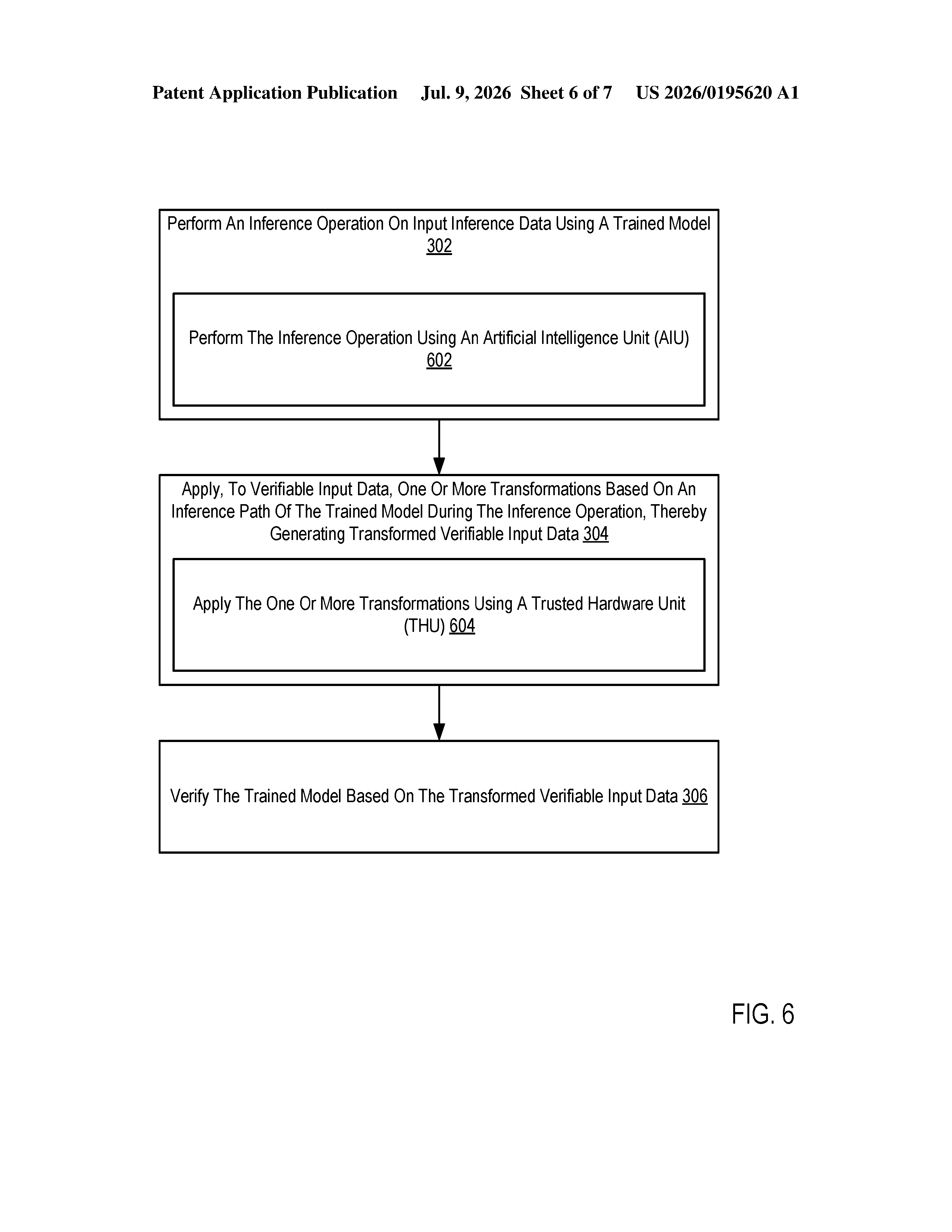
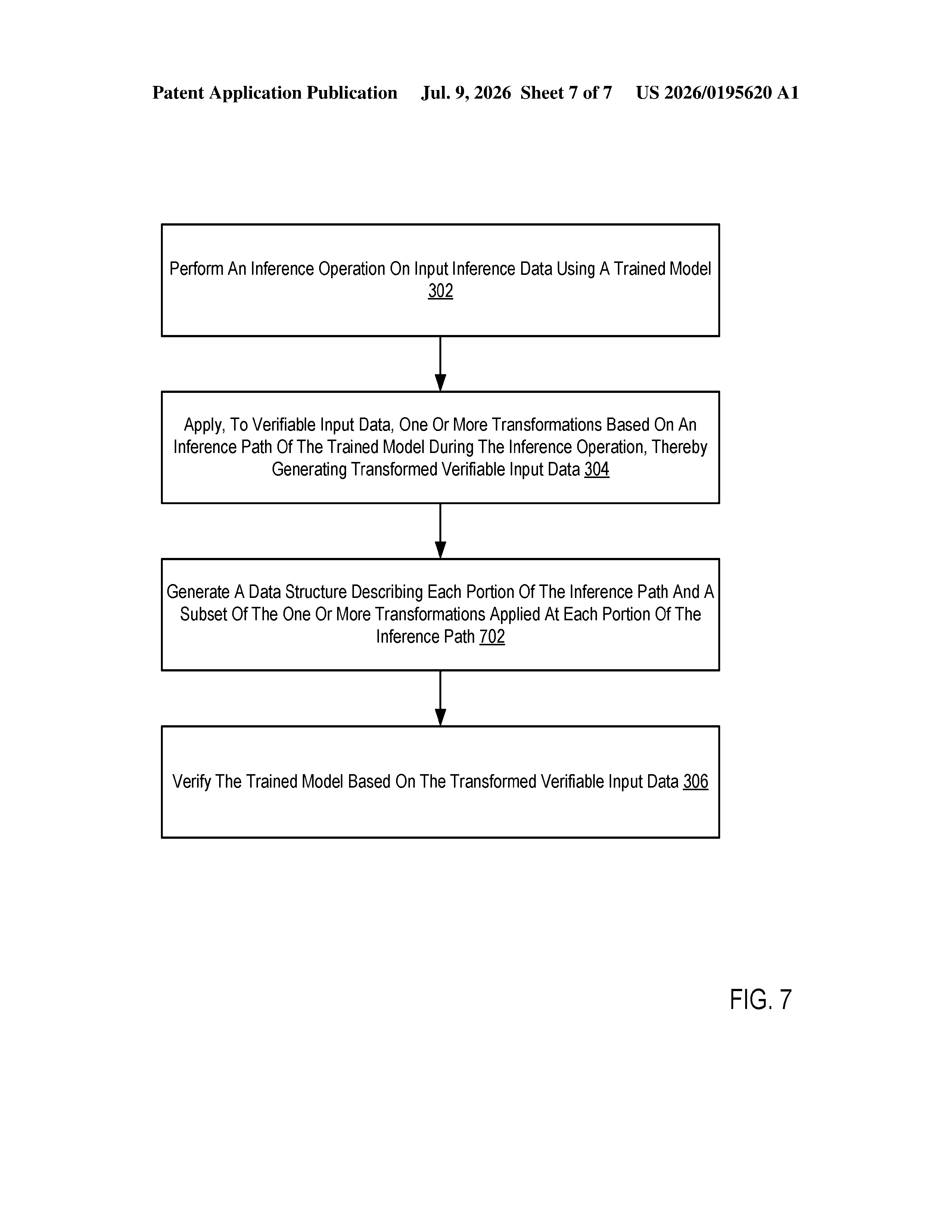
The patent describes a three-step process built around something called an inference path, which is the sequence of internal steps an AI model takes when processing an input and arriving at an output (think of it as the model's chain of reasoning, captured in real time).
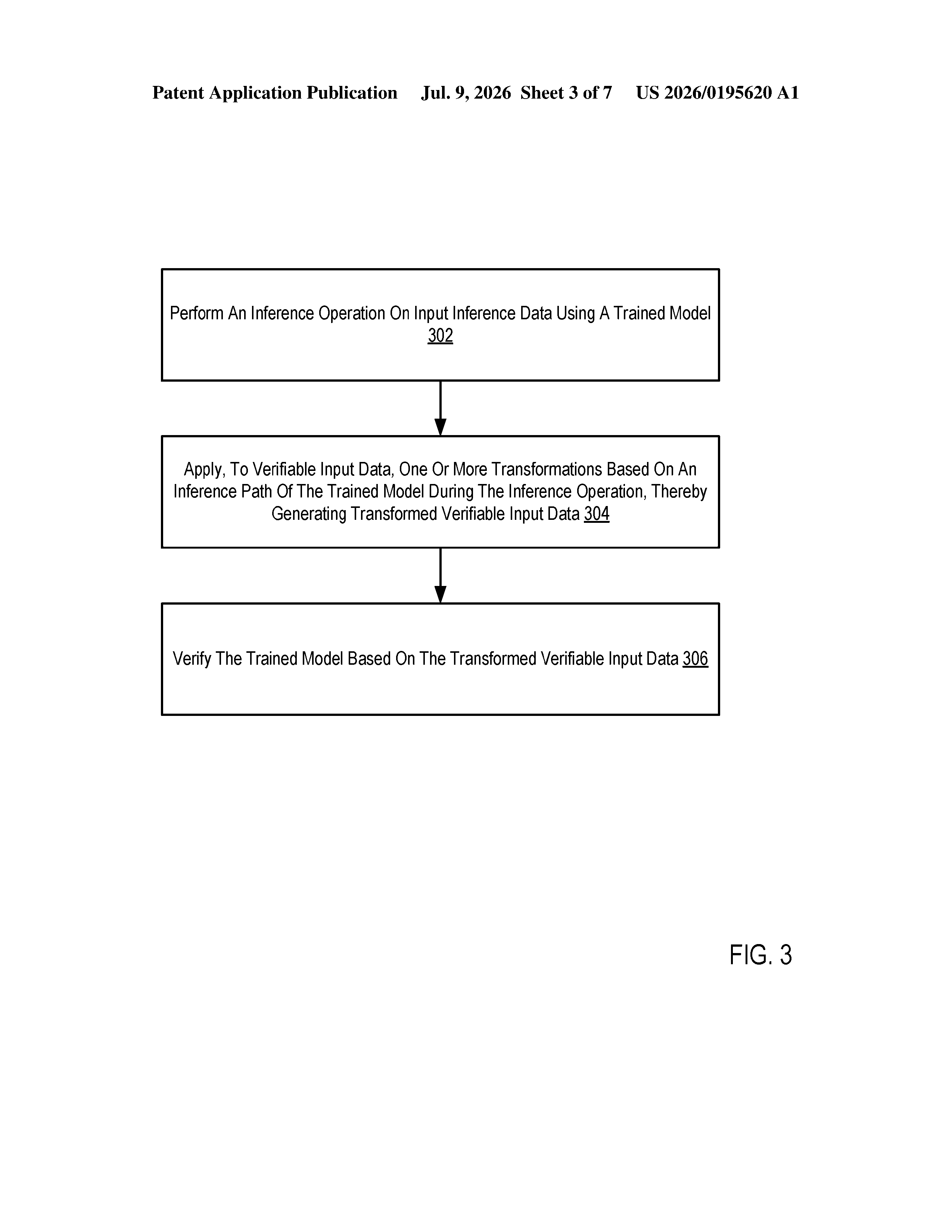
- Step 1 (Inference): The trained model processes real input data normally, producing its usual output while the system records which internal path through the model was activated.
- Step 2 (Transformation): A separate set of known "verifiable" test inputs is run through transformations that mirror that same internal path. This produces a transformed version of the test data whose expected output is already known.
- Step 3 (Verification): The system checks whether the model's output on the transformed test data matches what it should be. A mismatch signals that the model may have been altered, corrupted, or replaced.
The clever part is that the verification test is shaped by the model's own live behavior. An attacker who swaps or modifies the model can't easily predict which path will be tested, making it hard to fake a passing score. The patent is broadly written and applies to any trained model, not just neural networks.
Why AI model tampering is a real and growing problem
As companies deploy AI models in regulated industries like finance, healthcare, and legal services, the question of whether a model is exactly the one that was audited and approved becomes a real compliance issue. A model that has been subtly modified after deployment, whether by an attacker or an accidental update, could produce very different results without any obvious sign.
For enterprise AI buyers, this kind of continuous verification is the missing layer between "we tested the model before launch" and "we know it's still behaving correctly now." IBM's research division has a long history of building trust infrastructure for enterprise software, and this patent fits squarely into that tradition.
Source: US 2026/0195620 A1 at the USPTO (PDF). Full patent text and figures are in the official publication.
Get our take in your Top Stories
Liked this breakdown? Add Patentlyze as a preferred source on Google, and our plain-English take shows up more often in your Top Stories the next time IBM patent news breaks.
Add Patentlyze on Google
One click.
There are more where this came from
We read the new patents from Big Tech, carmakers and more and send you the ones worth knowing. Plain English, free, every week.
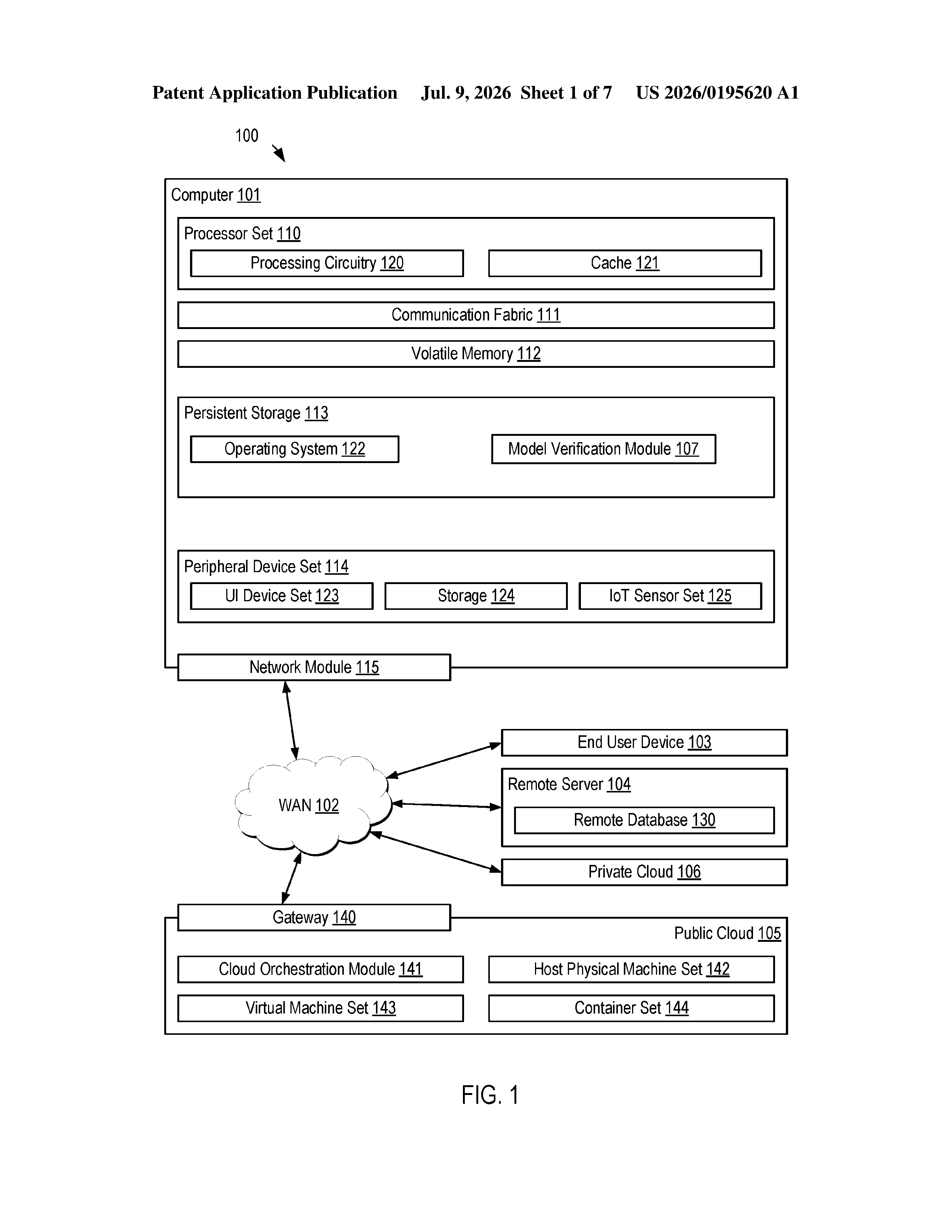
The drawings · 7 sheets
7 drawing sheets from US 2026/0195620 A1 · click any drawing to enlarge
More from IBM
All 481 IBM patents →
More in AI vision
All 352 AI vision patents →
Google
Google Patents a Way to Teach AI When to Say 'The Answer Isn't Here'
Microsoft
Microsoft Patent Targets Fraud Patterns Slipping Past AI Detection Models
Samsung
Samsung Patents a Way to Train Video AI on Deliberately Distorted Frames
Disney