
Qualcomm Patents an AI That Finds the One Photo That Doesn't Belong
Every photo app has a 'delete duplicates' button, but Qualcomm is patenting something different: an AI that looks at a whole batch of images and figures out which single photo is the odd one out — automatically.
What Qualcomm's image-scanning AI actually does
Imagine you take ten photos of the same product for a catalog shoot, and nine of them look consistent — same lighting, same angle, same colors. The tenth is weirdly overexposed or slightly blurred. Instead of manually flipping through all ten, Qualcomm's system would scan the entire batch and point directly at the problem image.
The idea is to feed a group of images into an AI, which assigns every photo a score representing how well it fits with the rest of the set. Whichever image gets the highest score is flagged as the anomaly — the one that doesn't belong.
This kind of check could be useful anywhere images are produced in batches: quality control on a factory floor, medical scans reviewed as a series, or even a camera roll that's supposed to capture one consistent scene.
How the transformer encoder scores each photo
The system works in two stages. First, a standard artificial neural network (ANN) processes each image and extracts what the patent calls low-dimensional features — a compressed numerical fingerprint that captures the essential visual characteristics of each photo without storing every pixel. Think of it as boiling a photograph down to a short list of key descriptors.
Those descriptors are then handed to a transformer encoder — the same core architecture that powers large language models like GPT, but applied here to visual data. The transformer is well-suited for this task because it's designed to look at a sequence of inputs and understand how each one relates to all the others simultaneously, rather than checking them one by one.
The encoder produces a score for each image in the set. A low score means the image looks consistent with its neighbors. A high score means something about that image stands out relative to the group.
- The image with the highest score is automatically flagged as the anomaly.
- The method works across the whole set at once, not image-by-image in isolation.
- It runs on a processor, making it deployable on-device — relevant for phones and embedded hardware.
What this means for cameras and quality control
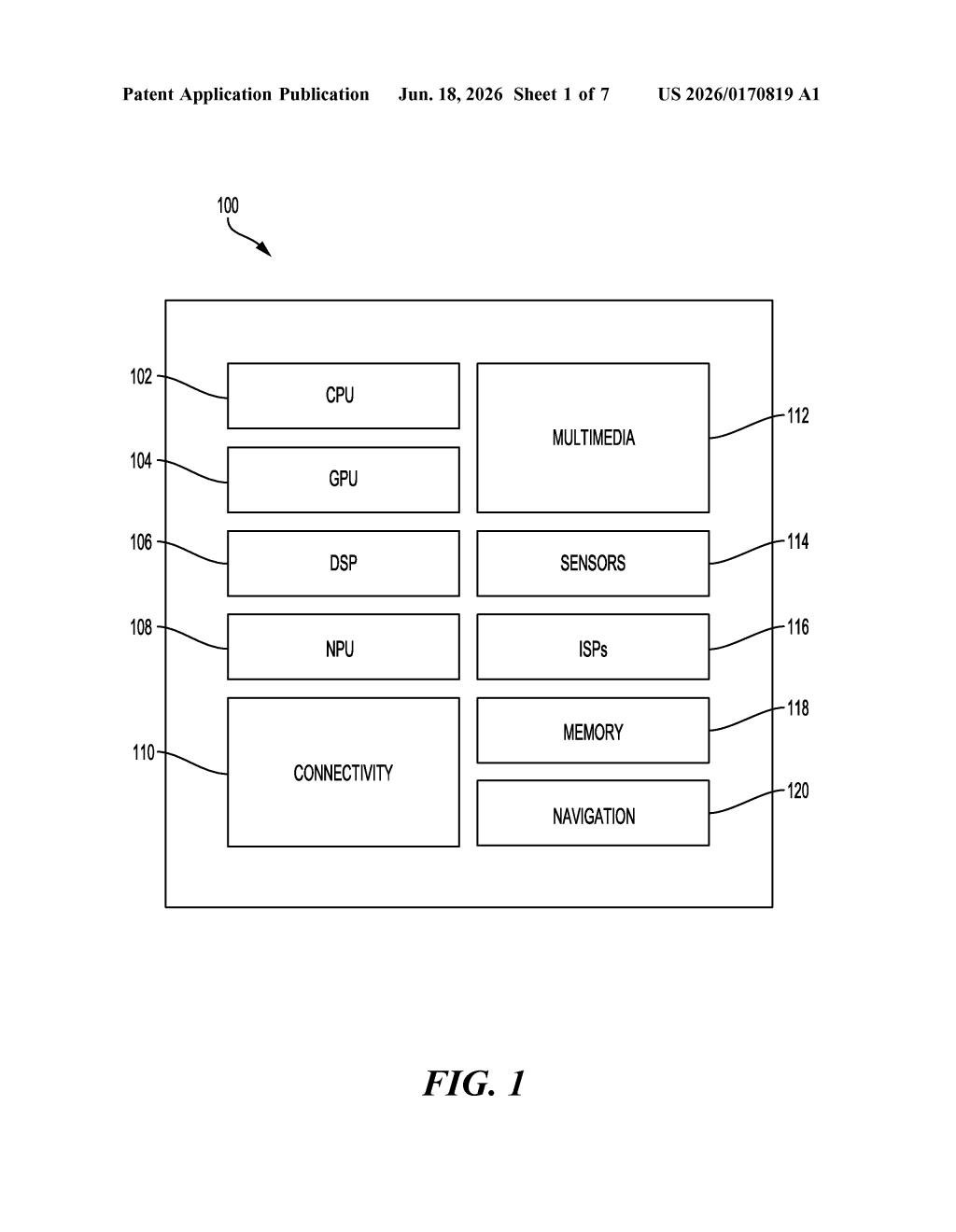
Qualcomm makes the chips inside Android phones, cameras, and a wide range of industrial devices. An on-device anomaly detector like this could run directly on a smartphone or edge processor without sending images to the cloud — which matters for speed, privacy, and offline use. That's the Qualcomm angle: the company isn't building the camera app, it's building the chip that the camera app runs on, and patents like this define what those chips can do natively.
Beyond consumer cameras, the practical use cases include automated visual inspection on production lines, medical imaging series where one scan in a sequence looks different, and surveillance systems that need to flag unusual frames without human review. The method is general enough to fit any domain where images come in batches and consistency is expected.
This is a focused, well-scoped patent with a clear application: find the bad image in a batch without human eyes. It's not a dramatic leap — transformer-based anomaly detection is an active research area — but building it into Qualcomm's chip ecosystem would give device makers a useful native capability. Worth watching, mostly as a sign of where on-device AI quality checks are heading.
There are more where this came from
We read every patent application Big Tech publishes and send you the ones worth knowing. Plain English, free, every week.
Want this weekly breakdown for a company we don't cover? Patentlyze Pro →