
Amazon Patents Delivery Labels That Hide Your Address From the Package
What if your name and home address never appeared on a shipping label at all — and only revealed themselves to the delivery driver's device when the truck was already close to your door? That's the core idea in this Amazon patent.
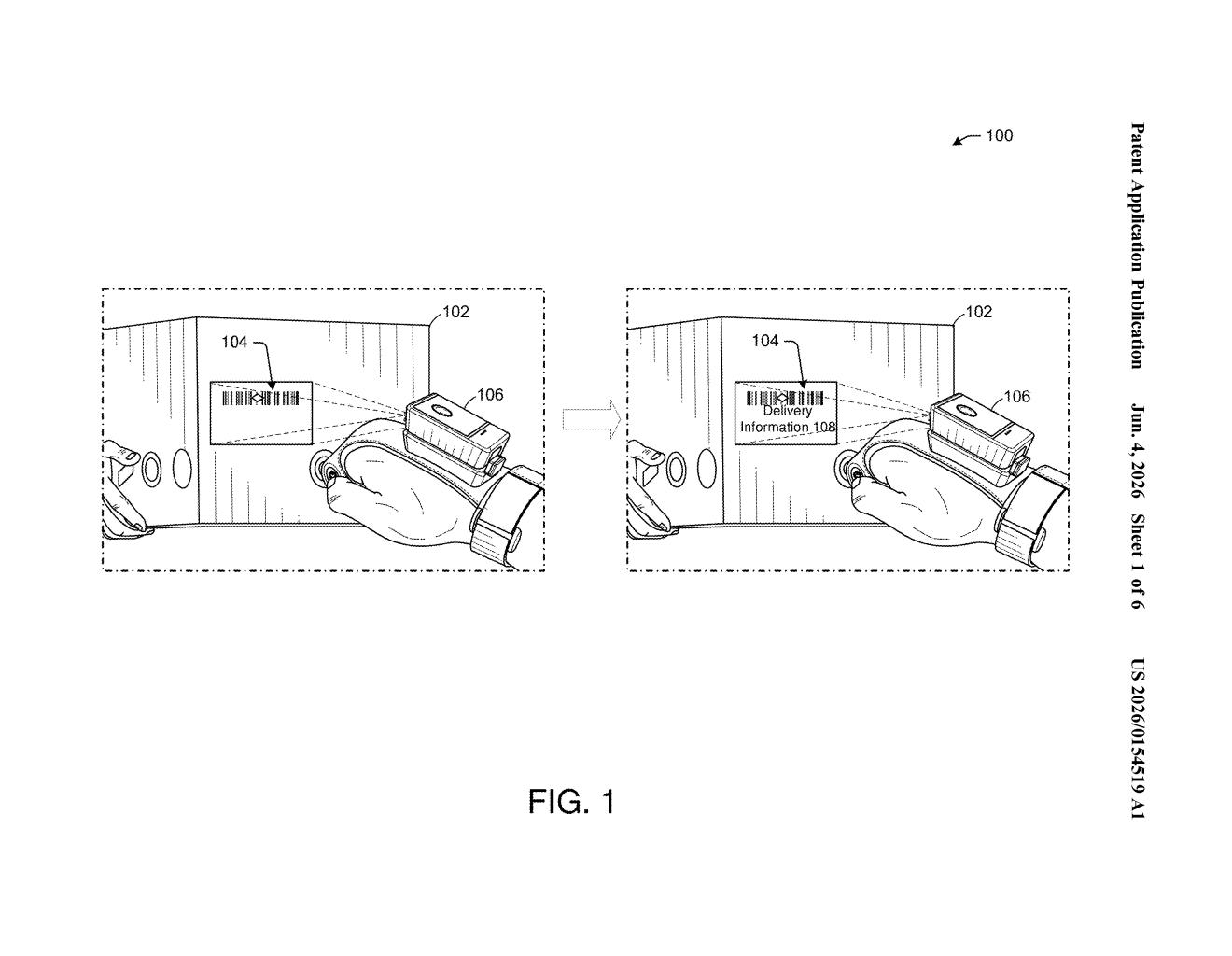
What Amazon's blank shipping label system actually does
Imagine ordering something online and the box that shows up at the sorting facility has no name, no address — just a QR code. Nobody working the conveyor belt, no porch pirate eyeballing your stoop, no casual observer at the post office can read where it's going or who it's for.
Here's how it gets to you anyway: the delivery driver's handheld scanner is pre-authorized by Amazon's servers. When the driver gets close enough to your address, the scanner reads that QR code and — only then — does your address briefly appear on the device's screen (or on a small display on the package itself). The address is unlocked by proximity, not printed on the box from day one.
For most people, this is a fix for a problem you've probably never consciously thought about: your full name and home address travel through dozens of hands before a package reaches you. This system keeps that data locked away until the last possible moment.
How the scanner unlocks your address at the doorstep
The patent describes a three-device chain designed to keep delivery information off the physical label until it's absolutely needed.
- The parcel carries only a computer-readable code (like a QR or barcode) containing a unique identifier. No recipient name, no street address — nothing a human can read at a glance.
- The delivery device (a handheld scanner or similar tool) is pre-authenticated to Amazon's backend. This pre-auth step is the trust gate: only authorized devices in the delivery network can request the unlock.
- Amazon's backend server holds the actual delivery information and enforces a key rule: it only releases the address when it confirms the parcel is within a threshold distance of the destination.
When those conditions are met, the address is sent to the delivery device — and crucially, the patent describes causing "temporary presentation" of the address, either on the delivery device's screen or on the package itself (think an e-ink display or similar). The word "temporary" is doing real work here: the address appears for the delivery moment, then disappears.
The system also handles delivery instructions (like "leave at back door") the same way, surfacing them only when proximity criteria are satisfied.
What this means for package theft and delivery privacy
Package theft — "porch piracy" — gets most of the attention, but this patent is actually solving an earlier problem: the fact that your home address and full name are visible to every person who touches a parcel in a warehouse, a sorting facility, or a delivery vehicle. That's a real privacy exposure, especially for people in sensitive situations (domestic abuse survivors, public figures, anyone who prefers not to have their address casually readable).
For Amazon's delivery network specifically, this also has an operational angle: if a package's destination is only decryptable by pre-authorized Amazon devices, it becomes harder for bad actors inside the supply chain to skim address data at scale. Whether Amazon ever ships this as a consumer-facing privacy feature — or just uses it internally — depends on how much complexity it adds to the logistics stack.
This is a genuinely useful privacy idea, not just a patent-for-patent's-sake filing. The proximity-gated address reveal is an elegant constraint — it's harder to abuse data that only exists in readable form for a few minutes near your front door. The e-ink-on-package angle is speculative hardware, but the core software and protocol approach could work with existing scanner infrastructure Amazon already operates.
There are more where this came from
We read every patent application Big Tech publishes and send you the ones worth knowing. Plain English, free, every week.
Want this weekly breakdown for a company we don't cover? Patentlyze Pro →