
Google Patents an Ad System That Checks Your Privacy Before Sharing Your Context
Most ad systems send details about what you're browsing before checking whether that data could be traced back to you specifically. Google's new patent flips that order, holding back your context until enough other people share it first.
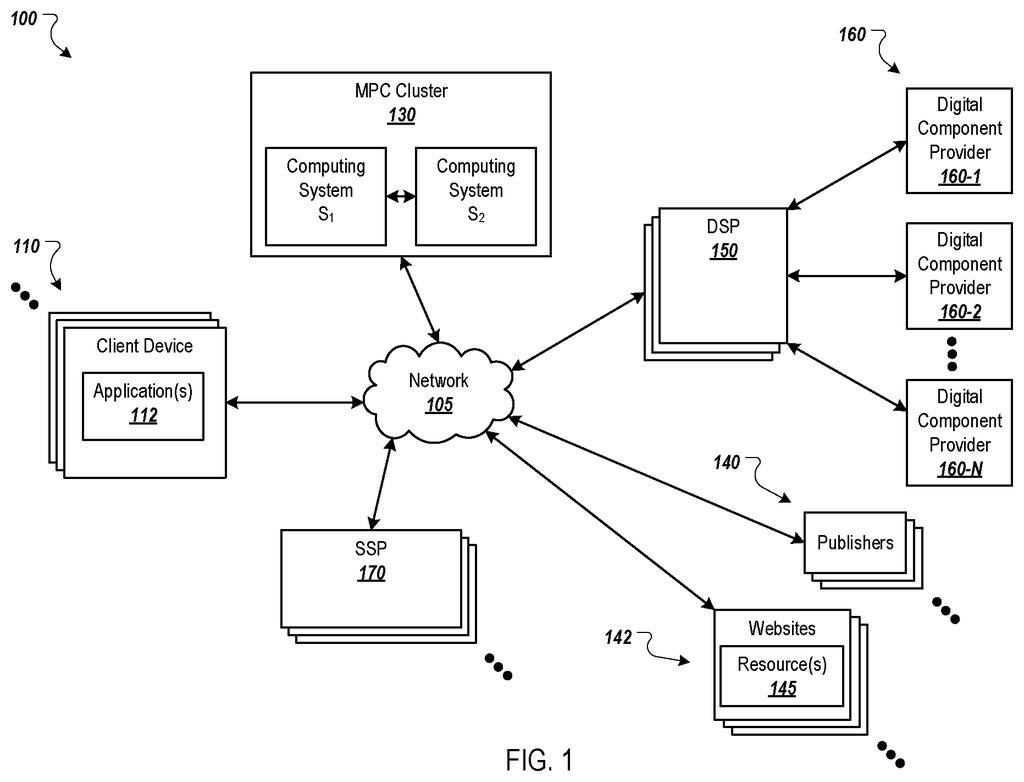
How Google's k-anonymity filter guards your browsing context
Right now, when a website wants to show you an ad, it often sends details about what you're doing (what page you're on, what you just searched) to ad servers before anyone checks whether those details are unique enough to identify you personally.
Google's patent describes a system that requires your browsing context to pass a privacy threshold before it ever leaves Google's servers toward ad platforms. The idea is called k-anonymity: your data only moves forward if at least a minimum number of other users are in the same situation. If you're the only person visiting a very niche page right now, the system holds your context back entirely.
On top of that, the patent adds a layer of encrypted handoffs between two separate computing systems that don't share data with each other, so neither system alone can connect your request to your identity. The goal is to let ads still get served without anyone being able to single you out.
… determining that one or more of the contextual signals satisfy k-anonymity, wherein determining that a contextual signal satisfies k-anonymity comprises determining that at least a threshold number of content requests that include the contextual signal have been received; …
Translation: The system checks if enough other users share your situation so your data blends into the crowd.
How the two-server handshake decides what to share
The patent describes a two-server architecture called secure multi-party computation (MPC), which means splitting a sensitive task across two systems that operate independently and can't collude. When your browser sends a content request, it includes encrypted user group identifiers (basically, labels describing your browsing context, encrypted so only the second server can read them).
The first MPC server receives your request and forwards each encrypted label to the second MPC server, asking it to decode only the labels that clear a k-anonymity check (meaning: at least a set minimum number of other users have sent the same contextual signal recently). Labels that don't meet that threshold are silently dropped.
For labels that do pass, the second server sends back the plain-text value to the first server, which then packages those approved signals into a selection parameter request sent to ad platforms. The ad platforms respond with candidate ads. The first server picks a winner and returns it to your device.
- Your raw context is encrypted before it leaves your device.
- A second, independent server holds the decryption keys and enforces the anonymity floor.
- Ad platforms only ever see context signals that are shared by a crowd, not unique to you.
For each user group identifier that satisfies a k-anonymity, the first MPC computing system receives, from the second MPC computing system, a plaintext value of the user group identifier.
Translation: Only when privacy thresholds are safely met will the system finally unlock and share specific user details.
What this means for ad tracking and your browser data
For everyday users, this architecture is a meaningful structural change from how ad targeting usually works. Rather than relying on promises that data won't be misused, the system technically prevents uniquely identifying context from reaching ad platforms in the first place. You don't have to trust any single company's policy; the math enforces it.
For advertisers and ad platforms, the tradeoff is real: niche pages, rare queries, or very specific browsing moments would be invisible to targeting entirely. That's a deliberate privacy floor, not a bug. Google keeps filing on privacy-preserving ad infrastructure, and this patent fits a broader shift toward building privacy into the plumbing rather than bolting it on afterward.
Google's 47th filing we've tracked since May builds on earlier applications covering choosing between on-device and cloud AI and on-device image generation, part of the broader on-device AI privacy push we follow.
The design makes a clear engineering bet: lose some targeting precision so that individual users can't be fingerprinted through their browsing context. That's a worthwhile trade on paper, but the actual privacy protection depends entirely on how the k-anonymity threshold is set. A threshold of two users is technically k-anonymous but practically useless; a threshold of ten thousand makes a lot of ad inventory impossible to serve. The patent doesn't specify the number, which is where the real policy fight will happen.
The split-server approach is genuinely clever. Even if one server is subpoenaed or compromised, it doesn't hold enough information to reconstruct individual requests. But both servers are, presumably, Google infrastructure or Google-contracted infrastructure, which raises an obvious question about whether "two independent systems" is as independent as it sounds in practice.
This is a technically serious filing, not a surface-level privacy checkbox. The architecture is the kind of thing privacy researchers actually ask for. Whether the deployed version lives up to the design is a question only auditors, not patents, can answer.
There are more where this came from
We read every patent application Big Tech publishes and send you the ones worth knowing. Plain English, free, every week.
The drawings
4 drawing sheets from US 2026/0278169 A1 · click any drawing to enlarge


Want this weekly breakdown for a company we don't cover? Patentlyze Pro →