
Amazon Patents an AI System That Decides Which AI Model Handles Your Request
Every major cloud platform now offers dozens of AI models, and most users have no idea which one to pick. Amazon has filed a patent for a system that makes that choice automatically, reading your request and routing it to whichever model fits best on cost, quality, and speed.
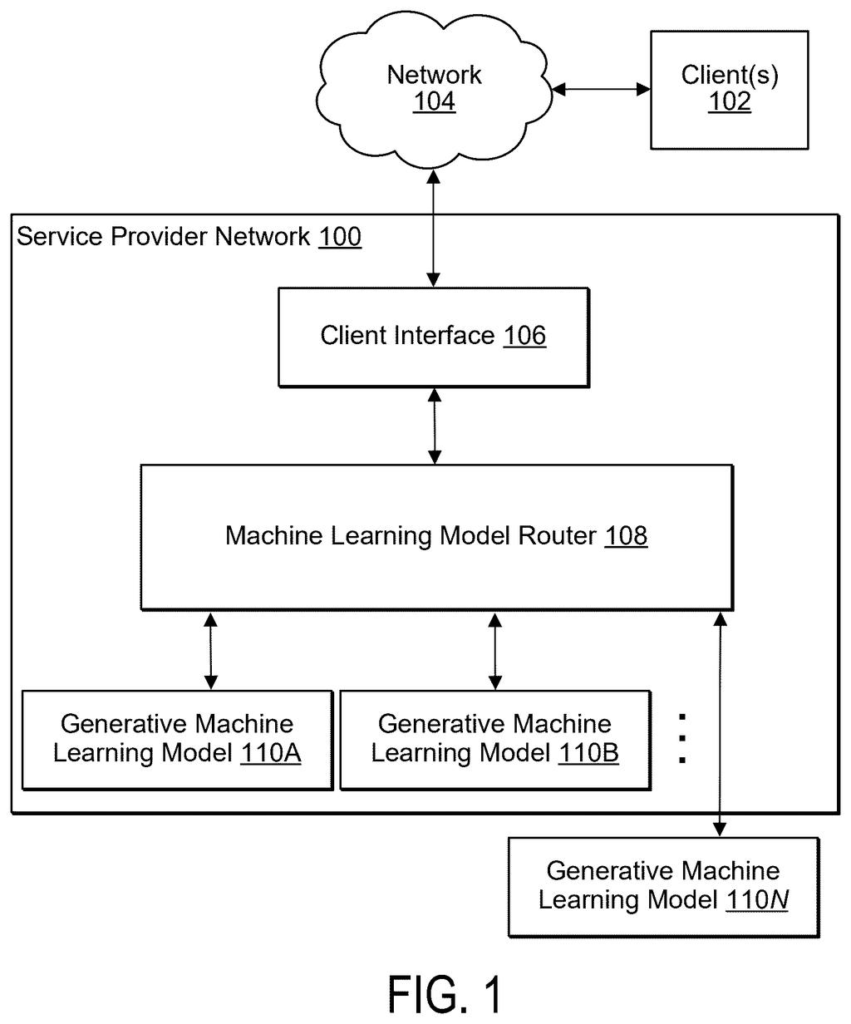
How Amazon's AI traffic cop picks the right model
Every time you send a request to an AI service, someone, or something, has to decide which AI model actually processes it. Right now, that decision often falls on you, and most people have no reliable way to compare dozens of models for a given task.
Amazon's new patent describes a routing layer that sits in front of a collection of AI models and makes that decision for you. You send in your prompt, and the router analyzes it, considers factors like expected response length, computing cost, and output quality, and forwards the request to whichever model it thinks is the best match.
Think of it like a hotel concierge who knows which restaurant fits your budget and your taste, without you having to research every option yourself. The router uses its own small AI model to do the matching, and it accounts for where each AI model is physically hosted, not just how good it is in general.
… estimate consideration factors, using at least one estimator machine learning model which uses a prompt embedding and a set of model identity embeddings which correspond with respective ones of the set of generative machine learning models …
Translation: It uses a smaller AI model to analyze your prompt and compare it against all available AI models.
How the router weighs cost, speed, and output length
The system sits between the user and a pool of more than two generative AI models (think GPT-class, Claude-class, or Amazon's own models). When a prompt arrives, the router doesn't just pick randomly or by round-robin. It runs a separate, smaller estimator model to predict several "consideration factors" for each candidate model.
The key mechanism is embedding comparison (a way of turning text and model identities into numerical vectors so they can be mathematically compared). The router converts your prompt into one such vector and compares it against stored identity vectors for every model in the pool. That comparison lets it predict things like: how long will the output be, how much will this cost to run, how fast will it respond, and how well does this model handle this type of prompt.
Critically, the patent specifies that at least one consideration factor must be based on estimated output length. That's notable because output length is one of the main drivers of both cost and latency in AI APIs; predicting it upfront lets the router make smarter tradeoffs before a single token is generated.
The system also accounts for hardware constraints, including which physical server or cloud region hosts each model, so routing decisions can factor in where compute is available and at what cost.
… expected resource expenditure for the particular prompt such as cost or latency, and other factors such as which computing device or devices hosts the generative machine learning model …
Translation: It decides based on how much the response will cost, how long it takes, and where the AI runs.
What this means for AWS customers and AI pricing
For businesses using Amazon Bedrock or similar AWS AI services, this kind of automatic routing could translate directly into lower bills. Routing a simple summarization task to a cheaper, faster model instead of the most powerful (and expensive) one in the pool is exactly the kind of optimization that adds up at scale.
For everyday users, the bigger shift is not having to understand the difference between AI models at all. Amazon's run of AI infrastructure filings suggests the company is betting that the future of AI services is abstracted, where you describe what you need and the platform figures out the rest. If this system works as described, the model selector dropdown in AI tools could simply disappear.
Amazon files its tenth application in the Enterprise AI work we've tracked since May, following filings on scoring answers early and picking a persona before responding.
Claim 1 is broad. It covers any system that routes prompts across more than two generative AI models using an estimator model that combines prompt embeddings with model-identity embeddings, as long as at least one factor is estimated output length. That's a wide perimeter. A lot of AI platforms are already experimenting with prompt routing, and this claim could, if granted, create friction for anyone building a similar multi-model dispatch layer on top of competing cloud infrastructure.
The output-length requirement is the most specific anchor in the claim, and it's doing a lot of work. It narrows the claim just enough to avoid covering trivially simple routers (ones that pick by cost alone, say) while still covering most sophisticated real-world implementations, because output length is almost always part of a sensible routing calculation.
The practical question is whether prior art already exists in this space. Multi-model orchestration has been a hot topic since at least 2023, and several open-source routing tools have been published. Amazon's patent office review will almost certainly test that boundary hard.
There are more where this came from
We read every patent application Big Tech publishes and send you the ones worth knowing. Plain English, free, every week.
The drawings
16 drawing sheets from US 2026/0300841 A1 · click any drawing to enlarge


Want this weekly breakdown for a company we don't cover? Patentlyze Pro →
Be the first to weigh in