
Amazon Patents a Bluetooth System for On-Demand Multi-Language Audio Streams
Imagine walking into an airport or stadium, opening an app, and your phone automatically switching the venue's audio feed to your preferred language — no staff, no pairing menus, no friction. That's the core idea Amazon is patenting here.
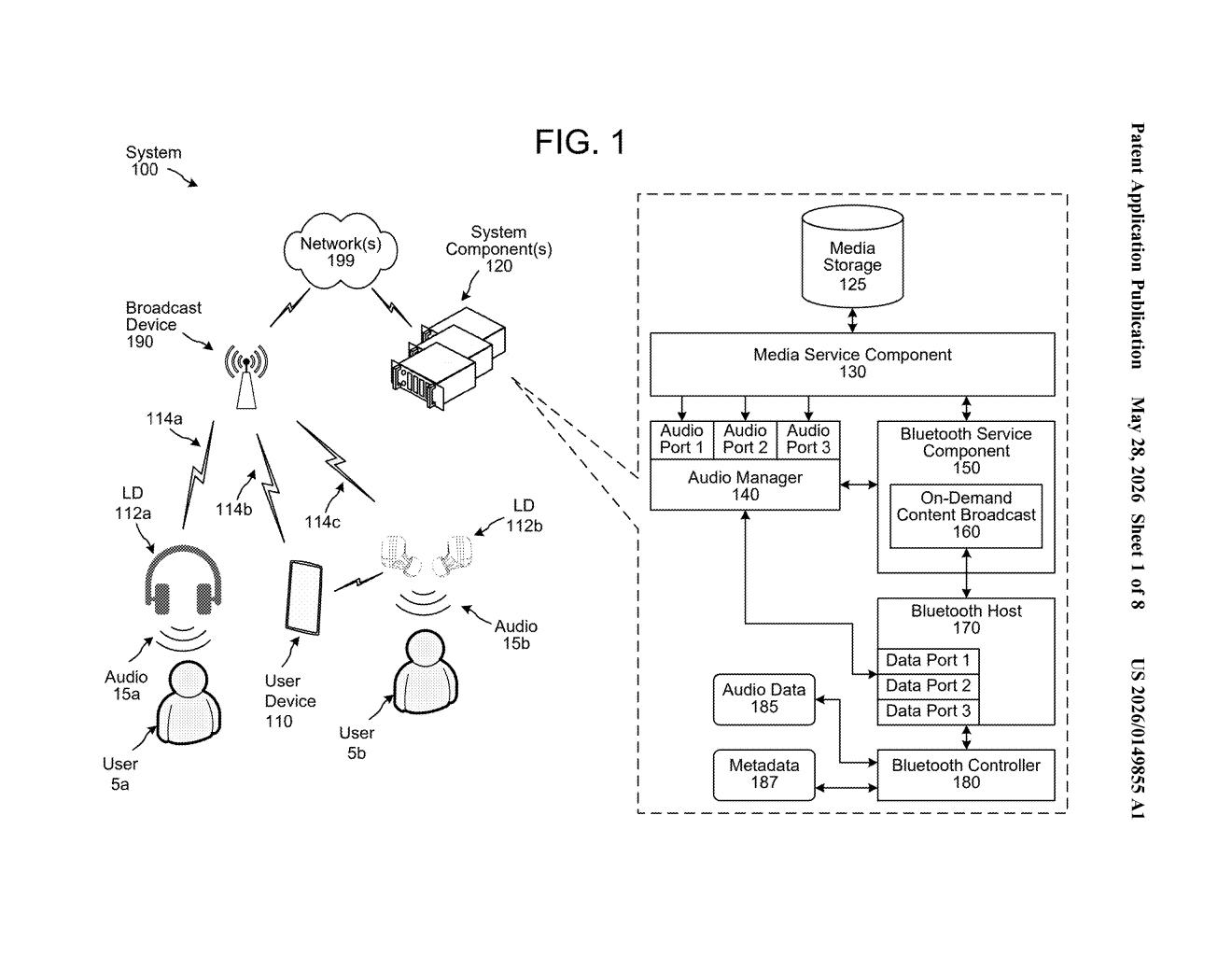
What Amazon's on-demand audio language switching actually does
Picture yourself at a live event or using a streaming device where the audio is playing in English, but you'd prefer Spanish or French. Normally, getting a different language track means pausing everything, digging through settings, and reconnecting to a different source. Amazon's patent describes a system that eliminates all of that.
Instead of making you go hunting for alternatives, the broadcast system periodically advertises what audio tracks are available — like a menu that's quietly announced every few seconds. Your device hears that announcement and can automatically request the language you prefer, or you can tap to pick one manually.
The whole thing runs over Bluetooth, meaning it's designed for close-range environments like hotel rooms, theme park rides, airplanes, or smart home setups where a single broadcaster serves multiple listeners who might each want different language audio.
How the Bluetooth broadcast and metadata request loop works
The system has a few moving parts that work together in a polling loop:
- A Media Service Component manages multiple parallel audio streams (e.g., English, Spanish, French) simultaneously.
- An Audio Manager routes the right stream to the right output port.
- A Bluetooth Service Component handles the actual wireless broadcasting using a Bluetooth Host and Controller stack.
- An On-Demand Content Broadcast module periodically sends out lightweight metadata packets — essentially small advertisements that say "hey, here are the audio tracks currently available."
When a listening device (a phone, a smart speaker, a set-top box) receives one of those metadata advertisements, it can respond with a request packet asking for a specific language stream. The system then begins streaming that audio data directly to the requesting device.
Critically, the patent emphasizes that the user doesn't need to connect or authenticate to a specific device first — the broadcast model means anyone in range can discover and request available content. User preferences stored on the device (like a preferred language setting) can automate the request entirely, so the switch happens without any manual input.
What this means for multilingual venues and streaming devices
For Amazon, this is a natural fit with its Echo and Fire TV ecosystem, where a single hub might serve a multilingual household or a hospitality deployment (think hotel rooms, cruise ships, or theme parks). The frictionless language-switching angle is genuinely useful — today, getting alternate audio tracks on most streaming setups is clunky enough that most people just don't bother.
The Bluetooth-broadcast approach also means no internet round-trip is required for the handoff — the device and the broadcaster negotiate locally. That's a real latency and reliability advantage in crowded venue environments. Whether Amazon is building this for a specific Fire TV or Echo feature, or for a broader hospitality SDK, the patent lays out a clean infrastructure for it.
This is a focused, practical patent — not a moonshot. The problem it solves (language track selection is annoying and requires too many steps) is real, and the Bluetooth broadcast-and-request architecture is a clean way to handle it without requiring per-user authentication. If Amazon ships this into Fire TV or Alexa-enabled hospitality devices, it would be a quietly useful quality-of-life improvement for multilingual households and commercial deployments alike.
There are more where this came from
We read every patent application Big Tech publishes and send you the ones worth knowing. Plain English, free, every week.
Want this weekly breakdown for a company we don't cover? Patentlyze Pro →