
New Anti-Glare Patent Tackles Blue and Green Light Reflection
Glare on phone screens is annoying under any light, but it turns out the blue and green parts of the visible spectrum are especially problematic. Samsung Display has filed a patent for a screen coating engineered to attack those specific wavelengths.
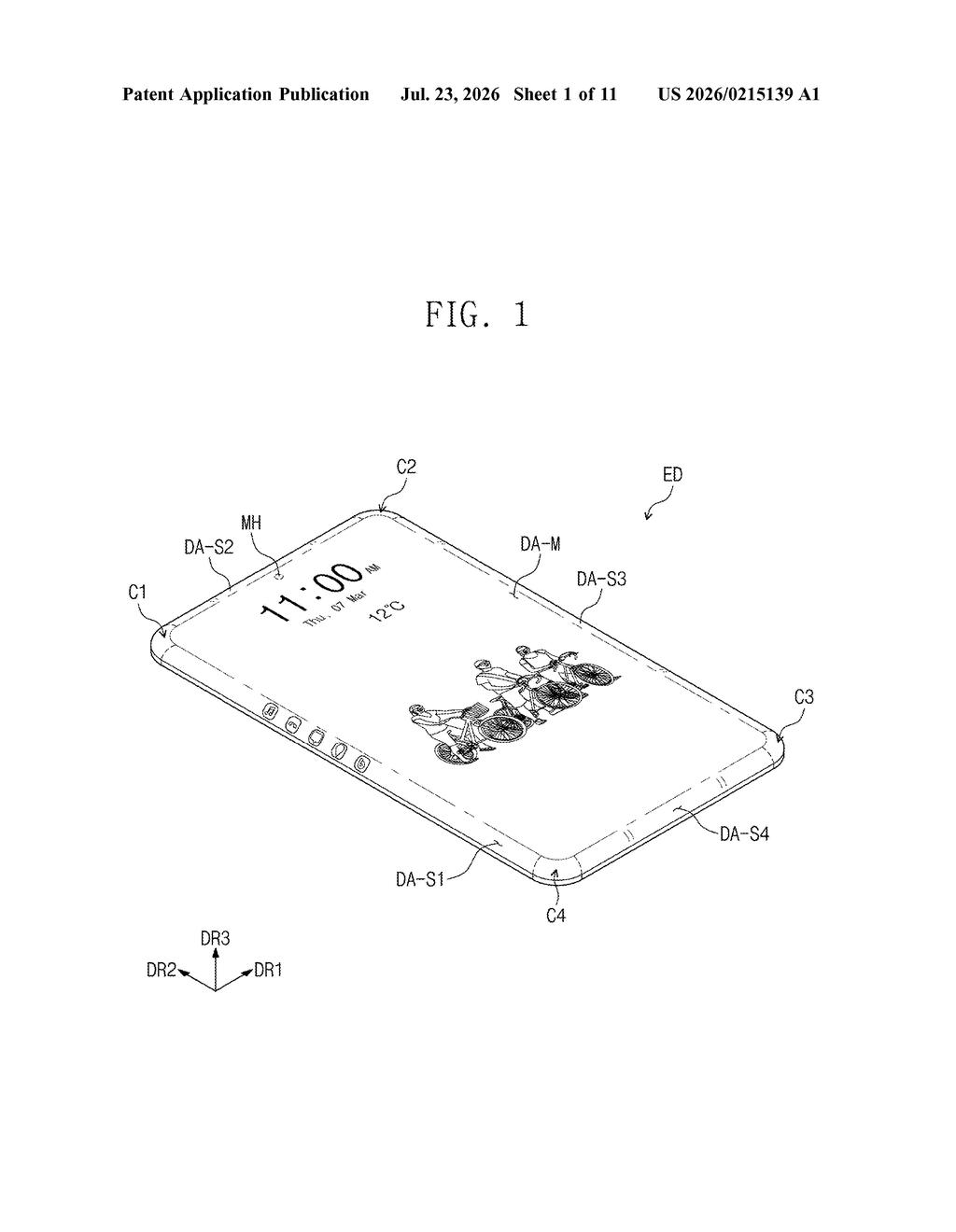
What Samsung's anti-glare screen coating actually does
Imagine you're using your phone outside on a bright day and the screen looks washed out by reflections. Most of that glare comes from particular colors of light bouncing off the glass, and some color ranges are worse than others.
Samsung Display's patent describes a special coating applied to the cover glass of a display that becomes progressively better at absorbing light across two specific color bands: the deep blue range and the green range. In other words, the coating is designed to get less reflective as you move through those color zones, rather than treating all light the same way.
This coating sits on top of a curved cover window, the kind of glass used on phones where the edges wrap around the sides. Getting anti-reflective coatings to work evenly on a curved surface is harder than on flat glass, so the precise layered design matters here.
How the layered coating controls light reflection by wavelength
The patent describes a cover window made up of a base layer topped by an anti-reflective layer. That anti-reflective layer is itself a sandwich of two sub-layers: a high refractive index layer (a material that bends light more sharply) and a low refractive index layer sitting on top of it.
The key behavior is in how the coating handles specific wavelengths. Reflectance (the percentage of incoming light that bounces back rather than passing through) decreases as wavelength increases across two ranges:
- From roughly 380 nm to 450 nm (the violet-to-blue part of visible light)
- From roughly 500 nm to 580 nm (the cyan-to-yellow-green part of visible light)
By engineering this slope-down behavior in those bands, the coating reduces the specific reflections that are most visible to human eyes under common lighting conditions. The alternating high-and-low refractive index design is what creates this wavelength-selective effect through thin-film interference (the same physics that makes soap bubbles show color, but used here deliberately to cancel reflection).
The cover window also has a flat central portion and bent edges, consistent with modern curved smartphone displays, and the coating must perform consistently across that geometry.
What this means for curved phone and tablet screens
For consumers, better anti-reflective coatings mean screens that stay readable in bright environments without cranking brightness to maximum, which also saves battery life. The focus on blue and green wavelengths is notable because those ranges overlap heavily with sunlight and indoor LED lighting, which is exactly when glare is most disruptive to you.
For Samsung, this patent is relevant to the curved-edge display designs used in its Galaxy S and Galaxy Z fold and flip lines. Applying a precisely tuned coating to glass that bends at the edges is an engineering challenge; a patent here suggests Samsung Display is working to solve it at the materials level rather than just relying on software brightness adjustments.
This is applied materials engineering, not a headline feature you'll see in a press release. But anti-reflective coating quality is one of those things that separates a premium display from a mediocre one, and Samsung Display supplies screens to multiple device makers beyond Samsung itself. Getting this right on curved glass is a genuine technical problem worth solving.
There are more where this came from
We read every patent application Big Tech publishes and send you the ones worth knowing. Plain English, free, every week.
The drawings
11 drawing sheets from US 2026/0215139 A1 · click any drawing to enlarge


Want this weekly breakdown for a company we don't cover? Patentlyze Pro →
Be the first to weigh in