
Apple Patents a Display That Shifts the Camera's View to Match Your Eyes
Your phone's camera sits in one spot, but your eyes sit in another. Apple is patenting a way to fix that gap so what you see on screen looks like it was shot from exactly where you're standing.
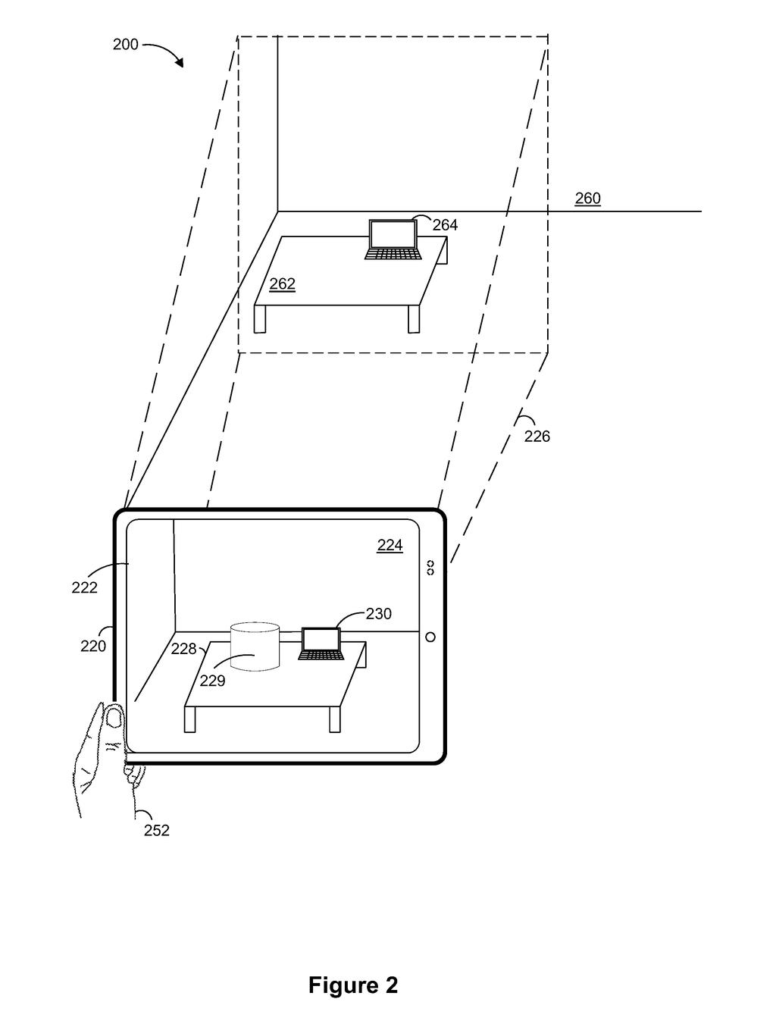
What Apple's camera-to-eye correction actually does
Imagine holding up your iPhone to take a photo, but the camera lens is at the top-left corner while your eyes are in the center of your face. The image the camera captures is technically from a slightly different angle than what you'd naturally see if you were looking directly at the scene. Most of the time you don't notice, but in mixed-reality headsets or video calls, that small offset can make things feel subtly off.
Apple's patent describes a system that automatically corrects for this. It figures out exactly how far apart the camera and your eyes are, then shifts the image accordingly so the final picture looks as if it came from your eye position instead of the camera's position.
To do this well, the system needs to treat nearby objects and far-away backgrounds differently, because the same shift that fixes the foreground would make the background look wrong. So it separates the image into layers before adjusting each one independently.
How Apple separates foreground from background to shift the view
The patent describes a multi-step pipeline running on a device's processor in real time.
- Capture and map: The device takes a current image and builds a 3D feature map of the scene (a depth-aware model of what's in the frame, how far away things are, and how they relate spatially).
- Layer separation: Using something called an image matting function (a technique that separates a scene into foreground and background with soft, blended edges rather than hard cutouts), the system generates multiple classification maps that label every pixel as belonging to the foreground, background, or a transitional zone between them.
- Perspective shift: The system calculates the difference between where the camera actually is and where the user's eyes are, then applies a different geometric transformation to the foreground layer and the background layer to compensate for that offset.
- Compositing and display: The adjusted layers are blended back together and shown on screen.
The key insight is that a simple single-layer warp would introduce distortions, especially at depth boundaries where a person stands in front of a wall. Treating foreground and background separately avoids that artifact.
What this means for FaceTime and Vision Pro displays
This kind of correction is most relevant for devices where the camera and the screen aren't positioned near your eyes, such as Apple Vision Pro (where the outward-facing cameras feed a passthrough view to internal displays) or a phone held at arm's length during a video call. In both cases, the gap between camera position and eye position is real and noticeable enough to affect presence and depth perception.
For everyday users, the payoff would be a passthrough or video image that feels more natural, less like you're watching a feed from a security camera mounted slightly off from where you're standing. If Apple is working toward more immersive mixed-reality experiences, getting this geometric correction right is the kind of foundational work that has to happen before the experience feels convincing.
This is unglamorous but genuinely important work for mixed-reality and video-call quality. The patent addresses a real perceptual problem with a technically sound approach, and the layer-separation method is the clever part. It's not a headline feature, but it's the kind of fix you'd immediately notice if it were missing.
There are more where this came from
We read every patent application Big Tech publishes and send you the ones worth knowing. Plain English, free, every week.
The drawings
11 drawing sheets from US 2026/0220737 A1 · click any drawing to enlarge


Want this weekly breakdown for a company we don't cover? Patentlyze Pro →