
Apple Patents a Fix That Keeps 3D Objects Sharp When You Move the Camera Too Fast
When you move your viewpoint faster than a 3D scene can redraw itself, objects blur, pop, or stutter. Apple's new patent describes a shortcut that keeps objects looking correct in the meantime, without waiting for a full re-render.
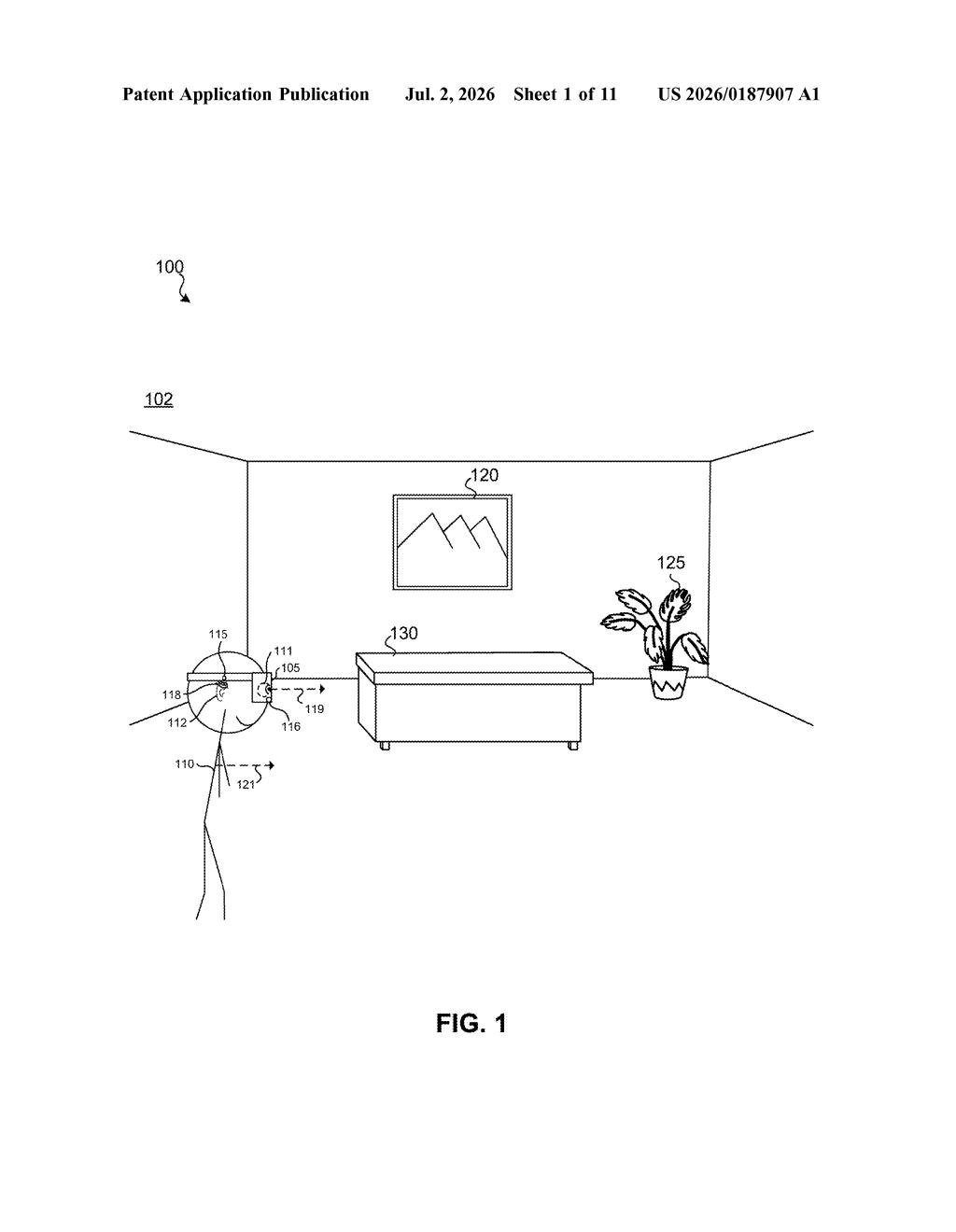
What Apple's Gaussian Splat proxy trick actually does
Imagine you're walking through a virtual room wearing Apple Vision Pro. As you turn your head, the headset has to redraw every object in the scene from your new angle. Some objects are built from a detailed format called 3D Gaussian Splats, which look great but take real time to generate. If your head moves faster than the scene can keep up, you'd normally see a glitch or a freeze.
Apple's patent describes a workaround: when a full re-render isn't ready yet, the device quickly creates a lightweight stand-in (a "proxy") for each object. The proxy is built from a flat snapshot of how the object looked from your last known position, but it's smart enough to shift and adjust as your viewpoint changes, so it still looks roughly right.
The result is that your view keeps updating smoothly at a fast frame rate, even when the underlying high-quality 3D data is still catching up. It's a bit like how a video call blurs your background instead of freezing the whole image when your connection drops.
How the proxy texture fills the gap between render frames
The patent centers on a rendering technique for 3D Gaussian Splat (3DGS) data. Gaussian Splats are a way of representing a 3D object as a cloud of thousands of tiny, semitransparent blobs, each with a position, size, color, and opacity. They can produce photorealistic results but are computationally expensive to regenerate from scratch for every new camera angle.
The method works in two stages:
- Full render: When time allows, the device draws the object using the complete 3DGS dataset for a given moment in time, producing a high-quality "first view" from the current viewpoint.
- Proxy render: From that full render, the system extracts a flat 2D texture image that captures the object's appearance, then maps it back onto the 3D positions of the original splats to create a lightweight stand-in object.
- Fast follow-up views: As the camera moves to new angles, the device shows the proxy instead of waiting for a new full render. The proxy uses the stored 3D positions of the splats, so it can shift perspective convincingly even though it's drawing from a 2D texture.
The key claim is that the second rate at which proxy-based views are delivered is meaningfully faster than the first rate at which full 3DGS data is generated. This decouples visual smoothness from rendering speed, which is the core engineering challenge in real-time 3D.
What this means for real-time AR and spatial video
For spatial computing devices like Apple Vision Pro, frame rate and perceived smoothness are directly tied to whether the experience feels real or nauseating. Any technique that keeps the frame rate high during computationally heavy moments is valuable. This proxy approach is particularly relevant for dynamic scenes, where objects are moving or changing over time and a full re-render is needed at every step.
More broadly, this kind of proxy-based gap-filling is a classic strategy in real-time graphics, but applying it specifically to Gaussian Splat data is newer territory. As 3DGS becomes a more common format for AR, spatial video, and volumetric capture, Apple having a patent on efficient proxy generation for it could matter for how the whole ecosystem develops.
This is focused, practical graphics engineering rather than a flashy AI patent. The problem it solves is real and well-defined: Gaussian Splat rendering is slow, and headsets need high frame rates. Apple isn't inventing Gaussian Splats, but they are staking out a specific optimization path for them, which suggests Vision Pro's rendering pipeline is being built around this format more deeply than Apple has publicly discussed.
Get our take in your Top Stories
Liked this breakdown? Add Patentlyze as a preferred source on Google, and our plain-English take shows up more often in your Top Stories the next time Apple patent news breaks.
There are more where this came from
We read every patent application Big Tech publishes and send you the ones worth knowing. Plain English, free, every week.
Want this weekly breakdown for a company we don't cover? Patentlyze Pro →