
Apple Patent Enables Devices to Identify Multiple Users and Trigger Personalized Services
Apple is exploring a way for its devices to recognize when a second person walks into view and automatically unlock or activate services tied to that specific person, all without interrupting whatever is already on screen for the first person.
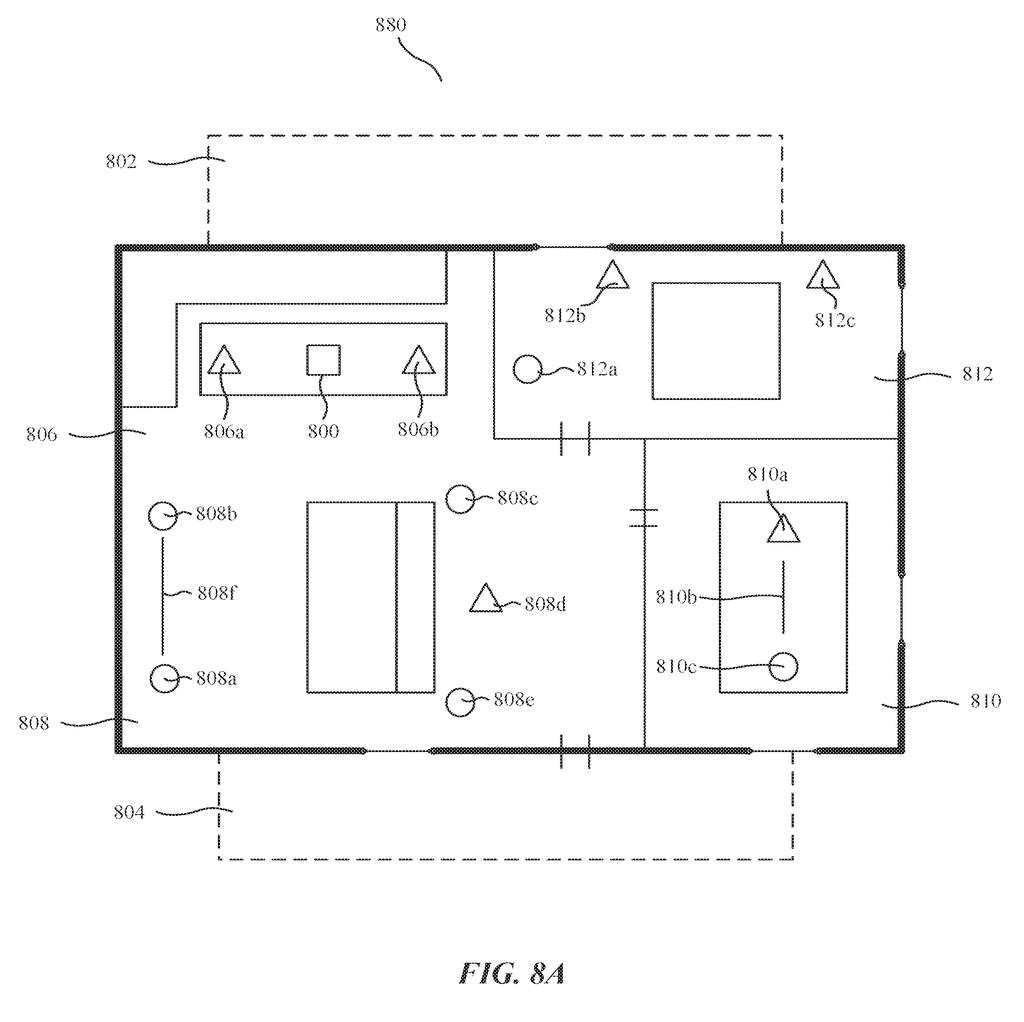
What Apple's multi-person recognition system actually does
Imagine you're watching your personalized news feed on a shared screen in your living room. A family member walks in, and the device notices them too. Instead of asking anyone to switch profiles or touch anything, it starts running a service, say their music queue or a notification panel, tied specifically to them. That's the core idea here.
Apple's patent describes a system where a device can spot a first person and display content for them, then also detect a second person entering the same space and activate a service for that second person using their own credentials, all at the same time. No one has to tap, swipe, or say a word.
This kind of technology could apply to a shared TV screen, a smart display, or even a kiosk. The key point is that each person's identity unlocks their own experience, and the two can coexist without one person's session getting in the way of the other's.
… detecting, via the one or more input devices, a second subject within the area, wherein the second subject is different from the first subject; and in response to detecting the second subject within the area and while maintaining display of the content corresponding to the first subject, enabling, using a credential for the second subject, a service.
Translation: The system notices another person nearby and unlocks a personalized service for them without interrupting the first user.
How the system detects subjects and triggers per-person services
The patent describes a computer system connected to input devices (cameras or sensors that can detect people) and display components (screens). Here's the sequence the system follows:
- It detects a first subject (a person) in a physical area.
- It displays content associated with that person on screen.
- While still showing that content, it detects a second, different subject entering the same area.
- It then enables a service for the second person using that person's own credential (think: face ID, a user profile token, or some other authentication signal), without disturbing the first person's display.
The patent bundles this capability alongside three related ideas: sharing partial accessory information with background processes, triggering services when a specific person is detected, and changing the state of external devices (like smart-home gadgets) when an emergency condition is recognized. The multi-person detection claim is the most specific and technically distinct of the four.
The USPC 382/103 classification confirms this lives squarely in image-based recognition, so cameras or similar visual sensors are the assumed input mechanism, even if the patent doesn't mandate a specific sensor type.
Other techniques are for altering a state of a set of external devices based on an emergency condition in accordance with some embodiments.
Translation: The technology can also adjust connected devices when it detects an emergency situation.
What this means for shared Apple devices and smart home setups
Shared screens are genuinely awkward right now. Smart TVs, family iPads, and smart displays all tend to operate in one person's context at a time, requiring manual profile switches or voice commands to hand off. Apple's approach here would let a device handle that handoff passively, which is a meaningful quality-of-life change for households with multiple Apple accounts.
The emergency-condition thread buried in the same filing is also worth noting: a system that can identify who is in a room and automatically change the state of connected devices (locks, lights, alarms) in a crisis is a different and more urgent use case. For you, that could mean a smart home that reacts to danger without waiting for you to ask it to.
The multi-person recognition piece is genuinely interesting because it solves a real annoyance with shared devices. The emergency-state-change angle is the more consequential idea in the filing, though, and it's frustratingly underspecified in the claims Apple chose to lead with. This is a patent worth watching but not yet worth getting excited about.
There are more where this came from
We read every patent application Big Tech publishes and send you the ones worth knowing. Plain English, free, every week.
The drawings
24 drawing sheets from US 2026/0229001 A1 · click any drawing to enlarge


Want this weekly breakdown for a company we don't cover? Patentlyze Pro →
Be the first to weigh in