
Apple Patents a System for Keeping Health Data in Sync Across All Your Devices
If you track your health on both an iPhone and an Apple Watch, your data sometimes lives in two places at once. Apple is patenting a smarter way to make sure nothing gets lost or duplicated when that data travels between devices.
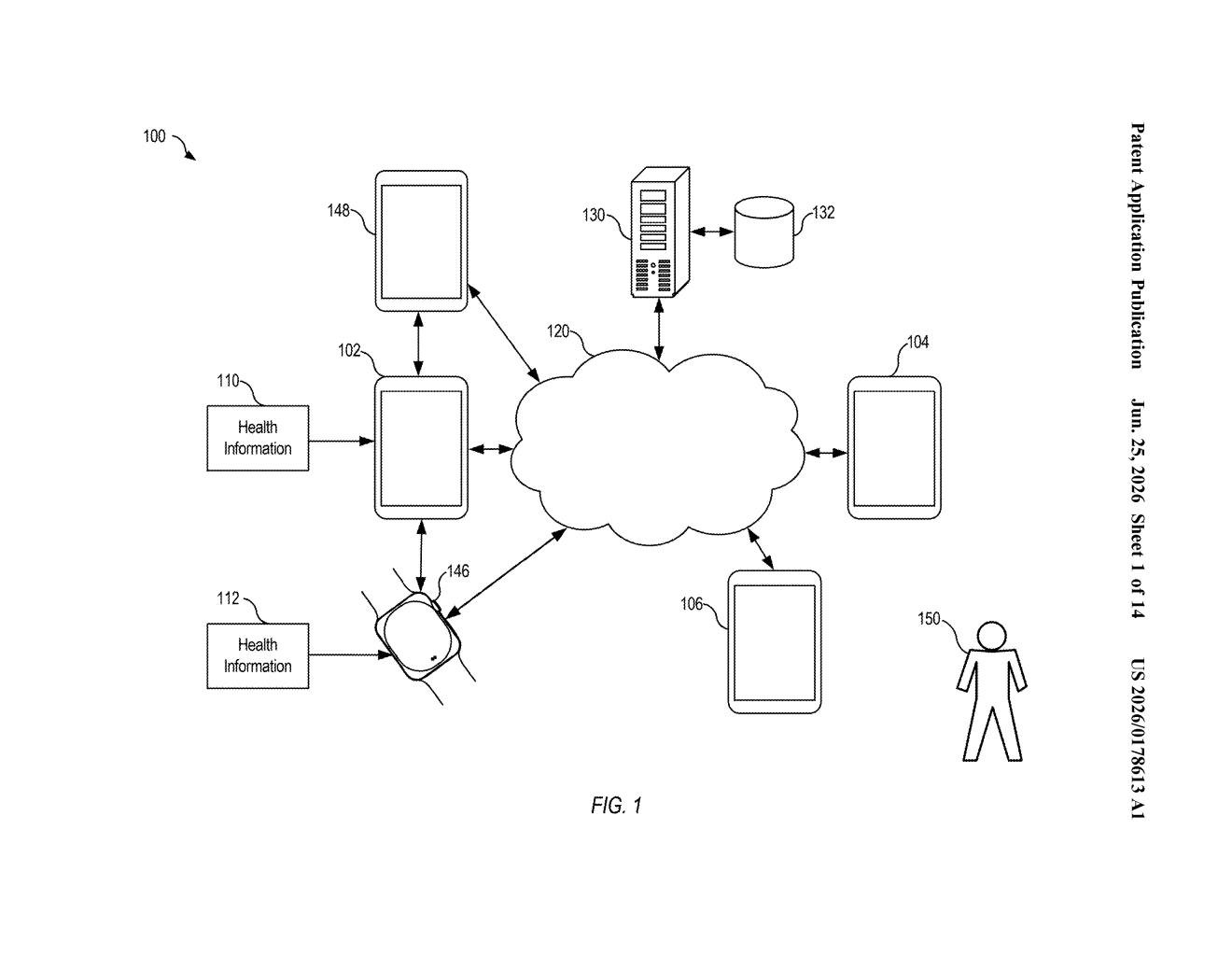
What Apple's multi-device health sync actually does
Imagine you go for a run with your Apple Watch, then later check your health stats on your iPhone. Both devices now have slightly different snapshots of your health data. Which one is right? How does Apple make sure neither device accidentally erases the other's records?
Apple's patent describes a system where a central server acts as the referee. When your Watch sends new health information up to Apple's servers, it includes a kind of fingerprint that says "this data came from this Watch and belongs to this account's database." Before passing that data along to your iPhone, the server checks whether the iPhone has a different fingerprint. If it does, the server knows the data is genuinely new and sends it across.
The result is that your health records stay consistent across every device tied to your Apple account, without any one device silently stomping on another's data. It's the kind of invisible plumbing that makes multi-device health tracking feel reliable rather than frustrating.
How Apple's sync identity check prevents data conflicts
The patent describes a server-side synchronization method for Apple's Health platform. When a device such as an Apple Watch collects health data (steps, heart rate, sleep, etc.), it packages that data into a health sync object, a structured bundle that also carries a sync identity.
That sync identity is a combination of two things:
- A hardware identifier that uniquely names the device that generated the data
- A database identifier that names which user's health database the data belongs to
Apple's server receives the sync object from the first device, then looks up which other devices are linked to the same user account. Before forwarding the data, the server compares the first device's sync identity against the second device's sync identity. If they differ (which they will, because the devices are different hardware) the server confirms the data is genuinely foreign to the second device and transmits it.
This comparison step is the core of the invention. It prevents a device from receiving a sync object that effectively mirrors data it already originated, which would create duplicate or conflicting records. The approach keeps every device in the account working from the same authoritative health database without requiring the devices to talk directly to each other.
What this means for Apple Health across iPhone and Apple Watch
Apple Health already syncs across devices, but conflict handling in multi-device ecosystems is notoriously tricky. This patent formalizes a server-side identity check that gives Apple a clean, documented mechanism for routing health data correctly, even as users add more devices to their accounts (an Apple Watch, an iPhone, an iPad, and potentially future health-focused hardware).
For you as a user, the practical payoff is that your health history should stay accurate and complete no matter which device you pick up first. The filing also signals that Apple is thinking carefully about the infrastructure needed to support health data at scale, which matters as the company continues to push deeper into health monitoring features.
This is quiet infrastructure work, not a flashy feature, but it's the kind of careful engineering that determines whether Apple Health feels trustworthy as Apple adds more health-tracking devices to its lineup. The sync identity mechanism is straightforward and probably not patentable in isolation, but the specific application to a server-coordinated health database across heterogeneous devices gives Apple a defensible claim in the health-data-sync space.
There are more where this came from
We read every patent application Big Tech publishes and send you the ones worth knowing. Plain English, free, every week.
Want this weekly breakdown for a company we don't cover? Patentlyze Pro →