
Apple Patents a Smoother Cell Tower Handoff System for iPhone
Dropped calls and stuttering video streams often happen in the fraction of a second it takes your phone to switch cell towers. Apple's new patent targets exactly that gap — letting an iPhone quietly line itself up with a new tower before it ever lets go of the old one.
What Apple's faster cell tower handoff actually does
Imagine you're on a video call while riding a train. Every few minutes, your phone has to switch from one cell tower to the next. That handoff usually means a brief interruption — your phone has to find the new tower, shake hands with it, and re-sync its timing, all while trying not to drop your call.
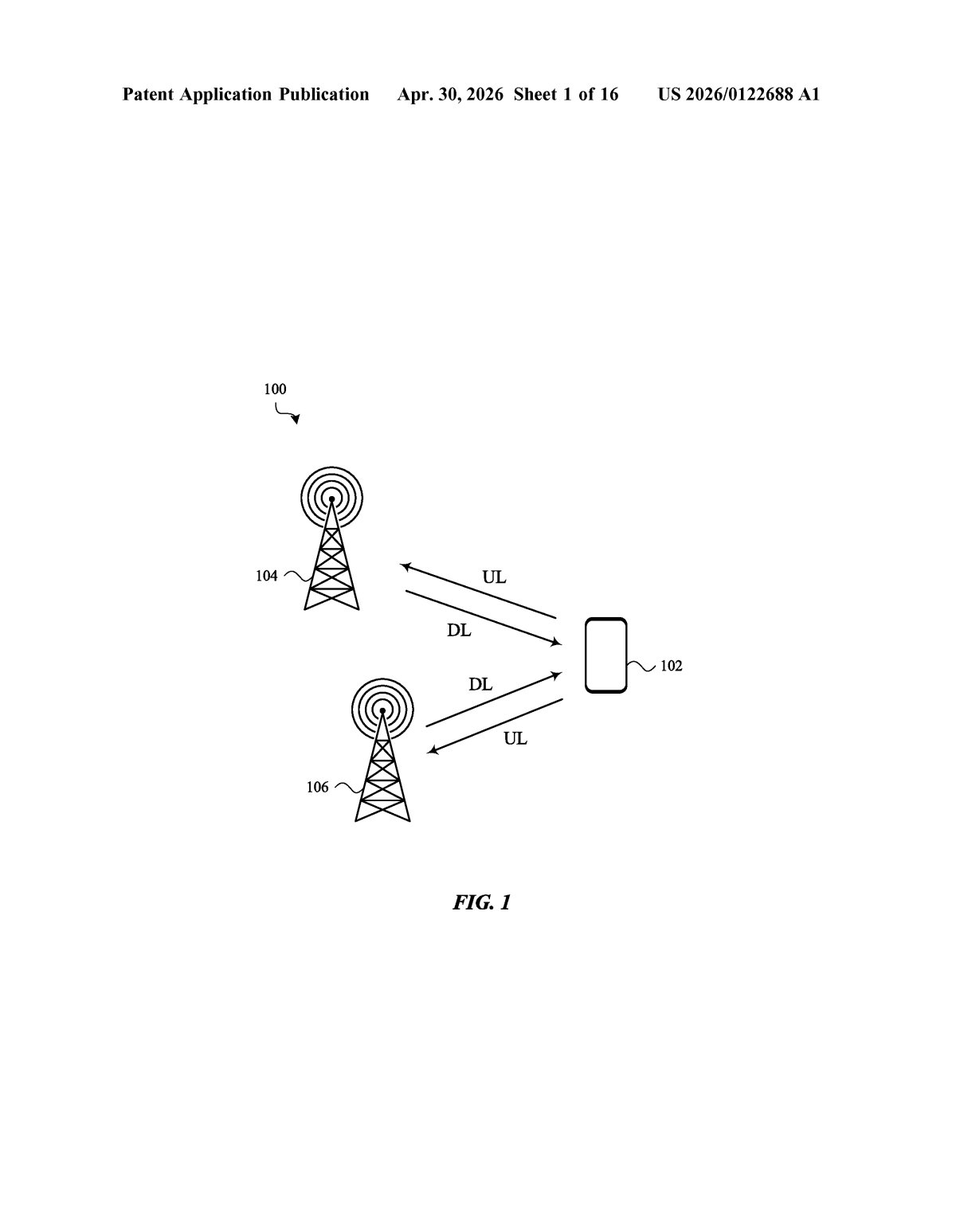
Apple's patent describes a system where the network sends your iPhone an early heads-up — a special control message — telling it exactly which radio channel to use to introduce itself to the next tower. The phone sends a "hello" signal on that channel to figure out the precise timing it needs before the actual switch happens.
The result is that by the time your iPhone officially hands off to the new tower, it's already done the legwork. The transition is faster and cleaner — which means fewer dropped calls, less buffering, and a more seamless experience when you're moving through areas with overlapping cell coverage.
How the PDCCH order triggers a pre-emptive RACH sync
The patent describes a UE (user equipment — that's your iPhone) that is actively connected to one cell tower, called a TRP (Transmission and Reception Point), in what's known as RRC_CONNECTED mode (a state where the phone has an active, maintained link to the network).
While still connected to that first TRP, the device listens for a PDCCH order — a Physical Downlink Control Channel message, essentially a short command broadcast by the network — that tells it a handoff is coming. Crucially, this order can come from either the current tower or the target tower, giving the network flexibility in how it orchestrates the transition.
In response, the phone determines the correct PRACH resource (Physical Random Access Channel — a specific radio slot reserved for devices making first contact) to use with the new tower. It then transmits a RACH preamble (a standardized "I'm here" probe signal) on that channel to calculate an initial timing advance (TA) — essentially, the precise time offset the phone needs to stay in sync with the new tower given the physical distance between them.
All of this happens before the phone formally switches over, so when the handoff occurs, the heavy lifting is already done.
What this means for iPhone call and data reliability
Cell tower handoffs are one of the last rough edges in mobile connectivity, especially in dense urban environments or high-speed transit scenarios where your phone might switch towers every 30 seconds. A patent like this sits squarely in the machinery of 5G multi-TRP coordination — a key feature of modern cellular standards designed to let devices work with multiple base stations simultaneously or in rapid succession.
For everyday iPhone users, the practical payoff would show up as fewer dropped FaceTime calls on the subway, smoother streaming on the highway, and more reliable hotspot performance in crowded venues. It's not a flashy feature you'd see on a spec sheet, but it's the kind of infrastructure-level polish that Apple tends to build into its custom modem work — and with Apple developing its own 5G modem, patents like this are a direct window into that effort.
This is cellular-standards plumbing — not exciting on the surface, but it's exactly the kind of low-level optimization that separates a good modem from a great one. Given Apple's well-documented push to ship its own 5G modem and reduce dependence on Qualcomm, this patent is a meaningful data point: Apple is doing serious, spec-level work on handoff performance, not just wrapping someone else's silicon.
There are more where this came from
We read every patent application Big Tech publishes and send you the ones worth knowing. Plain English, free, every week.
Want this weekly breakdown for a company we don't cover? Patentlyze Pro →