
Apple Patents a Hybrid Silicon-Oxide Gate Driver for Next-Gen Displays
Apple is trying to have it both ways in display design — combining the speed of silicon transistors with the low-leakage benefits of oxide transistors in a single gate driver circuit.
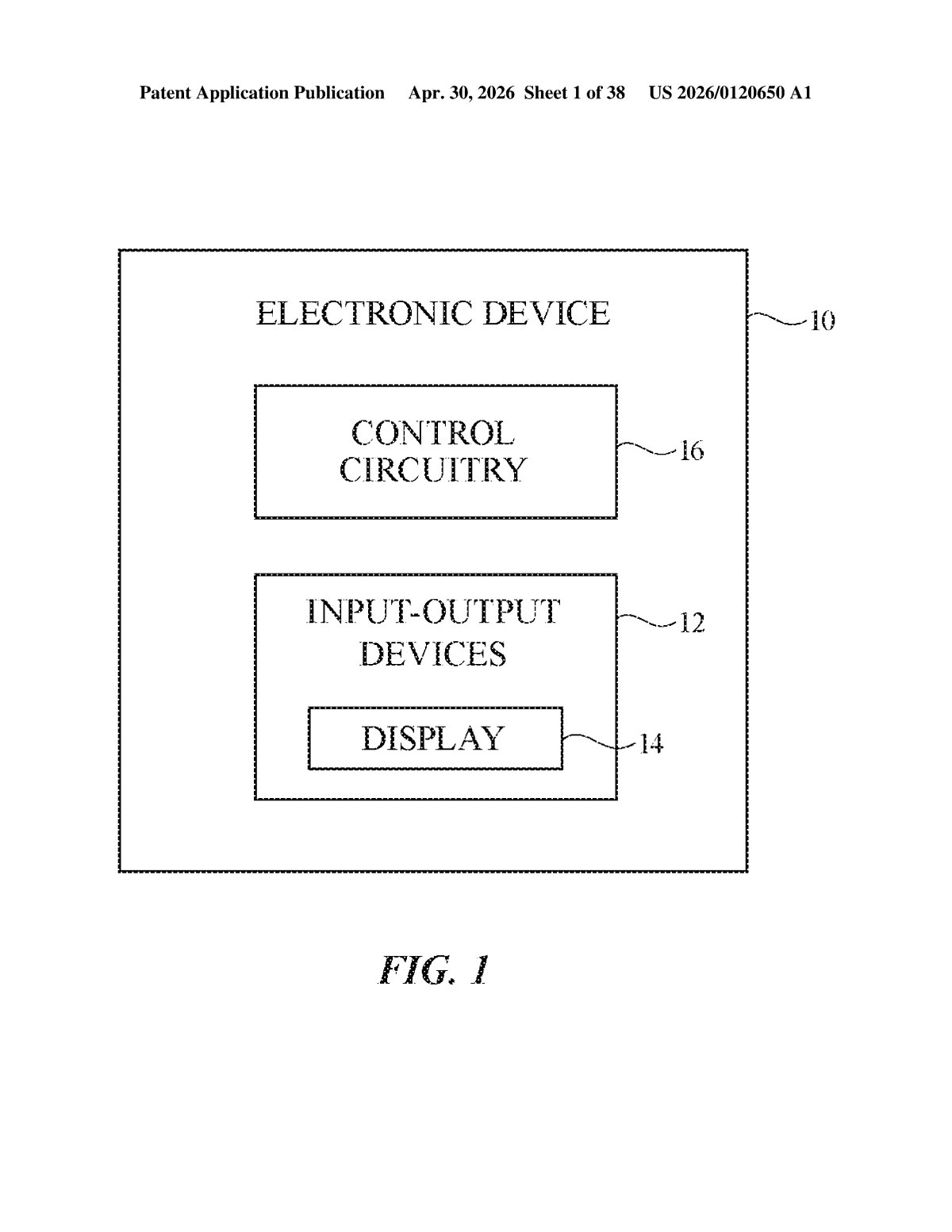
What Apple's split-transistor display driver actually does
Imagine the tiny circuits that tell each row of pixels in your screen when to turn on. Those circuits — called gate drivers — have to be both stable and fast, which is a tough combination to pull off with just one type of transistor technology.
Apple's patent describes a clever workaround: use two different transistor materials in the same driver. The part of the circuit responsible for passing signals down the chain (the shift register) uses oxide transistors, which barely leak electricity when idle — great for battery life. The part that actually fires the pixel row (the output buffer) uses silicon transistors, which switch faster.
By splitting the job across two transistor types, Apple can tune each clock signal independently — slow and steady for stability where it counts, fast and punchy for speed where you need it. It's a bit like using a diesel engine for the long haul and a sprinter motor for the burst.
How Apple separates shift and output clock signals
The patent covers a gate driver circuit — the chain of circuits that sequentially activate each row of pixels in a display. Every display needs one; the question is how to make it efficient.
The innovation here is a two-subcircuit architecture:
- Shift register subcircuit — clocked by dedicated shift register clock signals, this portion propagates a "carry" signal down the chain, one row at a time. It's built with semiconducting oxide transistors (think IGZO — indium gallium zinc oxide — a material that holds charge well and leaks very little current).
- Output buffer subcircuit — driven by separate output buffer clock signals, this portion takes the shift register's output and drives the actual gate line that activates the pixel row. Its key switching transistor is a silicon transistor, chosen for speed.
The critical detail in the independent claim is that the two sets of clock signals toggle independently. That means the shift register clock can use wider pulse widths (optimized for signal stability and noise immunity) while the output buffer clock uses narrower, faster pulses (optimized for precise pixel activation timing).
The second transistor in the output buffer — the oxide one — has its gate directly coupled to the shift register subcircuit, serving as a clean handoff point between the two domains.
What this means for future Apple display efficiency
Display power consumption is one of the biggest drains on any portable device, and a lot of that waste happens in the gate driver circuitry — transistors that are always switching, always leaking a little. Oxide transistors (like IGZO) have extremely low off-state leakage, which is why Apple and display makers have been moving pixel transistors toward them for years. But oxide materials switch more slowly, which is a problem for the output stage that needs to fire quickly.
This patent shows Apple working on integrating both materials at the driver level, not just in the pixel backplane. If this makes it into a shipping display — whether in an iPhone, iPad, or Mac — you'd potentially see gains in battery life and display responsiveness without having to sacrifice one for the other. It also signals that Apple is doing deep, process-level display engineering rather than relying entirely on panel suppliers.
This is genuinely interesting display engineering, not a surface-level software patent. The insight that you can decouple shift and output clock signals to independently optimize for stability versus speed is the kind of detail that suggests real lab work behind it. It won't make headlines the way a new form factor does, but it's exactly the kind of foundational IP that pays off across every screen Apple ships.
There are more where this came from
We read every patent application Big Tech publishes and send you the ones worth knowing. Plain English, free, every week.
Want this weekly breakdown for a company we don't cover? Patentlyze Pro →