
Apple Files Patent to Remove Blocky Patches From Video Before They Spread
Apple's latest filing goes after the faint squares that show up in streamed video, scrubbing a flawed frame before it gets used to build the next one.
What Apple's blocky-video fix actually does
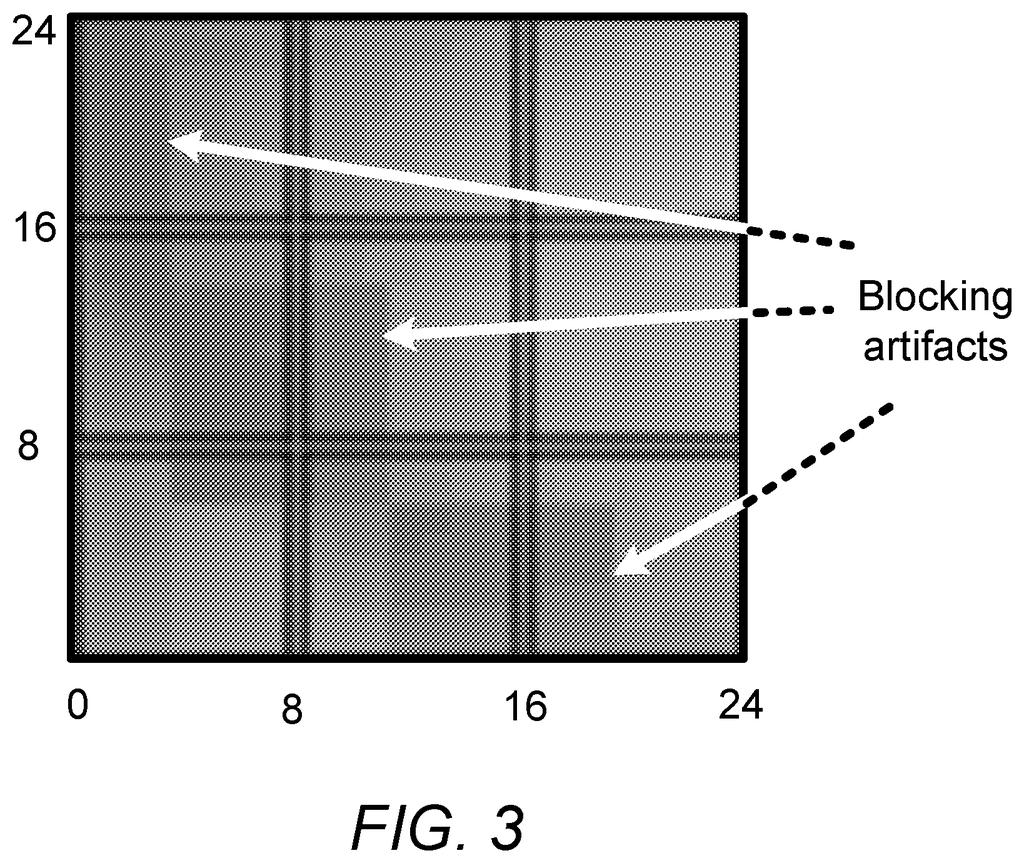
Imagine you're streaming a movie and a plain stretch of sky looks like it's built from faint squares instead of one smooth wash of color. That's blockiness, a side effect of squeezing video small enough to travel over the internet.
Video is stored by chopping each frame into small blocks and describing how they moved since an earlier frame. When neighboring blocks move slightly differently, visible seams show up along their edges. Phones and TVs run a cleanup step to smooth those seams, but only at the very end.
Apple's patent application moves some of that cleanup earlier. If the earlier picture a new frame is built from already has seams, those flaws get copied into the new frame in spots the end-stage cleanup doesn't expect. Scrubbing first stops the copying.
… performing motion compensation on the reference frame to obtain a predicted frame; performing reconstruction on the predicted frame to obtain a reconstructed frame; and applying a deblocking filter …
Translation: The system processes video frames and applies a special smoothing filter to clean up the picture.
How the cleanup moves ahead of the final picture
A video player (the decoder) rebuilds each frame in two main steps. First, motion compensation (shifting pieces of an earlier reference frame to guess how the scene moved) produces a predicted frame. Then reconstruction (adding the encoded corrections) produces the final picture. A deblocking filter (a tool that smooths the seams between blocks) normally runs only after that last step.
The claims cover running the filter sooner:
- On the reference frame, before motion compensation
- On the predicted frame, before reconstruction
- Optionally, once more on the finished frame
It can cover part of a frame or all of it.
The filing says this matters most for modes that build frames from pieces: temporal interpolated prediction (blending a frame before and a frame after to make the one between), optical flow refinement, and warp/affine motion (stretching and rotating blocks). These can give different parts of one block different motion, which creates seams inside the block. The filing also describes filtering those inner seams, not just a block's outer edges.
Settings travel in the video stream's headers: when to filter, how many pixels on each side of a seam to touch, and sensitivity thresholds. The decoder can also compare neighboring blocks, such as their motion or brightness-change settings, and filter only where they differ.
… determining one or more motion compensation units arranged in an array within the PU, and applying a filter to one or more boundaries of the one or more motion compensation units.
Translation: The method targets the edges between different blocks in the video to remove harsh lines and artifacts.
Why cleaner video decoding matters for your screen
If you watch video on a phone, laptop, or TV, the payoff would be cleaner skies, walls, and color gradients, the places where blocky patches are easiest to spot. The filing says the aim is better visual quality and better coding efficiency, meaning less of the video's data budget gets wasted on flaws.
The change lives in the decoder, the part of a device that rebuilds video for playback, so it would only help where both the sending and receiving ends support it. The filing uses the AOMedia Video Model's deblocking filter as an example, which points to open video standards work. It describes a technique, not a product, and says nothing about when or where it might ship.
Apple's 562nd filing in our Apple coverage since May follows work like the flicker fix for headsets and device setup via old phone.
Cleaning up video earlier means doing more cleaning. Every extra filtering pass costs processing time and power on the device playing the video, and video decoding already works hard on phones. The filing's answer is to make the extra pass optional, switched on only when neighboring blocks differ enough to cause seams.
There is a second risk. Smoothing too aggressively blurs real detail, like the edge of a building or the weave of a sweater. The filing hedges by letting the video stream set how many pixels get touched and how sensitive the filter is, which adds more settings for both ends of a video stream to agree on.
The trade reads as worth it. Blocky skies and gradients are among the most visible flaws in compressed video, and a switchable fix is a reasonable price to pay. The catch is that both ends of a video stream have to support it.
Get our take in your Top Stories
Liked this breakdown? Add Patentlyze as a preferred source on Google, and our plain-English take shows up more often in your Top Stories the next time Apple patent news breaks.
There are more where this came from
We read every patent application Big Tech publishes and send you the ones worth knowing. Plain English, free, every week.
The drawings
12 drawing sheets from US 2026/0332833 A1 · click any drawing to enlarge


Show the other 4 sheets


Want this weekly breakdown for a company we don't cover? Patentlyze Pro →
Be the first to weigh in