
Apple Patents the Core Mechanics Behind HTTP Live Streaming (HLS)
This patent covers the foundational plumbing behind HTTP Live Streaming — the protocol Apple invented that now powers video delivery across virtually every major streaming platform on the internet.
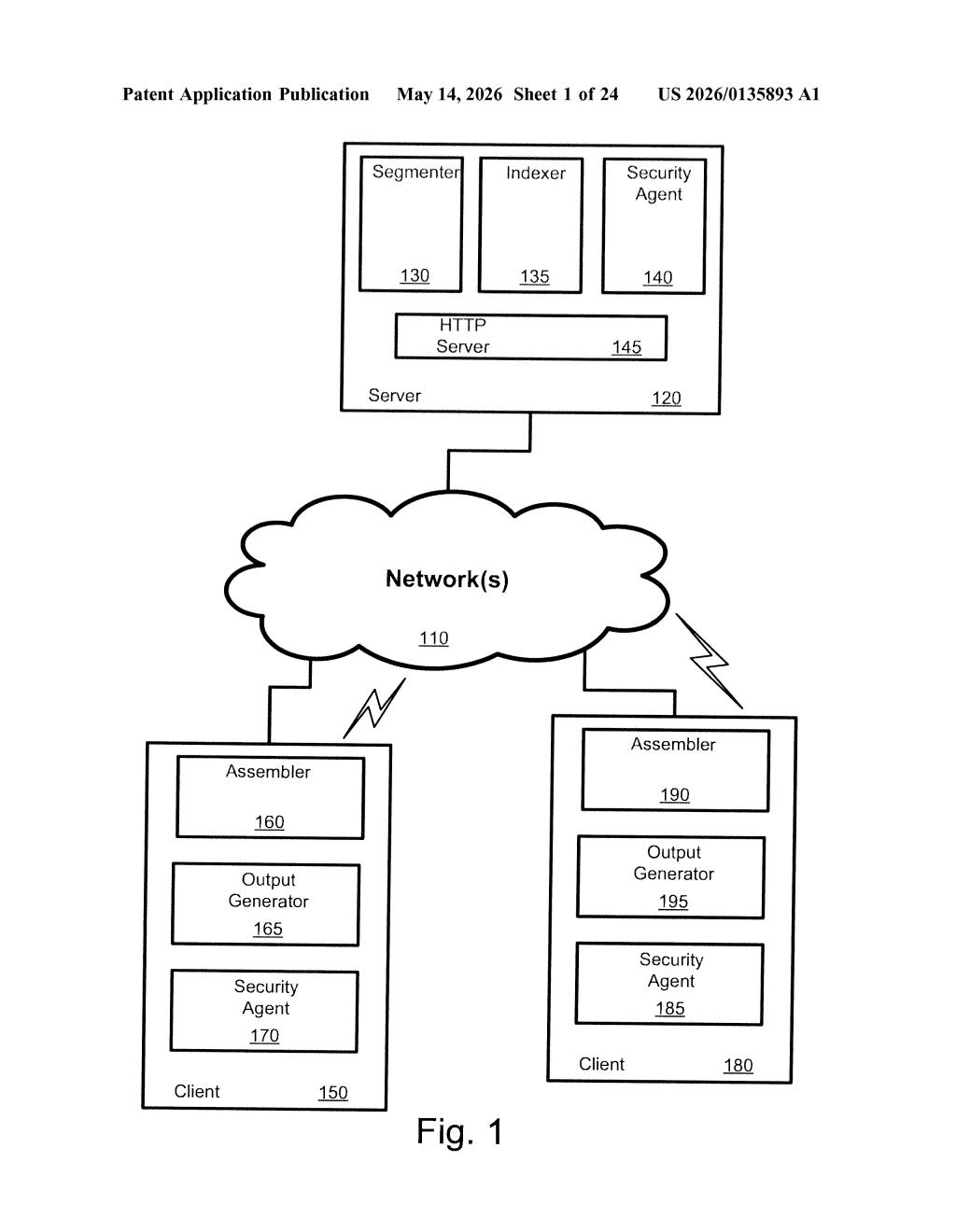
What Apple's HLS playlist protocol actually does
Imagine you're watching a live sports stream and your Wi-Fi hiccups. Instead of the video freezing completely, it quietly drops to a lower quality for a few seconds, then climbs back up. That seamless handoff is HTTP Live Streaming (HLS), and this patent describes exactly how it works under the hood.
At its core, HLS works by breaking a video into small chunks — typically a few seconds each — and listing them in a text file called a playlist. Your device reads the playlist, fetches the chunks in order, and plays them back. When your connection slows down, it switches to a different playlist pointing to lower-quality chunks. The patent spells out the rules for how that switching should happen, how long a client should wait before re-checking an unchanged playlist, and how to handle encrypted media files securely.
Think of it like a relay race baton handoff — the patent defines precisely how and when the runner (your device) grabs the next baton (media chunk) so playback stays smooth and secure.
How HLS manages playlists, switching, and decryption
The patent describes three core behaviors that make live and on-demand streaming reliable over standard HTTP connections.
Adaptive bitrate switching: A variant playlist lists multiple streams at different bandwidths (e.g., 1.28 Mbps, 2.56 Mbps, 7.68 Mbps). The client monitors connection speed and switches between them. The patent defines a minimum overlap window — how much of two concurrent streams must be buffered before the client commits to switching — and ties that window size to measured connection speed. Faster connection = smaller required overlap = quicker, lower-risk switch.
Playlist reload throttling: In live streaming, the playlist file updates constantly as new segments are added. If a client reloads the playlist and finds it unchanged, it must wait before retrying — with delays set as multiples of the target duration (the max length of a single media segment): 0.5× on the first retry, 1.5× on the second, 3.0× thereafter. This exponential back-off prevents servers from being hammered by impatient clients.
Encrypted media handling: The patent defines how the EXT-X-KEY tag signals encryption. When AES-128 is specified, each media file is decrypted individually using AES-128 CBC mode — critically, cipher block chaining does not span across files, so a single bad segment doesn't corrupt the rest of the stream. The decryption IV is either derived from the segment's sequence number or explicitly set in the tag.
Playback sequencing: The EXT-X-MEDIA-SEQUENCE tag gives each segment a number, so even as old segments scroll off a live playlist, the client always knows which chunk comes next.
Why HLS underpins almost every stream you watch
HLS is everywhere. Netflix, YouTube, Twitch, Disney+, and practically every CDN-backed video product either uses HLS directly or borrowed its architecture for MPEG-DASH. When you watch a live event on your iPhone, this is the protocol doing the heavy lifting. The rules in this patent — retry timing, overlap windows, encryption scope — are the kind of low-level decisions that determine whether millions of concurrent viewers experience a smooth stream or a spinner.
For Apple, this filing is partly a formalization of the HLS specification that Roger Pantos (listed inventor) has maintained publicly since 2009. It reinforces Apple's intellectual property position over a protocol the entire industry now depends on, at a moment when live streaming quality — think spatial audio, 4K HDR sports — is a genuine competitive battleground.
This is about as foundational as a patent gets — it's essentially Apple putting a legal stake in the ground over the HLS specification they wrote and the whole industry adopted. The technical content isn't novel in the sense of being new; it's the codification of a 15-year-old open standard. But that's exactly why the IP positioning matters: HLS is infrastructure, and infrastructure patents have long tails.
There are more where this came from
We read every patent application Big Tech publishes and send you the ones worth knowing. Plain English, free, every week.
Want this weekly breakdown for a company we don't cover? Patentlyze Pro →