
Apple Patents a Wi-Fi System That Checks Your Credentials Before You Can Join
Most Wi-Fi networks let any device in range start probing them for information. Apple's new patent describes a system where a device has to prove it belongs before the access point will even acknowledge it exists.
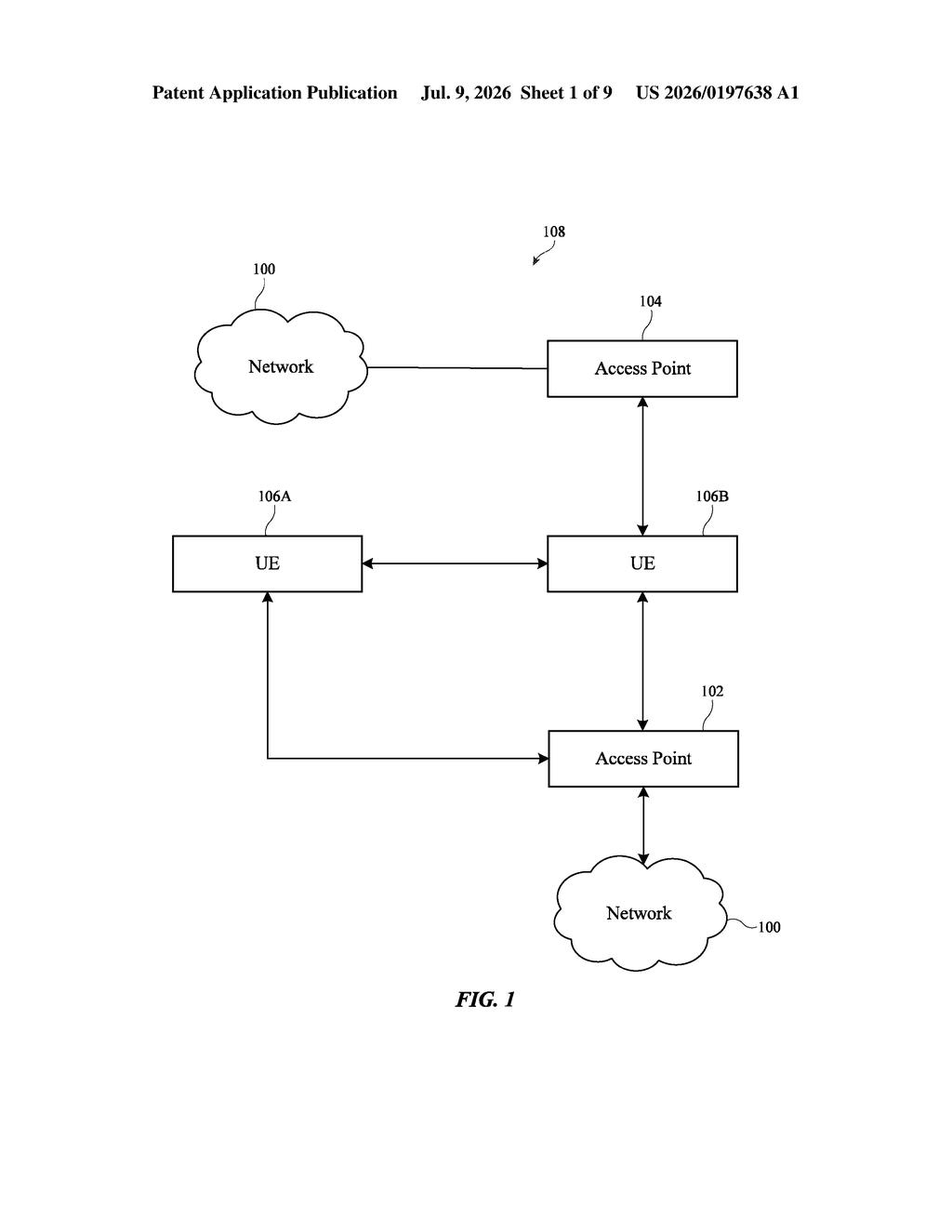
What Apple's pre-connection Wi-Fi verification actually does
Imagine walking into a coffee shop and the Wi-Fi router ignores every device that doesn't already have a secret handshake arranged in advance. That's essentially what this Apple patent describes for protected wireless networks.
Right now, when your phone looks for a Wi-Fi network, it sends out a general request and the router responds with its settings, which are visible to any device nearby. Apple's system would change that: your device first generates a one-time ID using a mix of your device's address, the router's address, and a shared secret key. Only then does the router respond, and only to devices that can produce the right ID.
The whole exchange, including the setup messages that normally travel in the open, gets encrypted before your device ever officially joins the network. The goal is to stop outsiders from snooping on who is connecting to what, or harvesting network configuration details they shouldn't have.
How the STA-ID hash and PASN handshake work together
The patent describes a protocol called BSS Privacy Enhancement (BPE), which wraps the normally unprotected setup phase of a Wi-Fi connection in cryptographic verification.
Here's the sequence:
- Before connecting, your device (the STA, or station) generates a STA-ID by feeding the router's network address, your device's network address, and a pre-shared cryptographic key into a hash function (a one-way mathematical operation that produces a unique fingerprint from its inputs). This STA-ID changes each session because the input addresses can rotate.
- Your device sends this STA-ID to the access point in the first message of a Pre-Association Security Negotiation (PASN) procedure, which is a Wi-Fi standard handshake designed to establish security before full connection.
- The access point checks whether the STA-ID is valid. If it is, it responds with its own PASN message. If not, it stays silent, effectively hiding itself from unauthorized devices.
- Both sides then independently derive a short-lived transient key (TK) from the exchange and use it to encrypt the management frames, the administrative messages that actually complete the connection.
The result is that the network's security parameters and configuration details are never transmitted in the clear to unverified devices.
What this means for enterprise and public Wi-Fi security
In enterprise environments, hospitals, or secure offices, the ability for any laptop in the parking lot to probe network details is a real reconnaissance risk. This patent closes that window by making the discovery phase itself gated, so an attacker can't even learn what security settings a network uses without already having authorized credentials.
For everyday users, the more immediate implication is tracking prevention. Because the STA-ID is derived from rotating addresses, each connection attempt looks different to outside observers, making it harder to track your device across locations. Apple has been pushing on both fronts, private Wi-Fi addresses and tighter connection security, for several years, and this patent fits that longer pattern.
This is careful, unglamorous security infrastructure work, and that's a compliment. Plugging leaks in the pre-association phase of Wi-Fi is genuinely useful, particularly as MAC address randomization has made device tracking harder and attackers have shifted attention to the connection setup phase itself. It won't ship as a user-facing feature anyone notices, but the absence of the problem it solves is exactly the point.
There are more where this came from
We read every patent application Big Tech publishes and send you the ones worth knowing. Plain English, free, every week.
Want this weekly breakdown for a company we don't cover? Patentlyze Pro →
Be the first to weigh in