
IBM Patents a System That Splits Graphics Chips to Serve Remote Computer Tasks
Modern GPUs are powerful enough to run several jobs at once — but deciding exactly how to divide that power, on the fly, at a remote server far from headquarters, is genuinely hard. IBM's new patent describes a system that figures it out automatically.
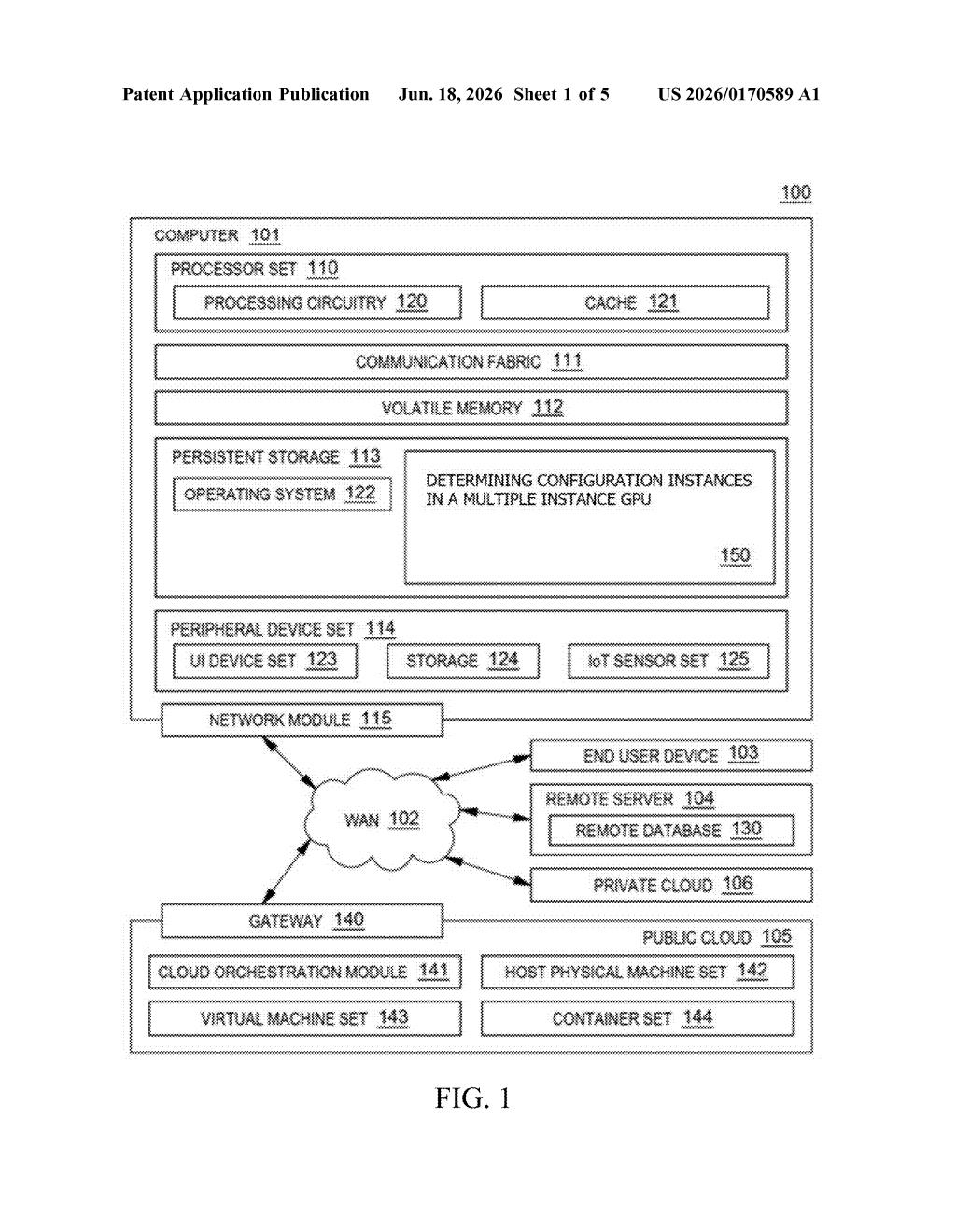
How IBM's GPU-slicing system decides what each job gets
Imagine a big, expensive GPU sitting inside a server at a cell tower or a factory floor — far from the main data center. Multiple programs want to use it at the same time: one for video analysis, one for fraud detection, one for something else entirely. The question is how to divide the GPU's power fairly and efficiently so every program gets what it needs without starving the others.
IBM's patented approach automates that decision. Instead of a human administrator manually setting rules, the system looks at what services are running, what they've historically needed, and what's currently being requested. It then uses a statistical model to predict how demand will shift over time and picks a GPU configuration that satisfies each service's requirements with high confidence.
The whole process happens at the edge — meaning on servers deployed close to where the data is generated, not in a remote cloud. That's important because those edge servers have limited resources and can't easily phone home for help every time a new job arrives.
How the Markov Chain model picks the right GPU slice
The patent describes a workflow for managing MIG — Multi-Instance GPU — a feature Nvidia introduced that lets a single physical GPU be split into smaller, isolated slices, each acting like its own miniature GPU. IBM's system decides, automatically, how to configure those slices for any incoming workload.
When a service requests GPU resources, it submits a specification — essentially a list of performance requirements (throughput, latency, memory, etc.). The system encodes that specification and consults historical usage data from the same edge site (a remote server location) to understand what configurations have worked before.
The novel part is the evaluation step. The system runs the request through a Discrete Time Markov Chain (DTMC) — a statistical tool that models how a system moves between different states over time (think of it as a flowchart with probabilities attached to each transition). The DTMC considers not just this one request in isolation, but how it fits alongside other service requests that are arriving around the same time at that edge site.
From that analysis, the system calculates execution metrics — predicted performance outcomes — and selects the MIG configuration most likely to satisfy the spec. It then provisions and runs the service using that configuration.
This is solid, unsexy infrastructure work aimed squarely at enterprise customers who are deploying AI at the edge and struggling with GPU resource management. It's not a consumer story, and IBM isn't trying to make it one. The Markov Chain angle is a legitimate technical choice for modeling sequential, time-dependent service requests — this isn't statistical window dressing. Whether it proves better than simpler heuristics in practice is the real question, but the problem it addresses is real.
There are more where this came from
We read every patent application Big Tech publishes and send you the ones worth knowing. Plain English, free, every week.
Want this weekly breakdown for a company we don't cover? Patentlyze Pro →