
IBM Patents Technology to Track Exactly How Much Power Each Program Uses on a Shared Graphics Chip
When dozens of jobs run on the same GPU at once, figuring out how much power each one actually consumed is surprisingly hard. IBM has filed a patent for a method that approximates that number without requiring dedicated hardware meters for every workload.
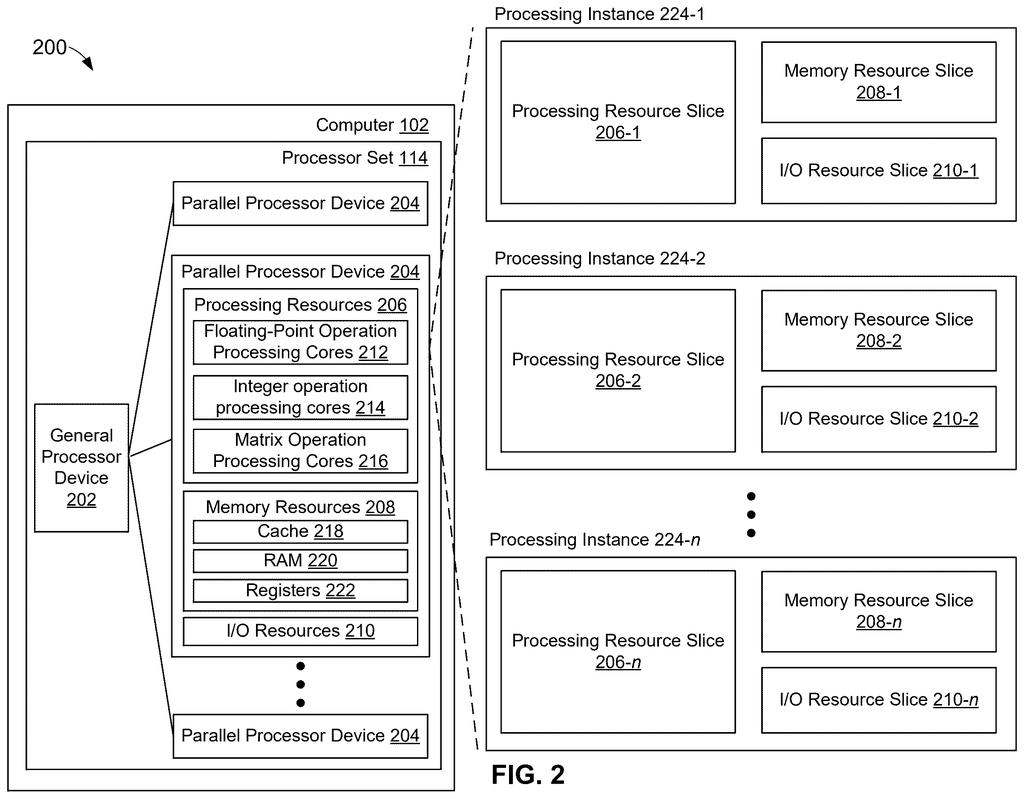
How IBM tracks power use across shared GPU workloads
Imagine a busy kitchen where five chefs share the same stove, oven, and refrigerator. At the end of the night, the restaurant owner wants to know how much electricity each chef's cooking actually used. You can't just look at one power meter for the whole kitchen.
That's roughly the problem IBM is addressing here, applied to graphics processors (GPUs) in data centers. Modern GPUs can run many tasks at the same time, but there's no built-in way to say "this particular job used exactly this much power." IBM's patent describes a system that assigns a weight to each type of hardware resource on the GPU, then looks at how much of each resource a given job actually used, and calculates an estimated power figure from those two inputs.
The practical payoff is better accounting. Cloud providers could use this to bill customers more accurately, and data center operators could spot which workloads are burning more energy than expected.
How the weighted resource formula estimates per-instance power
The patent describes a three-step calculation running on a host processor alongside a parallel processor (a chip designed to run many tasks at once, like a GPU).
- Step 1 - Assign weights: The system assigns a numerical weight to each type of hardware resource on the GPU (for example, memory bandwidth, compute cores, and cache). These weights reflect how much each resource type contributes to overall power draw.
- Step 2 - Measure usage: For a specific processing instance (one workload or job running on a slice of the GPU), the system records how heavily that job used each resource type during execution.
- Step 3 - Calculate estimate: The system multiplies each usage value by its corresponding weight and combines the results into a single estimated power consumption figure for that job.
The key insight is that the GPU's total resources are shared across many simultaneous jobs, so the system only looks at the subset of resources allocated to the specific instance it's measuring. This avoids double-counting and lets multiple workloads be evaluated in parallel.
What this means for cloud GPU billing and efficiency
For cloud computing providers like IBM Cloud or any operator running shared GPU infrastructure, knowing per-job power consumption is a prerequisite for fair billing and for meeting energy efficiency targets. Right now, most operators can measure total GPU power but have limited tools for attributing that power to individual tenants or workloads.
This patent won't change what a GPU does, but it could change how cloud invoices look and how data center managers decide which workloads to run or throttle. As AI training and inference workloads drive GPU power consumption to new highs, better per-job accounting becomes a real operational need, not just an accounting nicety.
This is unglamorous infrastructure work, but it addresses a real gap: GPU power attribution at the workload level is a known headache for cloud operators and sustainability teams. The weighted-resource approach is straightforward enough that it could realistically ship as a feature in a hypervisor or cloud management layer without requiring new hardware.
Get our take in your Top Stories
Liked this breakdown? Add Patentlyze as a preferred source on Google, and our plain-English take shows up more often in your Top Stories the next time IBM patent news breaks.
There are more where this came from
We read every patent application Big Tech publishes and send you the ones worth knowing. Plain English, free, every week.
The drawings
10 drawing sheets from US 2026/0211749 A1 · click any drawing to enlarge


Show the other 2 sheets


Want this weekly breakdown for a company we don't cover? Patentlyze Pro →