
Red Hat Patents a Middleware Layer That Connects Incompatible Quantum Computers
Quantum computers from different vendors can't easily talk to each other — the same way early computer networks couldn't. Red Hat thinks middleware is the fix, and they're patenting the approach.
What Red Hat's quantum networking bridge actually does
Imagine you're at a company running two quantum computers from different manufacturers — say, an IBM system and an IonQ system. They use completely different underlying technologies, different software interfaces, and different ways of receiving instructions. Right now, getting them to work together is largely a custom engineering nightmare.
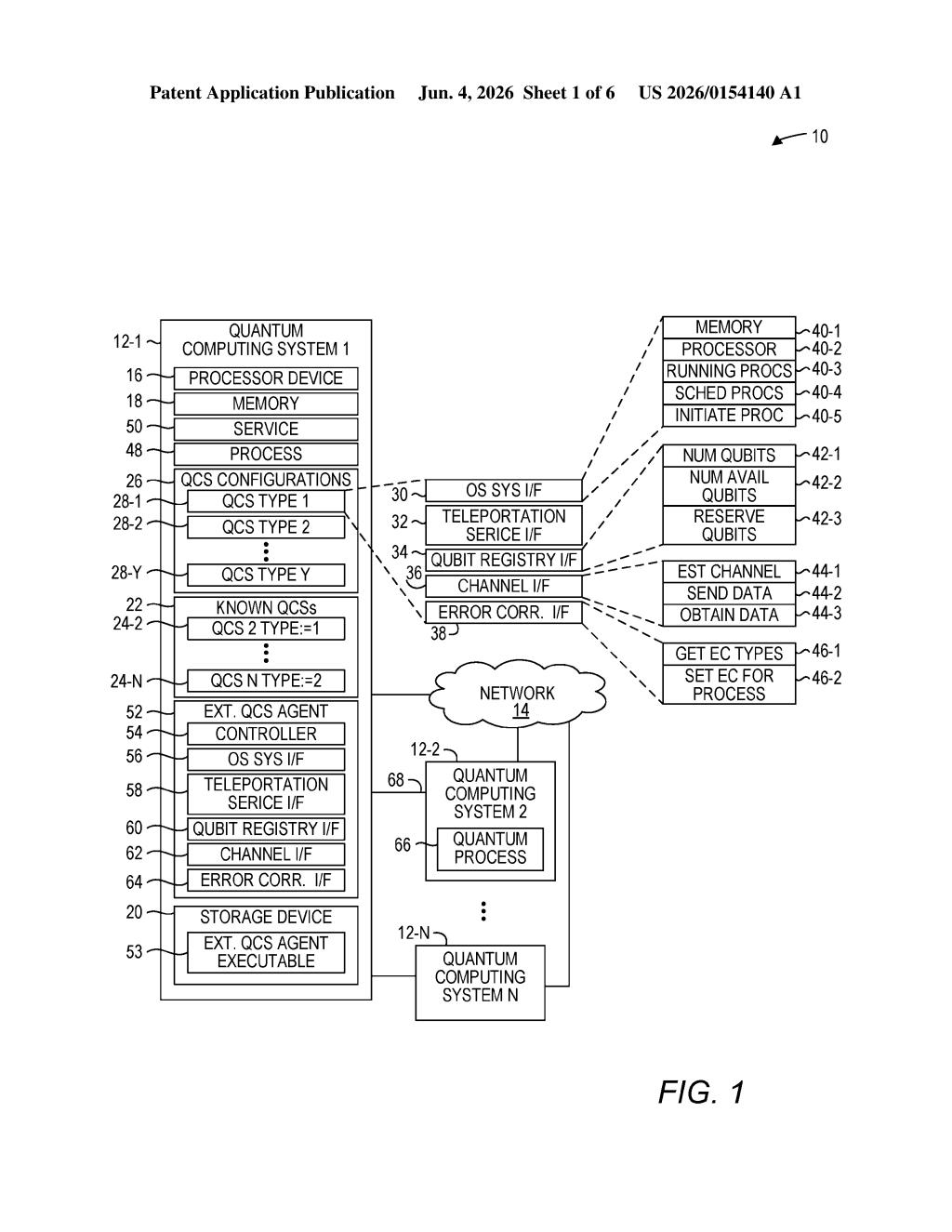
Red Hat's patent describes a broker service that sits on one quantum computer and acts as a universal translator. When a program on that machine needs to hand off work to a different quantum system, the broker figures out what type of system it's talking to and automatically spins up the right kind of connector — called an agent — to handle the conversation in a way the other machine understands.
The idea is similar to how Red Hat's existing middleware products (like AMQ or OpenShift) let classical computers from different environments communicate without custom glue code. They're betting the same problem will show up — and need the same kind of solution — in the quantum world.
How the external QCS agent handles cross-platform translation
The patent describes a quantum computing system (QCS) communication service that runs as a persistent process on one quantum machine. Its job is to handle outbound communication to other, potentially incompatible, quantum systems.
Here's the core flow:
- A process running on the first quantum computer signals that it needs to communicate with another quantum system.
- The service looks up QCS type information — essentially a registry that knows what kind of hardware or platform the target system is.
- Based on that type, the service instantiates an external QCS agent: a purpose-built connector configured for that specific platform type.
The key insight is that the agent is dynamically selected based on the target's type, rather than hardcoded. This means the same broker service could, in theory, communicate with IBM Quantum, Rigetti, IonQ, or any other QCS type — as long as a corresponding agent configuration exists.
This is a classic adapter pattern (a well-known software design approach where a single interface hides the complexity of many different underlying systems) applied to quantum networking. The patent is primarily a software/middleware claim, not a quantum physics claim.
What this means for enterprise quantum computing adoption
The quantum computing landscape is fragmented — multiple competing hardware platforms, each with its own SDKs, qubit types, and communication protocols. As enterprises start running real quantum workloads, they'll increasingly want to distribute jobs across multiple systems from different vendors, the way they currently spread classical workloads across hybrid cloud infrastructure. Interoperability middleware is the boring-but-essential plumbing that makes that possible.
Red Hat is essentially planting a flag in quantum middleware the same way it did in Linux enterprise support and container orchestration. If quantum computing adoption follows the hybrid-cloud adoption curve, whoever owns the interoperability layer owns significant leverage. This patent covers an early, foundational piece of that stack.
This is a smart, methodical filing from Red Hat — not a physics breakthrough, but a clear statement of where they're placing their bets. The adapter-pattern approach they're patenting is unglamorous but exactly the kind of infrastructure that enterprises will need as multi-vendor quantum deployments become real. Red Hat has played this game before with OpenShift and AMQ; don't dismiss the quiet middleware filing.
There are more where this came from
We read every patent application Big Tech publishes and send you the ones worth knowing. Plain English, free, every week.
Want this weekly breakdown for a company we don't cover? Patentlyze Pro →