
Qualcomm Patents a Digital Twin System That Cross-Checks Your Phone's Location
Your phone says it's here. The network isn't so sure. Qualcomm wants to build a virtual copy of the whole network to settle the argument automatically.
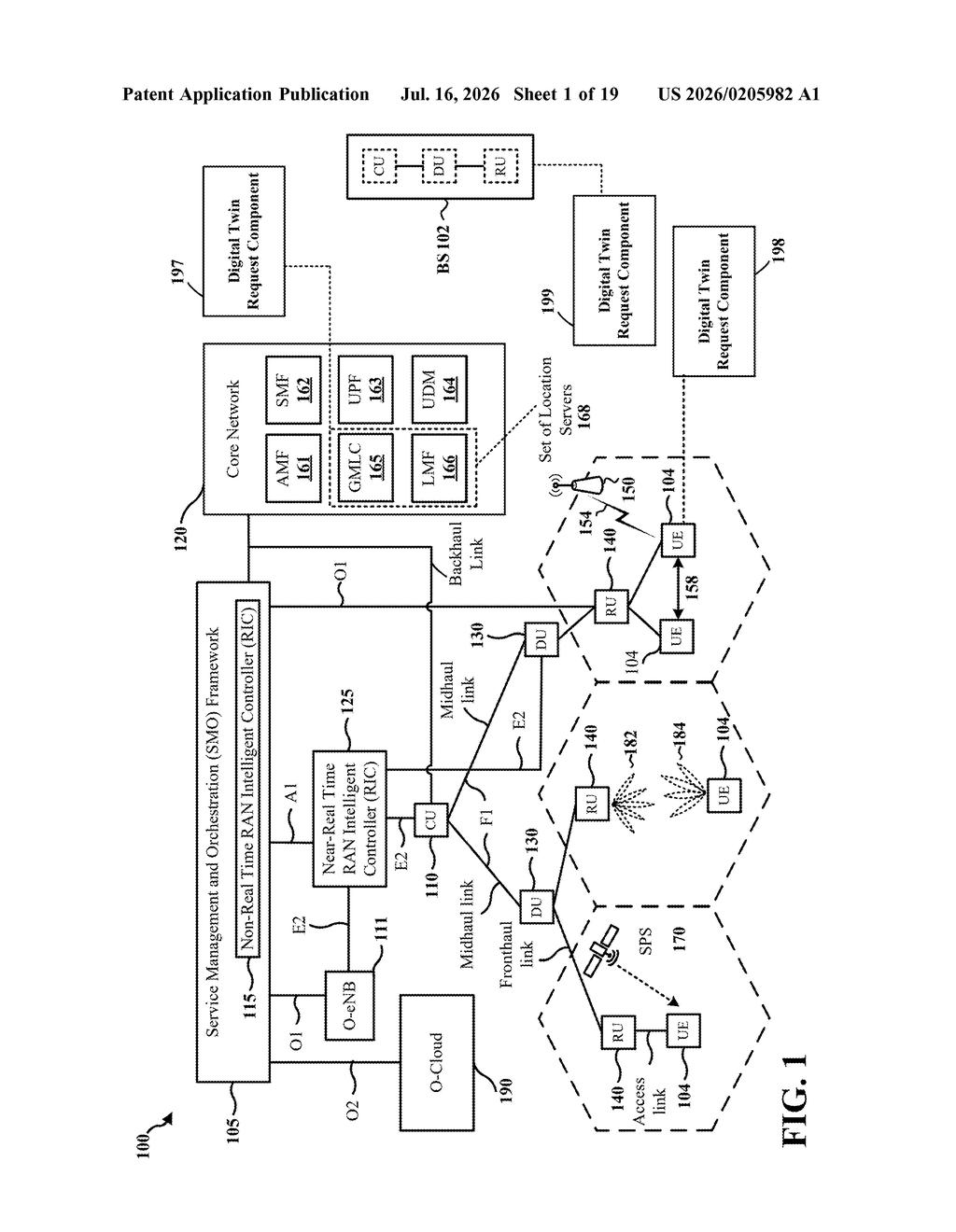
How Qualcomm's virtual network copy checks your position
Imagine your GPS says you're standing on one corner, but your bank's fraud system thinks you're somewhere else entirely. These kinds of location disagreements happen constantly inside wireless networks, and they're hard to catch. Qualcomm's new patent tries to fix that.
The idea is to create a digital twin, basically a detailed virtual copy of a real wireless network, and use it as a second opinion on location data. When a phone reports its position, the system asks the digital twin: does this actually make sense given the radio signals, cell towers, and environment we know about? If the twin says no, something's off.
This matters especially as carriers and device makers lean harder on AI to figure out where phones are located. AI location systems are only as good as the data they train on, and bad location readings can corrupt the whole process. The digital twin acts like a fact-checker running in the background.
How the DT provider validates UE positioning data
The patent describes a two-party system: a DT consumer (a base station, network server, or similar node that needs location data) and a DT provider (a server that creates and manages the digital twins).
The process works in two steps:
- The DT consumer sends a first request asking the DT provider to either create or activate a network digital twin (NDT), a software model of the radio environment, for a specific positioning job.
- Once that twin is live, the consumer sends a second request asking the provider to verify or validate location data tied to a specific device (called a UE, or user equipment, which is usually a phone or IoT sensor).
The DT provider runs the check against its virtual model of the network and sends back a confirmation or flag. Verification here means checking that the raw measurements are internally consistent; validation means checking that the reported location actually matches what the network physics would predict.
The system is designed to plug into AI and machine learning positioning pipelines, where stale or spoofed location inputs can silently degrade accuracy over time.
What this means for AI-driven 5G location services
Location accuracy is increasingly load-bearing infrastructure for 5G use cases: precision manufacturing, autonomous vehicles, emergency response, and AR. If the location data feeding these systems is wrong, even slightly, the downstream consequences can be serious. A background validation layer that uses a live virtual model of the network is a more principled approach than simple threshold checks.
For Qualcomm specifically, this fits squarely into its push to sell AI positioning software alongside its modem chips. A digital twin validator makes its own AI-driven location stack more defensible to carriers who worry about reliability, and it could become a standard part of how next-generation networks certify device positions before acting on them.
This is solid infrastructure work rather than a flashy consumer feature, but it addresses a real and underappreciated problem: AI positioning systems are only trustworthy if the data going in is clean. Qualcomm is essentially patenting the quality-control layer. It won't make headlines, but carriers evaluating 5G precision-location services will care about it.
There are more where this came from
We read every patent application Big Tech publishes and send you the ones worth knowing. Plain English, free, every week.
Want this weekly breakdown for a company we don't cover? Patentlyze Pro →
Be the first to weigh in