
Red Hat Patents Automatic Container Image Translation Between Incompatible Runtimes
If you've ever tried to run a Docker-built container on a system that only speaks Podman — or vice versa — you know the headache. Red Hat is patenting a way to make that problem invisible, automatically translating container image formats on the fly.
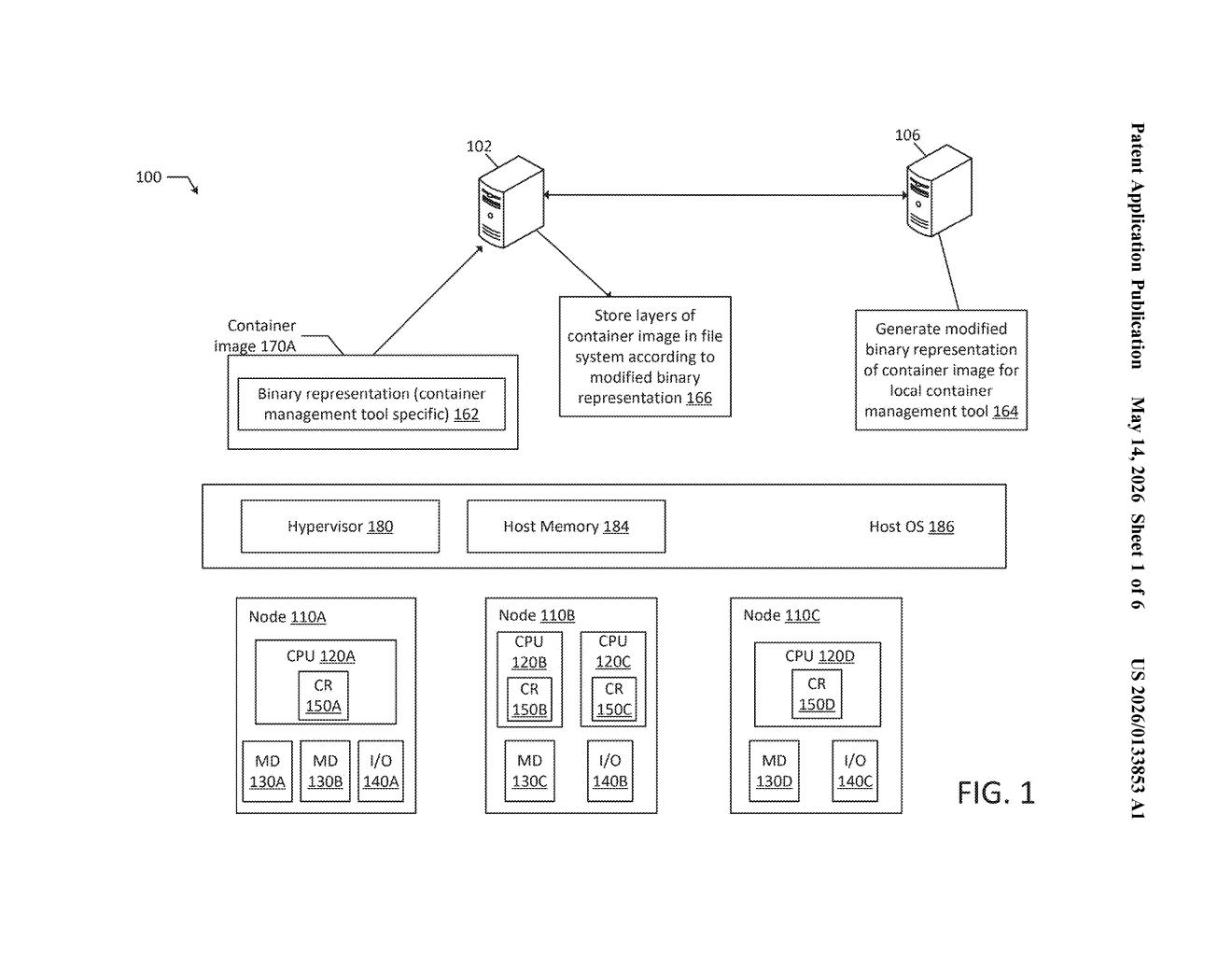
What Red Hat's container format translator actually does
Imagine you download a software package that was packed using one brand of zip tool, but your computer only understands a different zip format. Right now, you'd have to manually repackage it. That's roughly the situation with container images — the portable bundles that ship modern software — when they're built with one tool but need to run on a system that uses a different one.
Red Hat's patent describes a system where your machine quietly handles that incompatibility for you. When you pull a container image that was built with an incompatible tool, a background process on your device ships the image off to a remote service, which translates it into the format your local tool understands, then sends it back with instructions on where to store it.
The end result: the container just runs, without you ever knowing a translation happened. It's the container equivalent of a universal adapter plug — same power, different shape.
How the daemon offloads binary translation to a remote service
The patent describes a client-server translation pipeline triggered automatically when a container image format mismatch is detected. Here's how the pieces fit together:
- Pull operation: A computing device requests ("pulls") a container image that was originally built with a management tool the device doesn't support — think Docker vs. Podman, or any two incompatible container runtimes.
- Daemon-mediated offload: A daemon (a background process that runs silently on the host) intercepts the situation and forwards metadata about the image to at least one remote computing device capable of reading the original binary format.
- Remote binary translation: The remote service reads the first binary representation — the raw on-disk encoding tied to the original tool — and produces a second binary representation compatible with the local management tool. This is the core translation step.
- Storage instruction delivery: The remote service sends back not just the translated image, but also explicit instructions telling the local device where to store the new format so the local tool can find it.
- Execution: The local device runs the container using the translated image, via the compatible management tool, as if nothing unusual happened.
The claim language is deliberately broad — it says "virtualized compute instance image" rather than just "container image," which could theoretically cover VM images or other encapsulated workloads beyond traditional OCI containers.
What this means for multi-runtime container deployments
Container tooling fragmentation is a real, daily friction point for platform engineering teams. Organizations running mixed environments — some nodes on Docker, some on containerd, some on CRI-O — currently need manual conversion steps or carefully curated image pipelines. Red Hat's approach pushes that complexity into infrastructure rather than onto developers.
For Red Hat specifically, this fits neatly into their OpenShift and Podman ecosystem strategy. Lowering the barrier to adopting Podman (Red Hat's daemonless, rootless alternative to Docker) is a competitive priority. If pulling a Docker image on a Podman-only system Just Works, the switching cost drops significantly — and that's good for Red Hat's enterprise Linux and Kubernetes business.
This is unsexy infrastructure plumbing, but it's the kind of patent that actually ships as a real feature. Container format compatibility is a genuine enterprise pain point, and automating the translation layer at the daemon level is a clean architectural solution. It's not a moonshot — it's the kind of quiet quality-of-life work that wins platform adoption wars.
There are more where this came from
We read every patent application Big Tech publishes and send you the ones worth knowing. Plain English, free, every week.
Want this weekly breakdown for a company we don't cover? Patentlyze Pro →