
IBM Patents a System That Catches Forgotten Meals and Calculates Insulin Doses
Forgetting to log a meal is one of the most common — and dangerous — mistakes in insulin-dependent diabetes management. IBM's new patent describes a system that notices you ate something even when you didn't tell it you did.
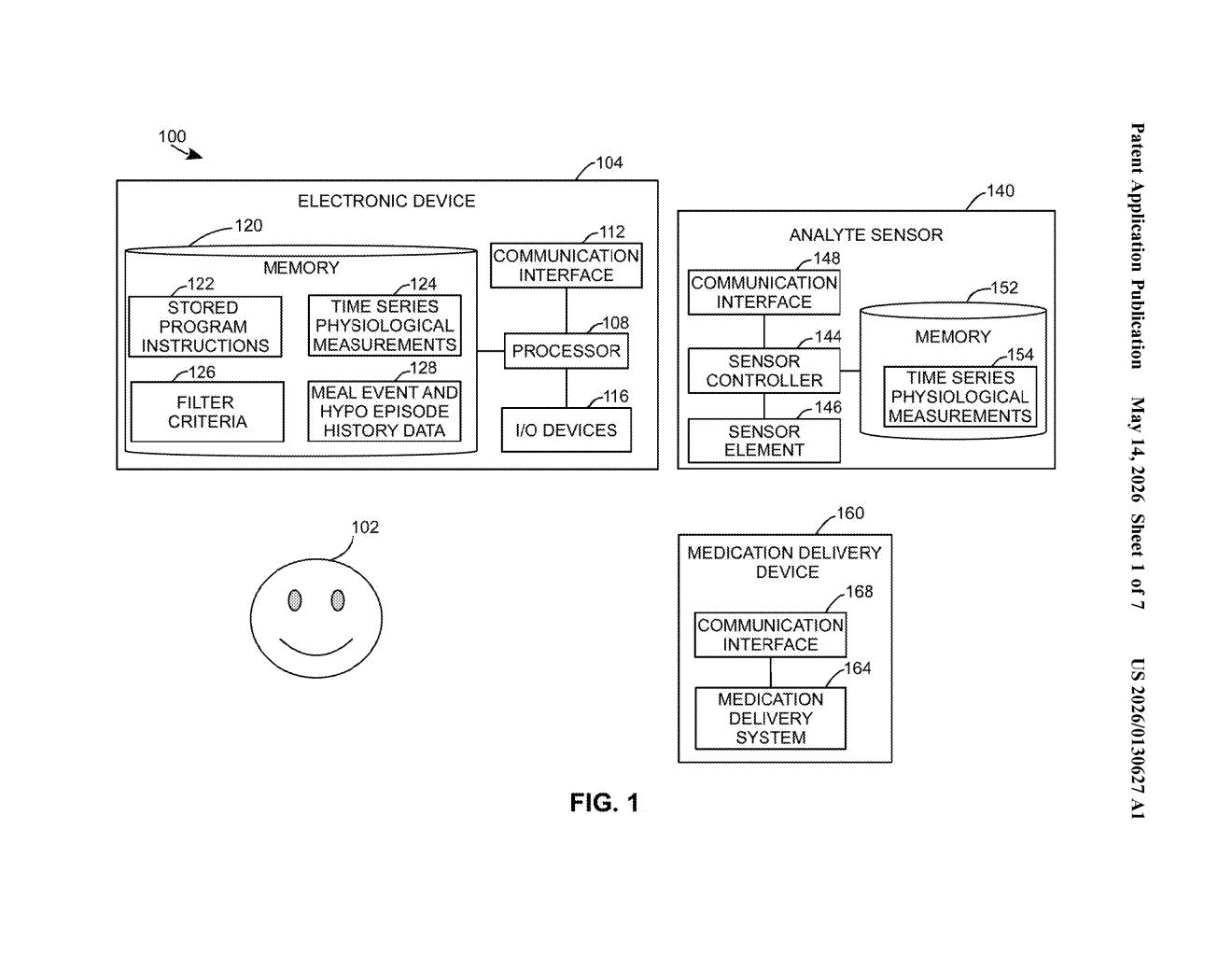
How IBM's system spots a meal you forgot to log
Imagine you're managing Type 1 diabetes with an insulin pump and a continuous glucose monitor (CGM). You grab a sandwich, get distracted, and forget to log the meal or trigger a bolus dose. Your blood sugar spikes — and by the time you notice, you're already in trouble.
IBM's patent describes a smarter system: one that watches your glucose readings in real time, detects the characteristic rise that follows eating, and checks whether you actually told it you had a meal. If no meal was logged, it flags a missed meal event and calculates a recommended insulin dose based on how long ago you ate.
The clever part is the timing adjustment. A bolus given two hours after a meal needs to be calculated differently than one given right after eating. The system factors in that elapsed time so the recommended dose is appropriate for where your body currently is in digesting that meal — not where it was when you first sat down.
How the sensor data flags a missed meal event
The system centers on a continuous analyte sensor — think a CGM patch on your arm transmitting glucose readings every few minutes. Those readings arrive as a time series, and a processor monitors that stream for patterns.
When the processor sees a rapid upward change in glucose levels that crosses a predetermined threshold, it generates a timestamp marking the likely start of a meal. It then checks that timestamp against a log of recorded meal events stored in memory. If there's no matching entry, the system classifies this as a missed meal event — a meal the user consumed but never officially logged.
From there, the system calculates a recommended medication bolus (the dose of insulin to administer). Crucially, this calculation incorporates the length of time elapsed between the missed meal timestamp and the current moment. This is important because insulin timing relative to carbohydrate absorption is highly nonlinear — a late correction dose needs to account for how much glucose has already been processed.
Finally, an output message is generated — likely a notification on a paired device — telling the user what dose is recommended. The patent doesn't specify how the user acts on this (manual injection, pump command, etc.), keeping the architecture flexible.
What this means for diabetes management tech
For the roughly 8 million Americans using insulin, missed boluses are a leading cause of hyperglycemic episodes. Current closed-loop insulin systems (sometimes called artificial pancreas systems) can automate basal insulin delivery but still rely heavily on the user manually announcing meals. IBM's approach fills that gap by making meal detection passive and automatic, reducing the cognitive load on the user.
This patent sits in a competitive space alongside CGM makers like Dexcom and Abbott, and insulin pump companies like Tandem and Medtronic. IBM doesn't make medical hardware, so this filing likely signals interest in the software and AI layer of diabetes management — possibly as a platform or licensing play rather than a consumer device.
This is a genuinely useful idea in a domain where software quality has real health consequences. The core insight — that a glucose spike is itself evidence of an unlogged meal, and that the bolus math should reflect how late the correction is — is clinically sound and not obvious to implement well. IBM filing here is a little unexpected given their pivot away from consumer health tech, but the IP could have real licensing value with medical device OEMs.
There are more where this came from
We read every patent application Big Tech publishes and send you the ones worth knowing. Plain English, free, every week.
Want this weekly breakdown for a company we don't cover? Patentlyze Pro →