
IBM Patents an Automatic Load-Balancing System for Distributed Database Leaders
When one server in a distributed database cluster gets hammered with traffic, the whole system can slow to a crawl — IBM's new patent describes a manager that spots the overload and shuffles database leadership roles to other servers automatically, doing it in as few moves as possible.
How IBM's system keeps database hosts from buckling
Imagine a restaurant kitchen where one chef is handling every order while the others stand idle. Orders pile up, food gets cold, and customers get frustrated. Distributed databases face the same problem: if too many leader instances — the database nodes that handle writes and coordinate reads — pile up on one server, that server buckles under the load.
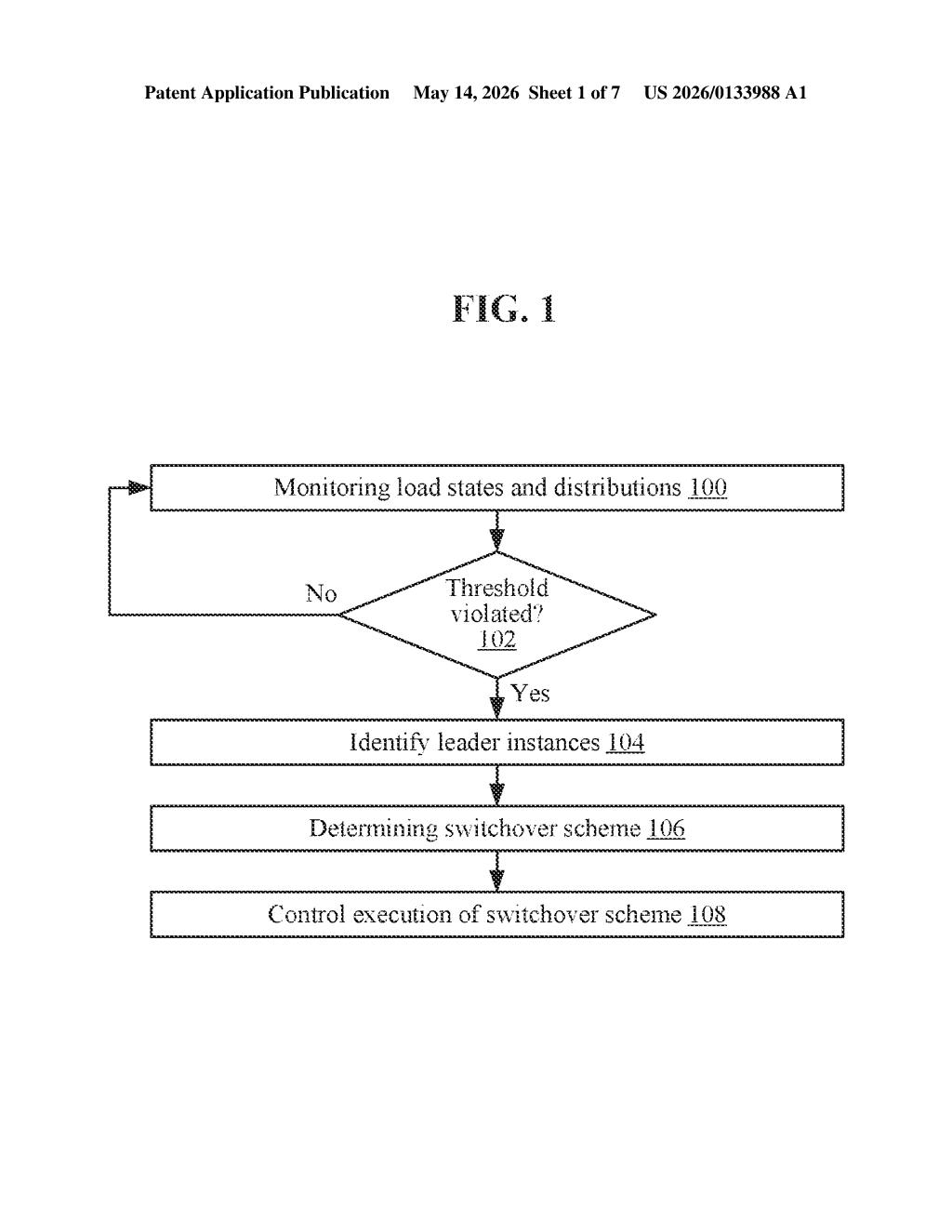
IBM's patent describes a background manager that constantly watches how busy each server is. The moment a server's load crosses a danger threshold, it pinpoints which leader database instances are running there and works out the smallest possible set of role handoffs needed to fix the imbalance. One of that leader's replicas (a standing backup copy) steps up and takes over.
The clever part is the emphasis on doing this with the minimum number of switchovers. Every leadership handoff carries a small cost — brief coordination overhead, potential for a hiccup — so the system tries to solve the problem with as few moves as a chess grandmaster needs to reach checkmate.
How the switchover scheme finds the minimum reassignments
The patent centers on a component IBM calls the leader distribution managing component — a supervisor process that sits above the distributed database cluster and keeps a continuous eye on two things: how loaded each host machine is, and how the leader/replica roles are distributed across those machines.
When it detects that a host's metrics (CPU, memory, I/O — collectively the load state) breach a predefined threshold, it enters a resolution workflow:
- Identify: Find every leader instance currently running on the overloaded host.
- Plan: Compute a switchover scheme — a minimal ordered set of role promotions where a replica takes over the leader role from its paired leader instance.
- Execute: Orchestrate the handoffs defined by the scheme, coordinating the timing so the database stays available.
The key constraint baked into the scheme is minimum switchovers: the system doesn't shuffle more roles than necessary to bring the host back below threshold. This is important because in a leader-follower configuration (where one node accepts writes and one or more replicas stay in sync), every role change involves a brief negotiation period and potential client reconnections. Minimizing that count reduces blast radius.
The patent covers this as a general method applicable to any distributed database using leader-follower replication — think setups analogous to how databases like SAP HANA, CockroachDB, or etcd handle quorum leadership.
What this means for cloud database reliability at scale
For teams running large distributed databases on-premises or in hybrid clouds, uneven load distribution is a persistent headache. Operators typically handle it manually or with coarse autoscaling policies that overshoot. An automated, minimum-disruption rebalancer addresses that gap directly — your database stays available and your overloaded host gets relief without a cascade of unnecessary role changes rippling through the cluster.
For IBM specifically, this fits squarely into its enterprise database portfolio — particularly IBM Db2 and its cloud-managed database offerings. A built-in load-aware leadership manager would be a meaningful operational feature for large enterprise customers running multi-tenant or high-availability workloads, where manual intervention during a load spike is simply not acceptable.
This is unglamorous but genuinely useful infrastructure work. Automatic, minimum-disruption leader rebalancing is the kind of feature that database administrators quietly wish every distributed system had, and IBM is right to formalize it. It won't make headlines, but it's the sort of reliability primitive that earns trust in enterprise deployments.
There are more where this came from
We read every patent application Big Tech publishes and send you the ones worth knowing. Plain English, free, every week.
Want this weekly breakdown for a company we don't cover? Patentlyze Pro →