
Sony Patents a Two-Direction Video Feed for Screens Joined Into One Large Display
Building a wall of screens usually means running a lot of cables. Sony's new patent describes a smarter wiring approach where each display in a chain pulls its portion of a video feed from both directions at once.
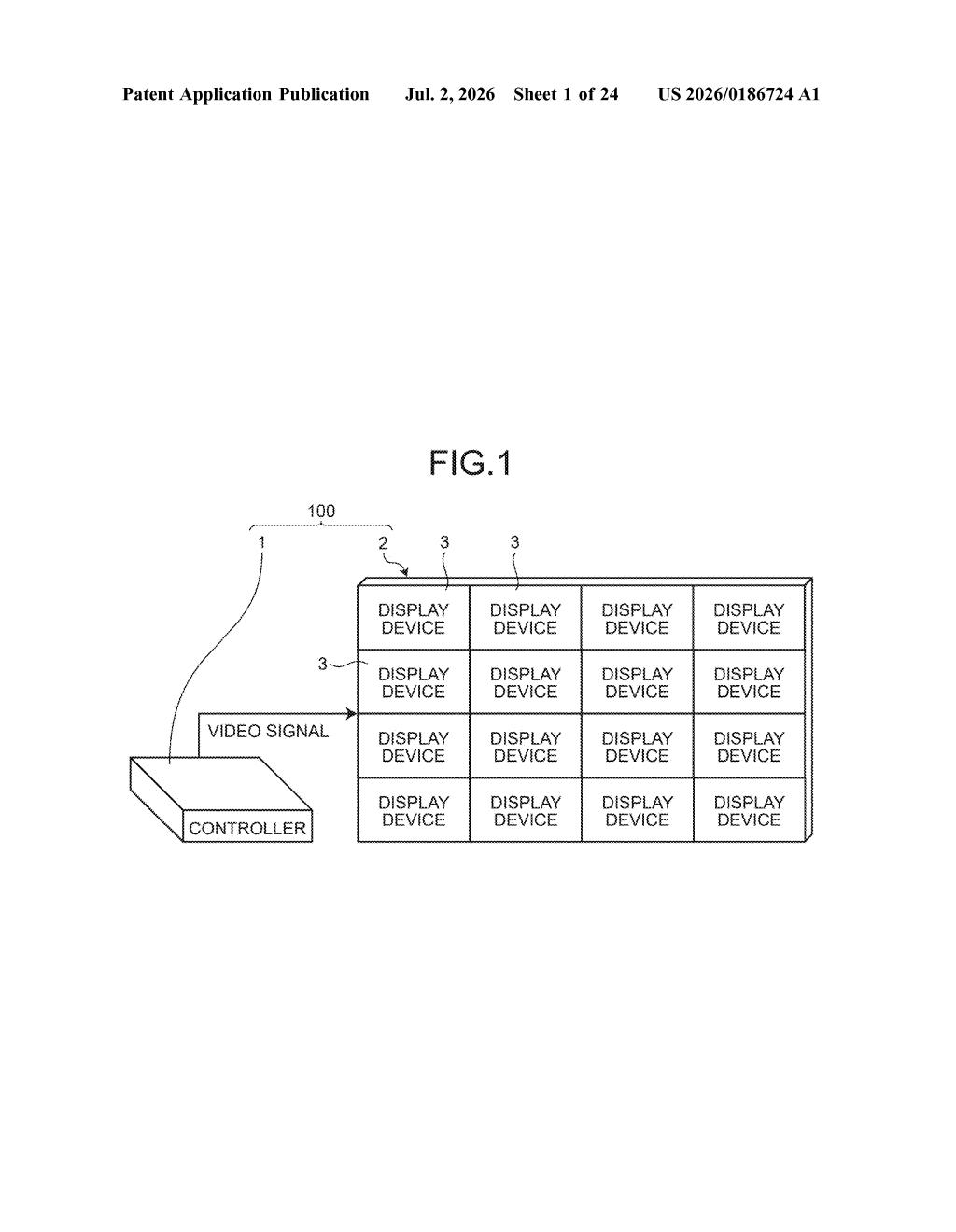
How Sony's daisy-chain screens each grab their own slice
Imagine a massive video wall in an airport or stadium made up of dozens of individual screens arranged in a grid. Getting the right piece of video to the right screen, without a rats' nest of cables, is harder than it sounds.
Sony's patent describes a system where each screen is connected to its neighbors in a single line (called a daisy chain), like Christmas lights. Instead of every display waiting for one signal to trickle down from one end, each screen can pull video from both the left side and the right side of the chain. That way, every display knows exactly which slice of the big picture it's responsible for showing.
The idea is to keep the cabling simple while making sure no single screen becomes a bottleneck that holds up the rest of the wall.
How each display reads signals from both ends of the chain
The patent describes a tiling display (a grid of screens that together show one large image) where individual panels are connected in a daisy chain, meaning each panel passes a signal to the next one in line.
Each display unit in the chain has two interface ports: one that receives a video signal traveling from the left end of the chain, and one that receives a video signal coming from the right end. The full video for the entire wall (called the chain video) is split across these two incoming streams.
- The first interface carries the first portion of the chain video from one end.
- The second interface carries the remaining portion from the other end.
- A display processing unit inside each panel figures out which part of the total image belongs to that screen and renders it, drawing from whichever of the two incoming streams contains the relevant data.
The result is that each panel is self-contained in its logic. It doesn't need a central controller telling it what to show; it just reads the two streams and extracts its own slice.
What this means for large-scale commercial display setups
Large-format video walls are common in broadcast studios, live event venues, retail flagship stores, and control rooms. The engineering challenge is always the same: how do you route a single high-resolution video source across dozens of independent panels without the wiring becoming unmanageable or a single cable failure taking down half the wall?
By feeding the signal from both ends simultaneously, Sony's approach gives each display two paths to the data it needs. If one direction of the chain has a problem, the panel may still be able to reconstruct its image from the other direction. For large commercial installations where downtime is expensive, that kind of redundancy is genuinely useful.
This is a focused, practical engineering patent aimed squarely at Sony's professional display business, not consumer TVs. The two-directional feed concept is a real solution to a real cabling and reliability headache in large installations. It won't make headlines, but integrators building broadcast or live-event walls would find this genuinely interesting.
Get our take in your Top Stories
Liked this breakdown? Add Patentlyze as a preferred source on Google, and our plain-English take shows up more often in your Top Stories the next time Sony patent news breaks.
There are more where this came from
We read every patent application Big Tech publishes and send you the ones worth knowing. Plain English, free, every week.
Want this weekly breakdown for a company we don't cover? Patentlyze Pro →