
Qualcomm Patents a Two-Layer Biometric System That Splits Your Fingerprint Data Across Isolated Chip Zones
Qualcomm wants to make stealing your biometric data much harder by ensuring that no single chip environment ever holds the complete picture of your fingerprint or face — even if an attacker compromises one layer of security.
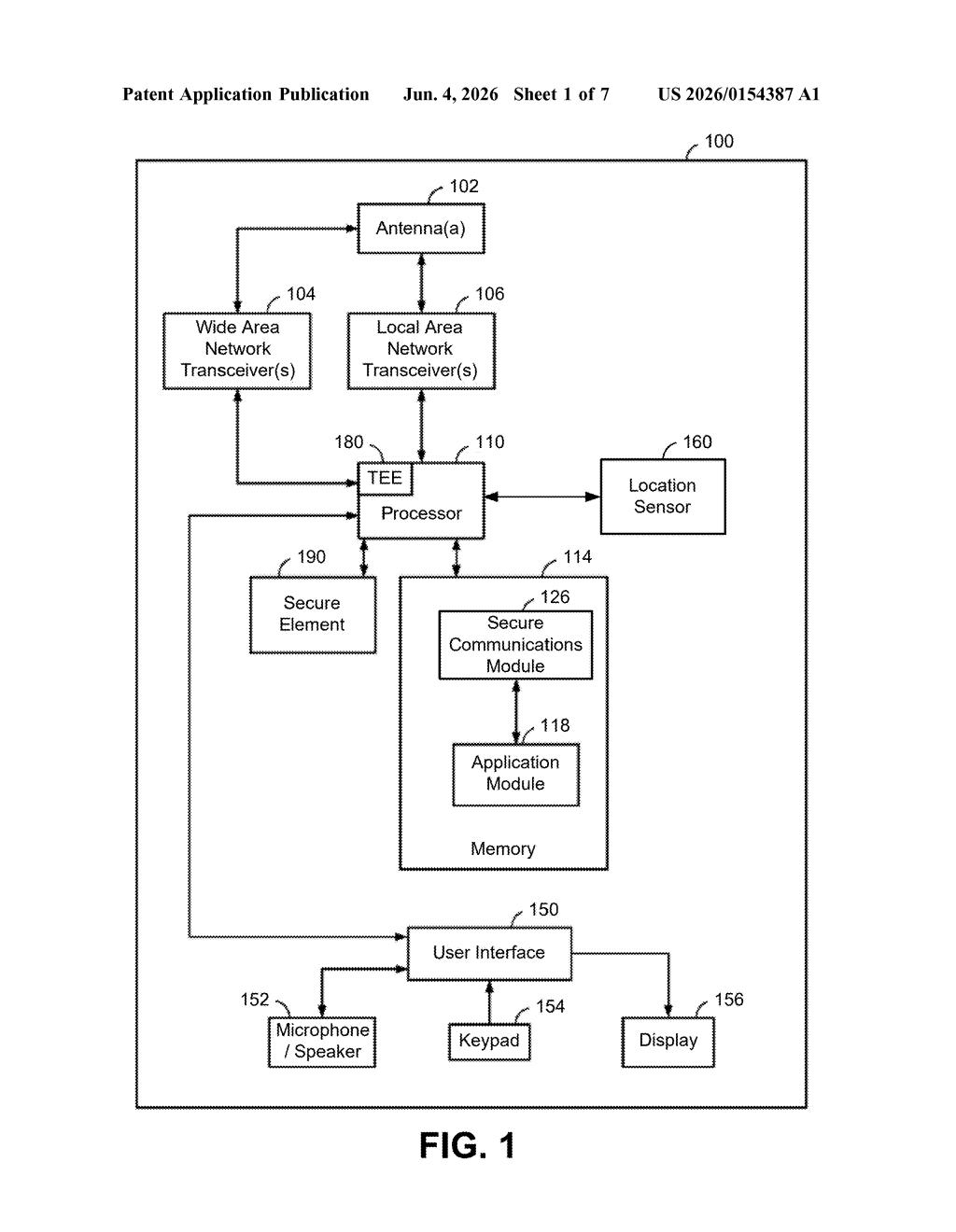
What Qualcomm's split biometric storage actually does
Imagine your house key was split into two pieces kept in two different safes — and the only way to use the key is to briefly combine them, never storing the whole thing in one place. That's essentially what Qualcomm is patenting for your fingerprint or face data.
Right now, when your phone reads your fingerprint, that data typically lives in one protected area of the chip called a Trusted Execution Environment (TEE). Qualcomm's approach adds a second, separate secure zone that generates a scrambling "mask." Your biometric template gets masked before it's ever stored — and only the masked version is saved to memory.
The result: even if someone manages to break into one secure zone on the chip, they don't get your real biometric data. They'd need to compromise both isolated environments simultaneously — a dramatically harder attack to pull off.
How the TEE and secure enclave divide the biometric work
The patent describes a two-process architecture running across two distinct secure chip environments.
Process one lives in the Trusted Execution Environment (TEE) — a well-established isolated partition on modern mobile chips (think ARM TrustZone) that handles sensitive operations separately from the main OS. This process takes incoming biometric data — a fingerprint scan, for example — and converts it into a biometric template (a mathematical representation of your biometric features).
Process two lives in a separate secure execution environment — a distinct hardware-isolated zone, not just a software partition of the same TEE. This second process independently generates a mask (essentially a cryptographic scramble pattern), receives the template from process one, applies the mask to it, and then saves only the masked template to memory.
The key design choice: the unmasked template is never written to storage. The mask and the template are generated and combined in transit. This means:
- Compromising the TEE alone doesn't expose a usable biometric template
- Compromising the secure enclave alone only yields a mask with no template to apply it to
- A full reconstruction requires breaking both isolated environments at once
This is a hardware-enforced separation, not just a software policy — which is what makes it meaningful from a security architecture standpoint.
What this means for on-device fingerprint and face security
Biometric data is uniquely dangerous to steal: you can change a password, but you can't change your fingerprint. Any architecture that reduces the blast radius of a single-point compromise is genuinely worth attention, especially as more payments, device unlocks, and identity verification flows run on-device.
For Qualcomm specifically, this kind of approach matters a lot — their Snapdragon chips power the majority of Android flagship phones, and they're increasingly central to Windows-on-ARM laptops and IoT security modules. A patent like this signals that Qualcomm is building differentiated biometric security directly into its silicon architecture, which could become a selling point for device OEMs looking to market stronger privacy credentials to enterprise and government customers in particular.
This is a genuinely thoughtful security architecture patent, not a routine filing. The insight — that you can reduce the value of any single breach by ensuring neither environment ever holds a complete, usable secret — is clean and well-motivated. Whether it ships as a discrete Snapdragon feature or gets folded quietly into existing TrustZone implementations, it's solving a real problem that matters more as biometrics replace passwords at scale.
There are more where this came from
We read every patent application Big Tech publishes and send you the ones worth knowing. Plain English, free, every week.
Want this weekly breakdown for a company we don't cover? Patentlyze Pro →