
AMD Patents a Processor Trick That Cuts Steps From High-Volume Math
AMD has filed a patent for a processor technique that eliminates redundant steps when doing large-scale math, the kind of math that powers AI models and graphics engines. It's a small change to how numbers are stored, but it could add up to real speed gains.
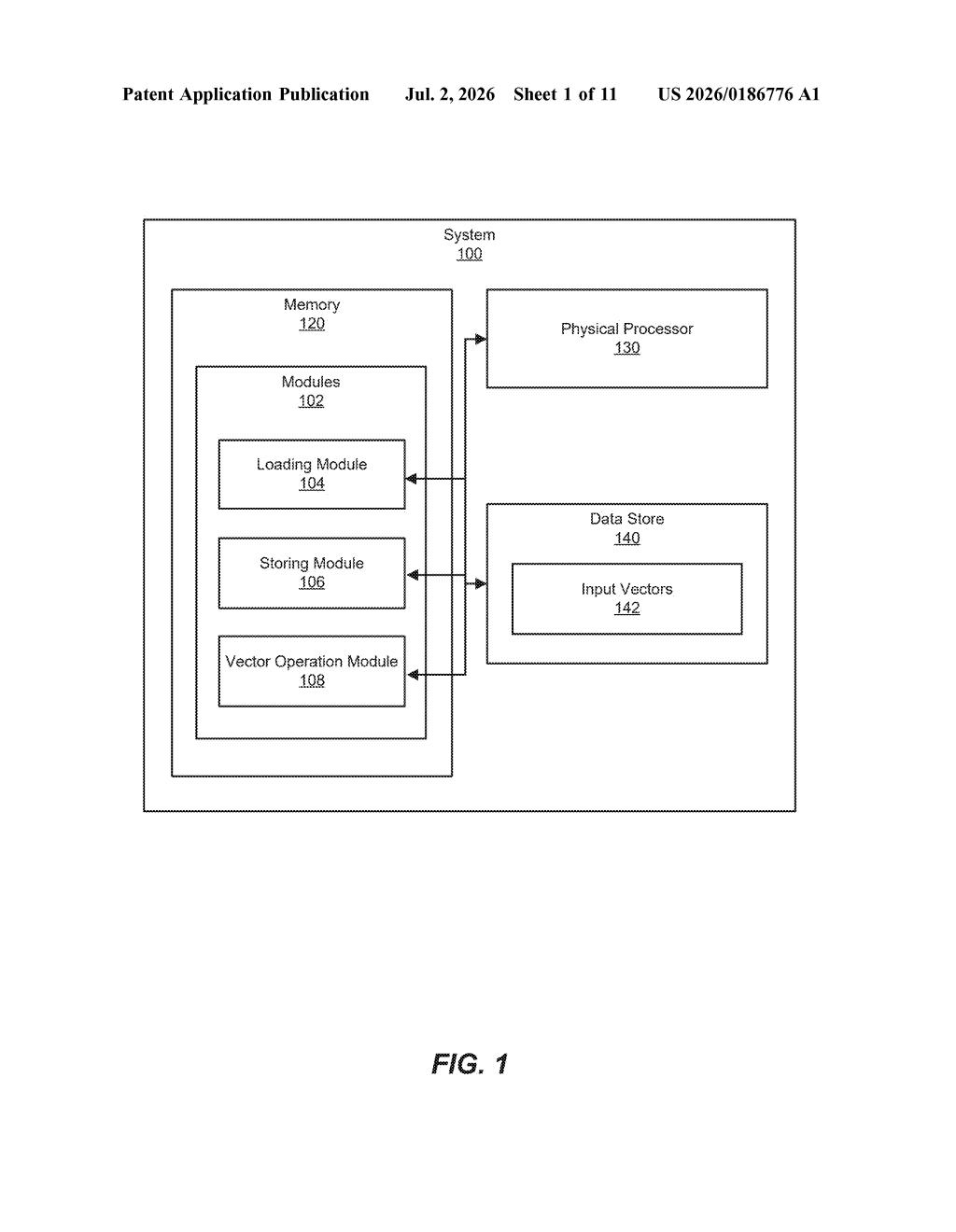
What AMD's shared-scale vector trick actually does
Imagine you're doing thousands of multiplication problems, and every single one starts with the same setup step: writing down the same conversion factor before you can begin. That's roughly what happens inside chips when they process big lists of numbers, called vectors. Each list carries a "scale factor" that tells the processor how to interpret its values, and re-reading that factor over and over wastes time.
AMD's patent describes a way to park that scale factor in a dedicated holding spot inside the processor, called a control register, so the chip can grab it instantly instead of fetching it repeatedly. Two lists of numbers go into two regular registers, and their scale factors live in that separate control register, always ready.
AMD calls each scale factor a shared scale term. The upshot is that the processor spends less effort on bookkeeping and more effort on the actual math, which is exactly what you want when you're running something like an AI model that does billions of these operations per second.
How the control register stores and retrieves scale terms
The patent describes a method for handling vector operations (calculations performed on long lists of numbers simultaneously) more efficiently by changing where certain metadata lives during a computation.
Here's the basic flow:
- A pair of input vectors (think: two long lists of numbers) are loaded into two standard processor registers.
- Each vector comes tagged with a shared scale term, a multiplier that tells the processor what the numbers actually represent in terms of magnitude. These scale terms are stored separately in a control register, a small, fast-access slot reserved for configuration values rather than raw data.
- When the processor performs the vector operation, it reads the scale term directly from the control register rather than embedding it inside the data registers or fetching it from slower memory.
The efficiency gain comes from avoiding repeated retrieval of the same scale information. In formats like microscaling floating point (a compact number format gaining traction in AI hardware), many values share a single scale factor, so storing it once in a dedicated register and referencing it repeatedly is a natural fit.
The patent is filed under USPC class 712/221, which covers processor instruction-set architecture, placing this firmly in chip-design territory rather than software.
What this means for AI chips and GPU workloads
This patent sits squarely in the middle of a quiet but important fight in AI hardware: how to do more math per watt. AI inference and training are dominated by vector and matrix math, and chips from AMD, Nvidia, and others are in a constant race to process that math faster and with less energy. Shaving overhead from scale-factor handling, even by a small amount, compounds significantly when a chip does billions of operations per second.
AMD's Instinct GPU line, which competes with Nvidia's data-center chips, relies heavily on efficient vector execution. A change like this, baked into the instruction-set architecture, could benefit any workload that uses compact number formats, including large language models and image-generation systems. It's not a headline feature, but it's the kind of low-level work that separates fast chips from faster ones.
This is unglamorous but genuinely useful chip engineering. AMD isn't reinventing how processors work; it's trimming fat from a specific bottleneck that matters a lot in AI workloads. If this makes it into silicon, the benefit will be invisible to end users but very visible on a performance-per-watt benchmark.
Get our take in your Top Stories
Liked this breakdown? Add Patentlyze as a preferred source on Google, and our plain-English take shows up more often in your Top Stories the next time AMD patent news breaks.
There are more where this came from
We read every patent application Big Tech publishes and send you the ones worth knowing. Plain English, free, every week.
Want this weekly breakdown for a company we don't cover? Patentlyze Pro →