
Samsung Patents a Faster Way to Show Nearby Bluetooth Audio Sources Before Connecting
Waiting for your phone to find a Bluetooth speaker before you can even tap on it is one of those small annoyances that adds up fast. Samsung's latest patent describes a way to show nearby audio devices on screen immediately, before your phone has even finished negotiating the connection.
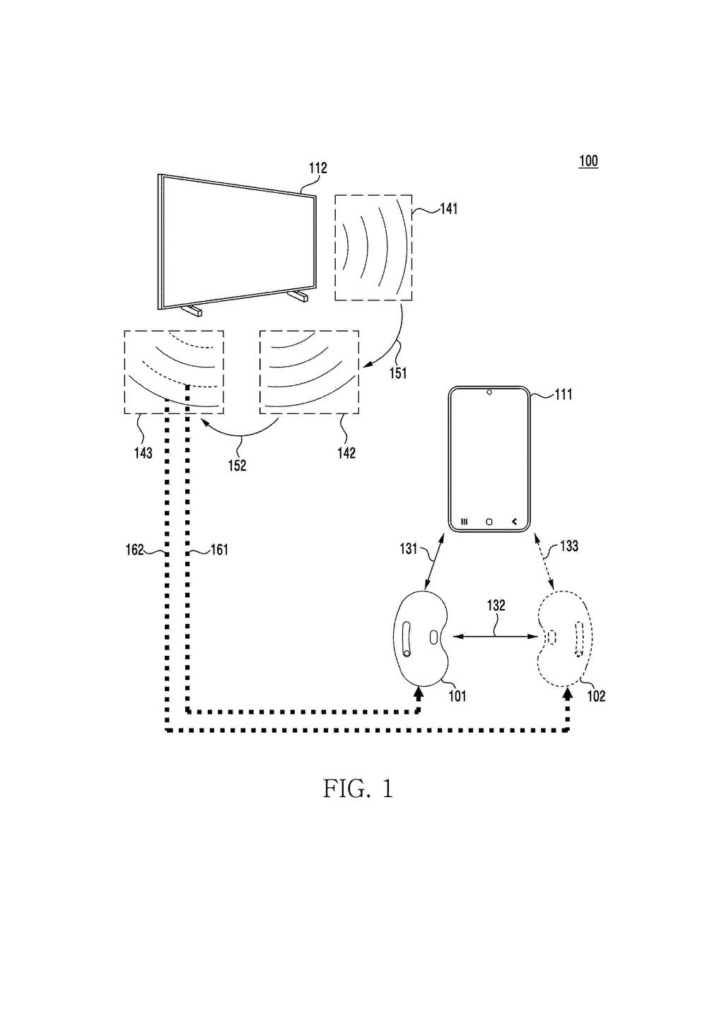
How Samsung speeds up finding Bluetooth audio sources
Imagine you walk into a room with a Bluetooth speaker and pull out your phone to connect. Right now, your phone often has to finish a bunch of invisible handshaking before it can even show you the speaker's name. Samsung's patent describes skipping that wait: your phone would show you the speaker as a tappable option before it finishes the full sync process.
The trick is splitting the discovery into two steps that happen at the same time. Your phone catches a quick broadcast signal from the speaker and immediately puts it on a list for you. Then, while you're looking at that list, your phone finishes the deeper sync in the background.
For everyday users, this means the device-picker screen shows up faster. You're not staring at a spinning indicator; you're already looking at your options. It's a small quality-of-life fix aimed at making Bluetooth audio pairing feel more instant.
How the two-scan BLE process works under the hood
The patent centers on a two-phase scanning approach using Bluetooth Low Energy (BLE), the low-power radio standard in nearly every modern phone and audio device.
In the first phase, the phone listens for what the BLE spec calls an extended advertisement, a short broadcast packet that a speaker or audio device sends out to announce itself. The moment the phone catches one of these packets, it adds that device to the on-screen list. No waiting.
In the second phase, the phone begins synchronizing to the device's periodic advertisement, a more regular, timed broadcast that carries richer metadata about the audio stream being offered. This sync happens in the background while the device list is already visible to the user.
The key claim is that these two steps overlap: the UI shows up after phase one completes, and phase two runs concurrently. The patent also situates this in the context of Bluetooth LE Audio broadcasting (sometimes called Auracast), a newer standard that lets one audio source broadcast to many listeners at once, the way a TV in an airport might broadcast to any nearby hearing aids or earbuds.
What this means for Samsung's audio ecosystem
This patent is tightly connected to Samsung's push into Bluetooth LE Audio and Auracast, the broadcast audio standard that Samsung has been integrating into Galaxy phones and Galaxy Buds. That ecosystem requires phones to discover and list nearby audio streams quickly, because the whole premise is that you'd browse for public audio broadcasts the way you browse for Wi-Fi networks.
For you as a user, the practical result would be a device-picker that feels snappier. Instead of the app freezing while it finishes syncing, you'd see your options right away and tap while the background work completes. It's an incremental improvement, but in audio products where first impressions of responsiveness matter, that kind of polish counts.
This is a focused, practical UX patent rather than a big architectural bet. It solves a real annoyance in Bluetooth audio discovery and fits neatly into Samsung's LE Audio strategy. It won't make headlines on its own, but it's exactly the kind of detail that separates a polished product from a frustrating one.
There are more where this came from
We read every patent application Big Tech publishes and send you the ones worth knowing. Plain English, free, every week.
The drawings
18 drawing sheets from US 2026/0219832 A1 · click any drawing to enlarge


Want this weekly breakdown for a company we don't cover? Patentlyze Pro →
Be the first to weigh in