
Samsung Patents a Foldable Phone That Vibrates Differently When Folded
Your phone's vibration feels different when it's folded shut versus lying flat open, and Samsung thinks that's a problem worth solving at the hardware level.
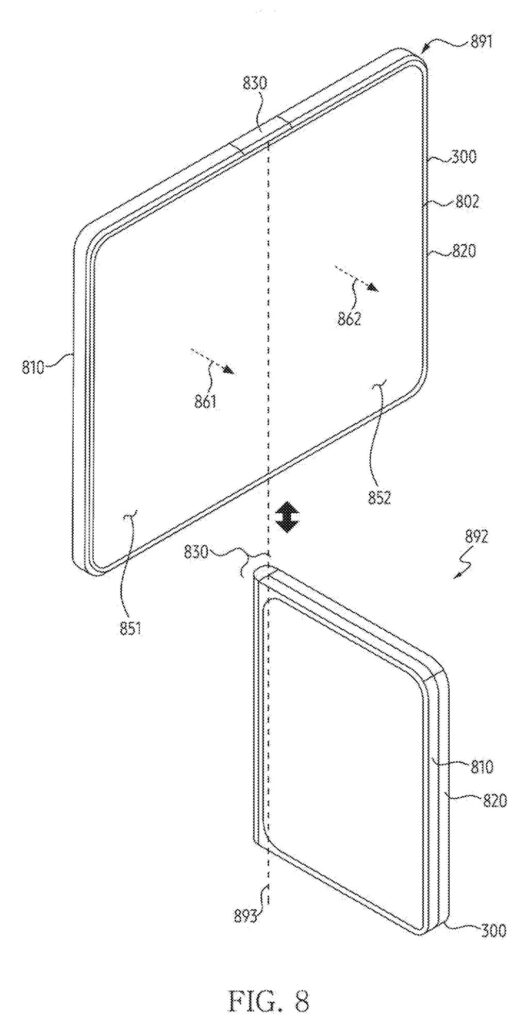
How Samsung's fold-aware vibration actually works
Imagine you're getting a notification. Your phone is folded shut in your pocket, but the vibration feels weaker than usual, almost like the phone is muffling itself. That's because folding a device changes its physical shape, and a vibration motor tuned for one configuration can feel wrong, or even sound buzzy, in another.
Samsung's patent describes a system where the phone detects whether it's open or folded, then adjusts the vibration frequency accordingly. A built-in microphone helps the phone figure out which frequency actually works best for the current shape, so you get a consistent, clean haptic response no matter how you're holding the device.
In short: your Galaxy Z Fold wouldn't just know that it's folded, it would know how to vibrate properly because of it.
How the microphone picks the right vibration frequency
The patent describes a foldable electronic device with multiple housings, a microphone, and a vibration actuator. The core idea is that the physical relationship between those housings (open, folded, or somewhere in between) defines a "state," and each state gets its own vibration frequency range.
The microphone plays a surprisingly active role here. Rather than just picking a preset frequency for each state, the system uses the microphone to identify which frequency range is appropriate. This suggests the phone may be listening for acoustic feedback from the actuator itself, essentially checking whether the vibration sounds or resonates correctly in the current physical configuration.
The claim distinguishes two states clearly:
- First state (e.g., fully open): actuator runs in a first frequency range
- Second state (e.g., folded shut): actuator runs in a second, different frequency range
This matters because foldable devices have complex resonance characteristics. A vibration frequency that feels crisp in one configuration can produce an unwanted buzz or feel dampened in another. By dynamically selecting the frequency range based on physical state, Samsung aims to keep haptic feedback consistent and avoid the actuator exciting unwanted resonances in the folded chassis.
What this means for foldable phone haptics
Foldable phones are still working through a list of small but annoying quality-of-life issues, and haptic feedback is one that doesn't get much attention. A vibration that feels good on a flat slab phone can feel rattly or weak on a device with a hinge and multiple folding panels. If Samsung ships this, it would be one of the first foldables to actively tune its own vibration motor to its physical shape.
For Galaxy Z Fold and Z Flip users, this could mean fewer moments where your phone buzzes like it's falling apart when folded. It's a detail, but it's the kind of detail that separates a premium device from one that just looks premium.
This is a focused, practical engineering fix for a real foldable-phone problem, not a flashy concept. The use of the microphone to inform frequency selection is the genuinely interesting bit, because it implies a feedback loop rather than just a lookup table. Worth watching if you cover foldables or haptics.
There are more where this came from
We read every patent application Big Tech publishes and send you the ones worth knowing. Plain English, free, every week.
The drawings
11 drawing sheets from US 2026/0222482 A1 · click any drawing to enlarge


Want this weekly breakdown for a company we don't cover? Patentlyze Pro →
Be the first to weigh in